Introduction
A tile project budget has more line items than most people expect. The tile itself is usually only part of the story — thinset mortar, grout, backer board, underlayment, tools, and labor (if you’re hiring) all scale with the area you’re covering. Miss one of them and the “simple weekend project” suddenly costs 30–40% more than planned.
This guide breaks down every cost component of a typical tile job, shows how the quantities from the Tile Calculator translate into a shopping list, and explains where the money actually goes. All price figures below are typical ranges, not quotes — local rates, tile choice, and labor markets move them considerably.
How Tile Project Costs Break Down
A full tile budget has five buckets. Here’s what typically falls into each, and how each scales:
- Tile — the largest material line. Prices vary enormously by material and format; ceramic is the budget end, natural stone and large-format porcelain the premium end.
- Setting materials — thinset mortar, grout, backer board or membrane, sealers. These scale directly with area.
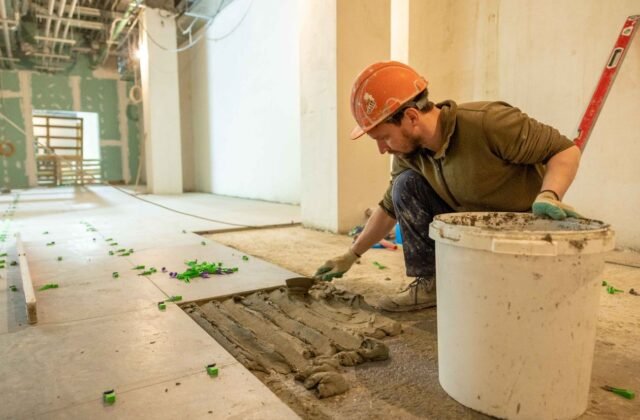
- Tools and consumables — spacers, trowels, a wet saw rental, mixing paddles, buckets, sponges. Mostly fixed cost regardless of job size.
- Labor — professional installation, if you’re not DIYing. Usually the single biggest line on hired jobs.
- Prep and repair — subfloor leveling, old flooring removal, plumbing adjustments. The wildcard that surprises people.
Before pricing anything, you need accurate quantities. Run your dimensions through the Tile Calculator first — every figure below multiplies off that tile count. The estimating guide shows how to measure net area correctly.
Tile Material Costs
Tile pricing is quoted per square foot (or per square meter), and the range is wide. These are typical retail ranges for common materials:
| Tile type | Typical price range (per ft²) | Typical price range (per m²) |
|---|---|---|
| Basic ceramic | $1–$4 | $11–$43 |
| Porcelain | $3–$10 | $32–$108 |
| Subway / specialty ceramic | $4–$12 | $43–$129 |
| Natural stone (marble, travertine) | $8–$25+ | $86–$269+ |
| Mosaic sheets | $5–$15 | $54–$161 |
Two things inflate the tile line beyond the per-foot price. Waste adds 10–20% to the purchased quantity (see the complete guide for waste rates by layout), and format matters: large-format 24 × 24 in (60 × 60 cm) tiles cost more per piece to ship and more per foot to install than 12 × 12 in (30 × 30 cm) tiles.
Setting Materials: Mortar, Grout, and Backer Board
These are the costs people forget. For a 120 ft² (11.1 m²) floor, the setting materials typically run:
| Material | Typical coverage | Typical cost for 120 ft² |
|---|---|---|
| Thinset mortar (50 lb / 22.7 kg bags) | 60–100 ft² (5.6–9.3 m²) per bag | $30–$60 (2 bags) |
| Grout (25 lb / 11.3 kg bag) | Varies with joint width and tile size | $15–$40 |
| Cement backer board (3 × 5 ft sheets) | 15 ft² per sheet | $80–$140 (8 sheets) |
| Waterproofing membrane (showers) | Per roll/bucket | $50–$150 |
| Sealer (natural stone) | 200–500 ft² per gallon | $20–$40 |
On a shower job, the waterproofing membrane is non-negotiable — skipping it to save $100 risks thousands in water damage. The material guide explains which setting materials each tile type needs, and the code compliance guide covers waterproofing requirements for wet areas.
Tools and Equipment
DIY tool costs are mostly one-time purchases, which makes the first tile job the most expensive one. A basic kit:
- Wet tile saw — $80–$150 to buy a basic model, $40–$60/day to rent. Worth renting for a single bathroom.
- Notched trowels — $10–$20 each; you’ll want the notch size your mortar manufacturer specifies.
- Tile spacers and leveling clips — $10–$25 per project; leveling clips are strongly recommended for 18 × 18 in (45 × 45 cm) and larger tiles.
- Mixing paddle, buckets, sponges, floats — $30–$60 total.
- Knee pads — $15–$30. Your knees will thank you by hour three.
Total first-job tool outlay typically ranges $150–$350 if you rent the saw — less if you already own the basics. That math is why a single small backsplash is often cheaper to DIY, while a whole-house floor may favor a pro who already owns everything. The DIY vs pro guide works through that comparison properly.
Labor Costs
Professional tile installation is usually priced per square foot, and it varies widely by region, tile size, and job complexity. Typical ranges:
| Job type | Typical labor range (per ft²) |
|---|---|
| Straight-lay floor, standard tile | $5–$12 |
| Large-format tile (24 × 24 in / 60 × 60 cm) | $8–$18 |
| Shower walls and pan | $10–$25 |
| Diagonal, herringbone, or mosaic patterns | $12–$25+ |
| Backsplash | $10–$20 (often a minimum charge applies) |
Labor typically represents 50–70% of a professionally installed tile job. Complex patterns, natural stone, and showers command premiums because they’re slower and less forgiving. Always get at least three quotes, and ask each installer the questions in the DIY vs pro guide before committing.
Worked Budget Example
A 120 ft² (11.1 m²) bathroom floor, porcelain 12 × 12 in (30 × 30 cm) tile, straight layout, DIY installation:
| Line item | Quantity | Typical cost |
|---|---|---|
| Porcelain tile (10% waste) | 126 tiles / 12 boxes | $400–$700 |
| Thinset mortar | 2 × 50 lb bags | $30–$60 |
| Grout | 1 × 25 lb bag | $15–$40 |
| Backer board | 8 sheets | $80–$140 |
| Tools (saw rental + consumables) | 1 project | $150–$250 |
| Total DIY | $675–$1,190 |
The same job professionally installed would typically add $600–$1,440 in labor (120 ft² × $5–$12), bringing the total to roughly $1,275–$2,630. The tile and setting materials don’t change — labor is the entire difference, which is exactly the trade-off the DIY vs pro guide helps you evaluate.
Where People Overspend (and How Not To)
- Ordering tile in multiple batches. Split orders risk dye-lot mismatch; buy it all at once. The waste allowance is cheaper than a mismatched repair later.
- Choosing premium tile for low-visibility areas. A laundry room floor doesn’t need the same tile as the master bath.
- Skipping the leveling system on large-format tile. A $20 bag of clips prevents lippage that no amount of skill fully fixes on 24 × 24 in (60 × 60 cm) tile.
- Underestimating prep. Subfloor leveling compound and old-floor removal can add 10–20% to the budget. Inspect the substrate before you buy tile.
- Forgetting the extras. Transition strips, caulk, grout sealer, and edge trim (Schluter-type profiles) add up — budget $50–$150 for a typical bathroom.
Related Guides
- Tile Calculator Complete Guide — the full estimating walkthrough behind these numbers.
- Tile Material Guide — tile types and setting materials, and what each costs to buy.
- DIY vs Pro — when the labor savings justify doing it yourself.
- How to Estimate — accurate measuring so you don’t over-buy.
- Pro Tips — trade techniques that save material and rework.
- Tiling Project Checklist — the full shopping list in one place.
Frequently Asked Questions
How much does it cost to tile a bathroom floor?
A typical 120 ft² (11.1 m²) bathroom floor in porcelain typically ranges $675–$1,190 DIY or $1,275–$2,630 professionally installed. Tile choice, subfloor condition, and local labor rates move these figures significantly.
What is the most expensive part of a tile job?
On hired jobs, labor — typically 50–70% of the total. On DIY jobs, the tile itself. Setting materials and tools are the smallest bucket either way.
Does larger tile cost more to install?
Typically yes. Large-format tiles (18 × 18 in / 45 × 45 cm and up) are heavier, harder to cut, and require flatter substrates and leveling systems, so installers charge a premium — often $8–$18 per ft² versus $5–$12 for standard sizes.
How much should I budget for waste?
Budget for 10–20% more tile than the net area requires, depending on layout complexity. The waste is a real cost — include it in the budget from the start rather than discovering it at checkout.
Is DIY tiling actually cheaper?
Usually, if you already own or can rent the tools and the job is straightforward. The savings shrink on complex jobs — showers, natural stone, and large-format tile — where a pro’s speed and lower breakage rate offset the labor cost. See the DIY vs pro guide for the full comparison.
Price It Out
A tile budget is five lines: tile, setting materials, tools, labor, and prep. Get your quantities right with the Tile Calculator, price each line with two or three local suppliers or installers, and keep a 10% contingency for the surprises hiding under the old floor. The cheapest tile job is the one you only do once.
Disclaimer: All cost figures in this guide are typical ranges for planning purposes, not quotes. Actual prices vary by region, supplier, tile selection, and labor market. Calculator results are planning estimates — verify quantities with your supplier and get written quotes from installers before committing to a budget.