Introduction
Replacing or installing a heating and cooling system is one of the biggest-ticket projects a homeowner ever faces. Equipment, labor, ductwork, permits, and efficiency options all move the total — and a quote that looks complete on page one can hide missing line items on page two. Estimating answers the question with structure: identify the equipment, size it to the space, price the labor and add-ons, and compare quotes like for like.
The HVAC Cost Calculator handles the core calculation: enter your system type, capacity, and project details, and it returns an estimated equipment-plus-labor total, with the major add-ons itemized. This guide explains everything behind that number — the terminology, the cost drivers, a full worked example, and the judgment calls the calculator can’t make for you.
What an HVAC Cost Calculator Estimates
An HVAC estimate is built from five buckets: the equipment itself, the labor to install it, any ductwork work, permits and inspections, and extras such as thermostats, electrical upgrades, or refrigerant line sets. The calculator combines those buckets into a single planning total so you can sanity-check contractor quotes or budget before you call anyone. The people who use this math:
- Homeowners replacing an aging furnace or air conditioner, or adding cooling to a home that never had it.
- Landlords and property managers budgeting replacements across multiple units or buildings.
- Contractors and estimators producing quick ballpark figures before a site visit.
- Home buyers pricing the HVAC work flagged on an inspection report.
Costs are always regional and project-specific. Every figure in this guide is a typical US planning range — useful for budgeting and quote comparison, not a substitute for a written bid. For a line-item breakdown of each cost bucket, see the HVAC cost guide.
Key Terms and Variables
The calculator asks for a handful of inputs. Each one corresponds to a real cost driver:
System type
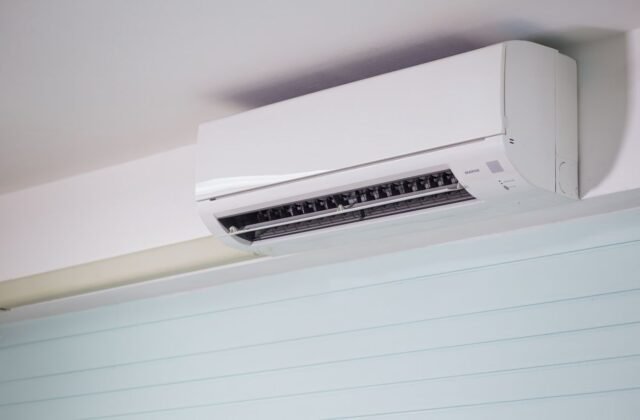
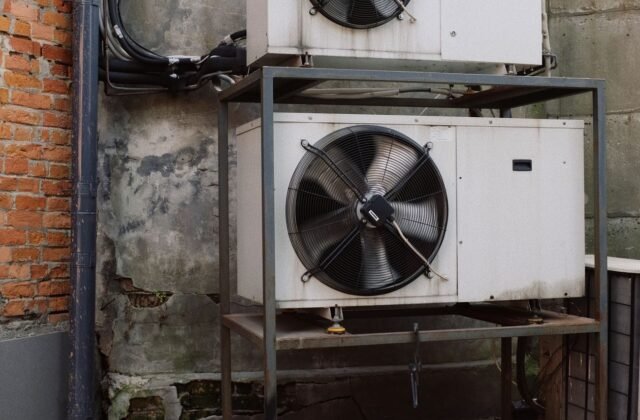
The equipment family you’re pricing: gas furnace, central air conditioner, heat pump, or ductless mini-split. Each has its own equipment price range and its own installation profile — a mini-split needs no ductwork but needs a line set and an outdoor unit per zone, while a furnace needs gas piping, venting, and usually ductwork.
Capacity (tons / kW)
Cooling capacity is measured in tons, where one ton equals 12,000 BTU per hour (about 3.517 kW). A 3-ton system therefore moves roughly 36,000 BTU/h (≈ 10.6 kW) of heat. Residential systems commonly fall between 1.5 and 5 tons (18,000–60,000 BTU/h, or about 5.3–17.6 kW). Heating capacity is usually stated in BTU/h or kW directly.
Efficiency ratings
SEER2 (cooling efficiency) and AFUE (furnace efficiency, as a percentage) describe how much useful heating or cooling you get per unit of energy. Higher ratings cost more upfront and less to run — the efficiency premium is one of the largest optional line items in any estimate. The equipment and material guide breaks down what each rating means for your wallet.
Labor share
Installation labor typically accounts for 30–50% of the total installed cost. Complex jobs — attic installs, long line-set runs, electrical panel upgrades, homes with no existing ductwork — land at the high end. The calculator applies a labor share to the equipment cost rather than pricing labor as a flat fee, which mirrors how contractors actually build quotes.
Ductwork
New ductwork for a home that lacks it typically adds $1,000–$5,000, depending on the size of the home and the difficulty of the runs. Repairing or modifying existing ducts (sealing, resizing, adding a return) costs less; a full replacement in a large two-story home can exceed the range. Duct condition is the single most common source of estimate surprises.
Permits and extras
Mechanical permits commonly run a few hundred dollars and vary widely by jurisdiction. Common extras include the thermostat ($100–$500+ installed), condensate pump or drain work, refrigerant line sets for mini-splits, and electrical upgrades such as a new 240V circuit or subpanel.
The Cost Formula
Every HVAC estimate follows the same skeleton:
Total installed cost = Equipment + Labor + Ductwork + Permits + Extras
Labor is usually expressed as a share of the total: if labor is 40% of the job, then the total equals the equipment cost divided by 0.60, before adding ductwork, permits, and extras. A full derivation — including tonnage sizing math and unit conversions — is in the formula-explained guide.
Equipment Costs by Type
Equipment-only typical US planning ranges:
| Equipment type | Typical equipment cost | Best suited for |
|---|---|---|
| Gas furnace | $2,000–$6,000 | Cold climates with existing ductwork and gas service |
| Central air conditioner | $3,000–$7,000 | Homes with a furnace and ductwork needing cooling added or replaced |
| Heat pump (split system) | $4,000–$8,000 | Moderate climates; heats and cools with one system |
| Ductless mini-split | $1,500–$4,000 per zone | Homes without ducts, additions, garages, targeted rooms |
A full furnace-plus-AC replacement combines the two rows; a heat pump replaces both in one box. Premium efficiency models sit at or above the top of each range; regional price differences of 15–30% between markets are normal.
Replacement vs New Install
Replacement means swapping equipment in a home that already has ductwork, gas piping, and electrical service in place. New install means adding a system where none existed — or where none of the supporting infrastructure exists. New installs cost more because they include the infrastructure: ductwork, gas lines, electrical circuits, and sometimes a panel upgrade.
The gap between the two is usually the ductwork and infrastructure work. A like-for-like 3-ton AC swap might land near $6,000–$9,000 installed; putting first-time central air into a ductless home can run several thousand more once ducts, electrical, and permits are counted. The estimating guide walks through building each type of estimate line by line.
Worked Example: 3-Ton AC Replacement
A single-story home of about 1,800 ft² (≈ 167 m²) needs its aging 3-ton central air conditioner replaced. The existing ductwork is in good shape.
Step 1 — Capacity. 3 tons = 36,000 BTU/h ≈ 10.6 kW.
Step 2 — Equipment. A mid-efficiency 3-ton condenser and coil: $5,000.
Step 3 — Labor. Labor share 40% → total before extras = $5,000 ÷ 0.60 = $8,333.
Step 4 — Permits and extras. Mechanical permit $250 + new programmable thermostat $200 = $450.
Step 5 — Total. $8,333 + $450 = $8,783 planning estimate.
If the ductwork had needed replacement, another $1,000–$5,000 would join the total — which is why every estimate should state the duct assumption explicitly.
Mistakes That Distort Results
Most bad HVAC estimates aren’t arithmetic errors — they’re assumption errors:
- Forgetting the labor share. Pricing the equipment alone and being shocked at the installed total. Labor is 30–50% of the job.
- Assuming the ducts are fine. Leaky, undersized, or damaged ductwork can add thousands and is the most common mid-project surprise.
- Oversizing the system. Bigger is not better — an oversized unit short-cycles, dehumidifies poorly, and costs more to buy and run.
- Comparing bids that aren’t like for like. One quote includes permits and a new thermostat; the other doesn’t. Normalize the line items before comparing totals.
- Ignoring efficiency math. A cheaper low-SEER2 unit can cost more over ten years than a pricier high-SEER2 one, depending on your climate and electricity rates.
A fuller catalogue of these errors, with fixes, is in the common mistakes guide.
Related Guides
- Complete HVAC Cost Guide — every cost bucket broken down with typical ranges.
- Cost Formula Explained — the sizing and pricing math step by step.
- Estimating Guide — build your own line-item estimate from measurements.
- HVAC Cost Calculator FAQ — quick answers to the most asked questions.
- DIY vs Pro — what you can legally and safely do yourself.
- Planning Checklist — everything to verify before you sign a contract.
Frequently Asked Questions
How much does a full HVAC system replacement cost?
A typical full system (furnace plus central AC, or a heat pump) usually lands in the $7,000–$15,000 range installed for an average home, depending on equipment type, efficiency, and whether ductwork is needed. Larger homes and premium equipment push higher.
Is a heat pump cheaper than a furnace plus AC?
Equipment-wise, a heat pump ($4,000–$8,000) can cost less than a furnace plus AC bought separately ($5,000–$13,000 combined), and it heats as well as cools. Whether it saves money overall depends on your climate and local gas vs electricity prices.
How long does an HVAC installation take?
A straightforward like-for-like replacement usually takes one day. New installs with ductwork typically take 2–4 days; complex jobs with electrical upgrades can run longer.
Do I need a permit to replace my HVAC system?
In most US jurisdictions, yes — a mechanical permit is typically required for equipment replacement, and an inspection follows. Permit fees commonly run a few hundred dollars. Always verify with your local building department.
Get Your Estimate
HVAC cost estimating is structured arithmetic built on honest inputs: pick the equipment, size it to the space, apply a realistic labor share, and don’t forget the ductwork, permits, and extras. The HVAC Cost Calculator does the arithmetic — your job is the measurements and the assumptions. Run your numbers, get three itemized quotes, and compare them line by line before you commit.
Disclaimer: Calculator results are planning estimates based on the inputs you enter. Actual HVAC costs vary with equipment selection, site conditions, labor markets, and regional pricing. Verify requirements with your local building authority and consult a licensed HVAC professional before making purchasing or installation decisions.