Introduction
Hypothetical case study — illustrative example, not a real project. The numbers below are worked through for teaching purposes: a typical suburban driveway, standard assumptions, mid-range US pricing. No real client, no real site, no real contractor bid. What makes it useful is that every quantity is derived step by step and every line item sums exactly — so you can see how the formulas and the budget connect.
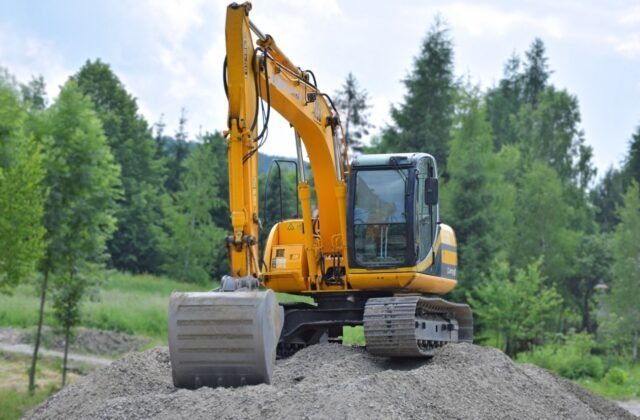
The scenario: a homeowner replaces a failing gravel driveway with a new aggregate-base section for a future asphalt surface. Dimensions: 50 ft long × 12 ft wide (15.24 × 3.66 m), cut 8 in (20 cm) deep, ordinary loam soil, level site, utilities located and clear. Follow along with your own numbers in the Driveway Excavation Calculator.
Step 1: Cut Volume (Bank)
Bank volume = length × width × depth, in consistent units.
Imperial: 50 × 12 = 600 ft²; 8 in = 0.667 ft; 600 × 0.667 = 400 ft³; 400 ÷ 27 = 14.8 yd³ bank.
Metric: 15.24 × 3.66 = 55.78 m²; × 0.2032 m = 11.3 m³ bank. Cross-check: 14.8 × 0.7645549 = 11.3 m³ ✓.
Step 2: Loose Volume and Truck Loads
Apply the 1.25 swell factor for ordinary soil, then divide by truck capacity.
Loose volume: 14.8 × 1.25 = 18.5 yd³ (11.3 × 1.25 = 14.1 m³; cross-check 18.5 × 0.7645549 = 14.1 m³ ✓).
Truck loads: 18.5 ÷ 12 yd³ per tri-axle = 1.54 → round up to 2 loads. This is the quantity that prices haul-off — see the cost guide for typical per-load rates.
Step 3: Base Aggregate Tonnage
The design calls for a 6-inch (15 cm) compacted crusher-run base in two lifts.
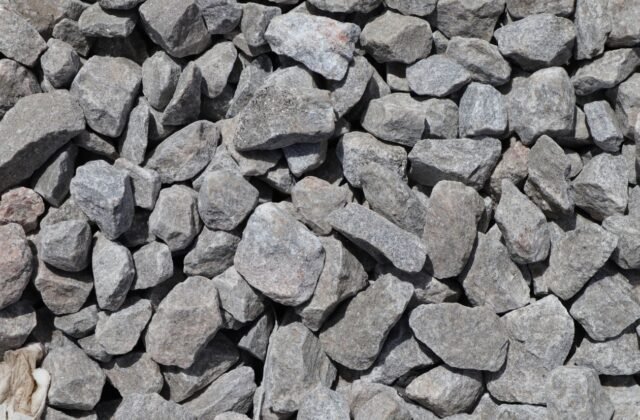
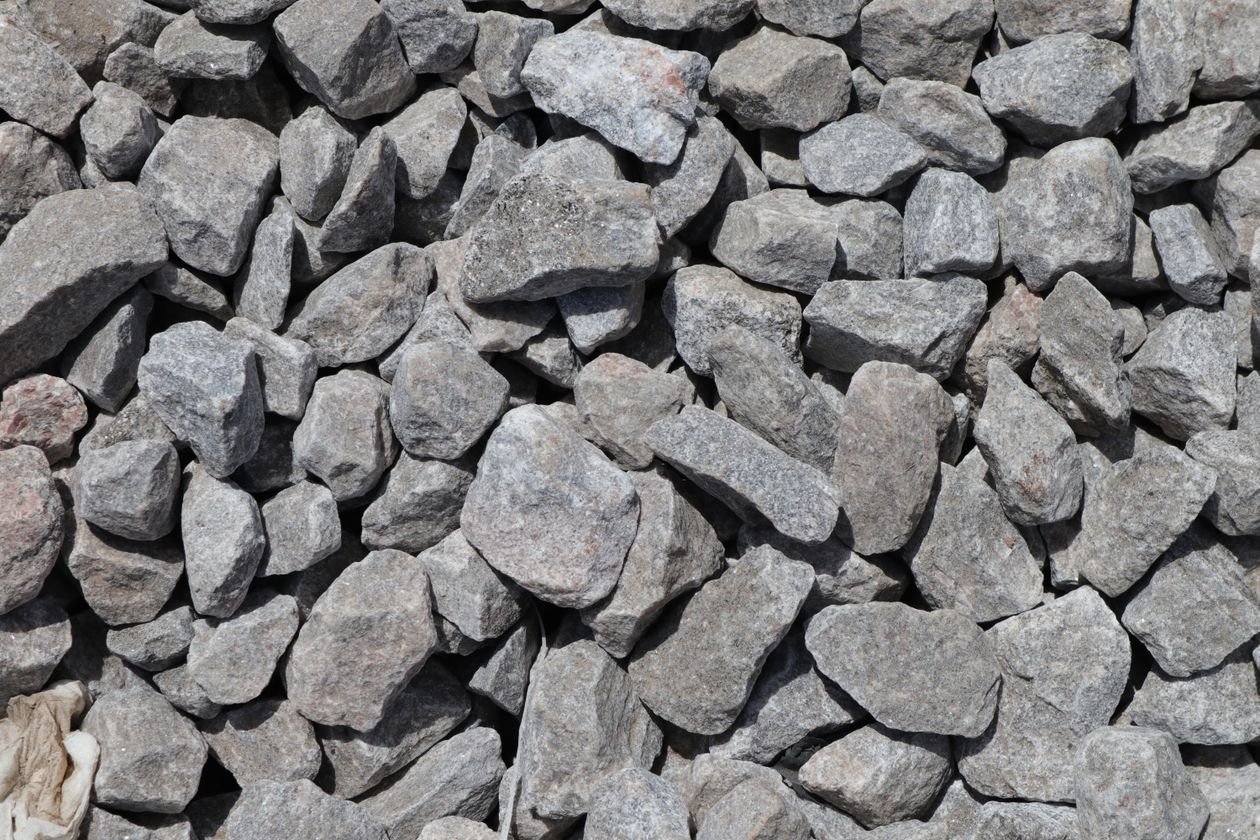
Imperial: 600 ft² × 0.5 ft = 300 ft³ = 11.1 yd³; × 1.5 tons/yd³ = 16.7 tons; +5% waste → order 18 tons.
Metric: 55.78 m² × 0.15 m = 8.37 m³; × 2.0 t/m³ = 16.7 tonnes; +5% → ~17.6 tonnes.
The material guide explains why crusher run is the default here and what the alternatives cost.
Step 4: Drainage Check
The lot falls gently toward the street. Required fall at 2% over 50 ft: 50 × 0.25 in/ft = 12.5 in (32 cm) total — confirmed achievable with string lines before digging, per the pro tips guide. No supplemental drainage needed in this hypothetical.
Step 5: The Line-Item Budget
Mid-range US pricing applied to the quantities above:
| Line item | Calculation | Amount |
|---|---|---|
| Excavation (mini-ex + operator, 1 day) | Flat day rate | $1,150.00 |
| Haul-off and disposal | 2 loads × $350 | $700.00 |
| Base aggregate, crusher run delivered | 18 tons × $45 | $810.00 |
| Geotextile separation fabric | 700 ft² × ~$0.13 | $90.00 |
| Plate compactor rental (2 days) | 2 × $75 | $150.00 |
| Driveway permit | Flat fee | $125.00 |
| Subtotal | $3,025.00 | |
| Contingency (10%) | $3,025.00 × 0.10 | $302.50 |
| Total project budget | $3,327.50 |
Check the arithmetic: 1,150 + 700 + 810 + 90 + 150 + 125 = 3,025.00; 3,025.00 × 1.10 = 3,327.50. ✓ Every line item ties to a quantity computed above, so any change in dimensions flows through the whole budget predictably.
Note what this hypothetical budget includes and excludes: it covers excavation through base installation — the scope of this calculator cluster. It excludes the final surface (asphalt, concrete, or pavers), which is a separate project with its own pricing. For how these ranges shift by region and site condition, see the cost guide.
What This Example Teaches
- Swell matters: the dig was 14.8 yd³ but the haul was 18.5 — the second truck load exists purely because of the 1.25 factor.
- Base is the biggest material line: $810 of aggregate versus $700 of haul-off — ordering the right tonnage (after the dig, not before) protects the largest variable cost.
- Contingency is real money: $302.50 reserved for soft spots or over-excavation that this hypothetical site didn’t need — but a real one might.
- Small choices compound: if this driveway had been cut 10 inches instead of 8, bank volume would rise to 18.5 yd³, loose to 23.1 yd³, and haul-off to a likely third load — adding roughly $350–$500 to the project. Depth decisions deserve the care the estimating guide gives them.
- Schedule drives cost too: this hypothetical assumes a clean one-day dig. Every rain delay on an open excavation adds equipment standby and risks a softened subgrade — which is why the pre-dig checklist treats the weather window as a line item, not an afterthought.
How to Adapt This to Your Driveway
Swap in your own dimensions and local rates, keeping the same five-step structure: bank volume, loose volume and loads, base tonnage, drainage check, line-item budget. The proportions scale predictably — a driveway twice the area roughly doubles excavation, haul-off, and aggregate, while fixed costs (permit, mobilization) stay flat, which is why larger driveways cost less per square foot. To apply the same five steps to your driveway, start with the estimating guide for measurement technique.
Related Guides
- Complete Guide to Driveway Excavation — depths, cut vs fill, drainage, and materials.
- Formula Guide — every calculation in this case study, derived.
- Cost Guide — typical US ranges behind the line items.
- Base Materials Guide — aggregates compared on compaction, drainage, and cost.
- Pro Tips — the field techniques this example assumes.
- FAQ — quick answers on depth, cost, and timelines.
Get Your Number
This case study was hypothetical — your driveway is real. Run its dimensions through the Driveway Excavation Calculator to get your own bank volume, loose volume, truck loads, and base tonnage, then build your line-item budget the same way: quantities × local rates + contingency. The arithmetic is the easy part; the discipline of doing it before the equipment arrives is what keeps projects on budget.
Disclaimer: Calculator results are planning estimates based on the dimensions you enter. Actual excavation requirements vary with site conditions, soil type, and local regulations. Verify with local contractors and your local building authority for permits and utility requirements.