Introduction
Installing flooring yourself can save 30–50% of the project cost — or it can cost more than hiring out, once you count tool purchases, wasted material from learning-curve mistakes, and the value of your weekends. The right choice depends on the material, the room, your tools, and an honest assessment of your skill level. This guide lays out both sides so the decision is deliberate, not hopeful.
Either way, the quantities are the same: run your rooms through the Flooring Calculator to get the order quantity with waste and the box counts before you decide. A DIY install with a short order is the worst of both worlds.
The Honest Cost Comparison
Take the worked example from the cost guide — a 12 × 15 ft bedroom (180 ft²), laminate at $2.50/ft² material, 10% waste:
| Line item | DIY | Hired pro |
|---|---|---|
| Material (198 ft² × $2.50) | $495 | $495 |
| Underlayment (198 ft² × $0.75) | $149 | $149 |
| Labor (180 ft² × $2.50) | $0 | $450 |
| Tools (saw, spacers, tapping block, knee pads) | $80–$200 | $0 |
| Extra waste (learning curve) | $50–$100 | $0 |
| Old floor removal | $0 (your labor) | $270 |
| Approximate total | $774–$944 | $1,364+ |
The DIY saving here is real — roughly $400–$600 — if the install goes well. The saving shrinks with tool purchases and grows with your experience. For tile, where labor runs $5–$12/ft², the DIY saving is larger but so is the skill gap — and tile mistakes are far more expensive to fix than laminate mistakes.
When DIY Makes Sense
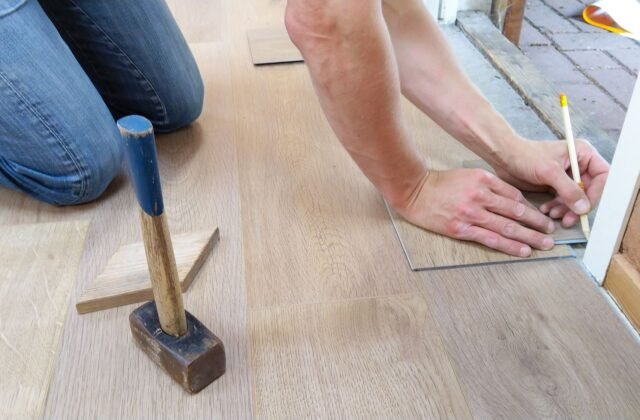
- Click-lock laminate or vinyl in rectangular rooms. The most forgiving combination: simple tools, reusable cut-offs, and mistakes that cost a plank rather than a day.
- You own (or can borrow) the core tools. A miter or circular saw, tapping block, pull bar, spacers, and knee pads. If you’re buying every tool new for one room, the economics tilt toward hiring.
- The subfloor is sound and flat. DIY estimating assumes a ready subfloor; leveling, squeak repair, and moisture mitigation are where DIY projects stall. Inspect first — the install checklist covers what to look for.
- You have uninterrupted time. A bedroom takes a focused weekend for a first-timer; a whole house takes several. Stretched across evenings, acclimated material sits waiting and motivation fades.
- The stakes are modest. A bedroom or home office is a good first project. The primary bathroom with its toilet flange, vanity, and waterproofing details is not.
When to Hire a Professional
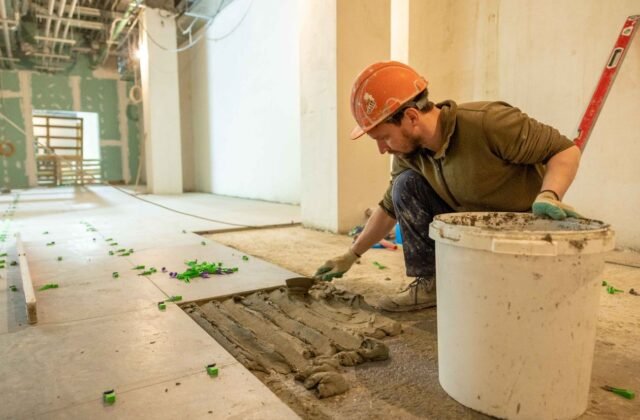
- Tile installations. Mortar mixing, trowel technique, lippage control, and grout work are genuinely skilled trades. Bad tile is expensive to remove and worse to live with.
- Solid hardwood nail-down or glue-down. Fastening schedules, moisture testing, and finish work reward experience; mistakes show permanently.
- Subfloor problems. Significant leveling, structural squeaks, or moisture issues are pro territory — the floor is only as good as what’s under it.
- Whole-house or multi-material projects. Pros sequence rooms, manage dye lots across large orders, and handle transitions between materials cleanly.
- Time-sensitive or rental turnovers. A pro crew finishes in days what takes a DIYer weeks — and vacancy or disruption has a cost too.
- Carpet (usually). Power stretchers, seam irons, and knee-kicker technique make pro carpet installation visibly better than DIY attempts, and labor is relatively cheap.
The Middle Path: Hybrid Approaches
It’s not all-or-nothing. Common splits:
- DIY the demolition and prep, hire the install. Removing old flooring and prepping the subfloor is labor-intensive but low-skill — it cuts the pro quote while leaving the skilled work to the skilled.
- Hire the difficult rooms, DIY the easy ones. Pro for the tiled bathroom, DIY for the laminate bedrooms — one order, two installers (you being one of them).
- DIY the install, hire the finishing. Less common, but some homeowners lay the field and hire out tricky transitions, stair nosings, or baseboard work.
Whichever split you choose, estimate the full material order once — the complete guide worked example shows how — and coordinate dye lots across whoever installs what.
What DIY Really Requires
Beyond tools and time, successful DIY flooring needs:
- Accurate estimating. A pro carries spare material and supplier relationships; a DIYer with a short order loses a weekend waiting on a reorder. Add the full waste allowance from the formula guide — learning-curve miscuts are real.
- Manufacturer instructions, read fully. Acclimation times, expansion gaps, stagger requirements, and subfloor specs aren’t suggestions — they’re warranty conditions.
- A dry layout before committing. The pro tips guide covers starter-wall planning and row-width checks that prevent the classic 1-inch final row.
- Realistic pacing. First-timers lay roughly 100–150 ft² per day of click-lock flooring once prep is done. Plan accordingly.
Related Guides
- Cost Guide — full project budgeting for DIY and pro scenarios.
- Complete Guide — the estimating walkthrough both paths need.
- Material Guide — which materials suit DIY installation.
- Install Checklist — pre-install verification for either path.
- Pro Tips — techniques that close the skill gap.
- Flooring Calculator FAQ — quick answers on quantities and cost.
Frequently Asked Questions
How much can I save installing flooring myself?
Typically 30–50% of the installed project cost, depending on material — the saving is the labor line minus tool costs and extra learning-curve waste. On a $1,364 pro laminate job, DIY runs roughly $774–$944.
What is the easiest flooring for a beginner to install?
Click-lock laminate or luxury vinyl plank in a rectangular room — simple tools, forgiving cuts, and no mortar, grout, or nail guns involved.
Should I attempt tile as a DIY project?
A small, simple backsplash-style area maybe; a bathroom floor as a first project, generally not. Tile mistakes are costly to fix, and waterproofing details matter. When in doubt, hire it.
Do I need special tools to install laminate?
A saw for cutting (miter, circular, or jigsaw), tapping block, pull bar, spacers, tape measure, and knee pads. Budget $80–$200 if buying new, less if borrowing.
Can I DIY prep and hire the install?
Yes — it’s one of the best cost/quality trade-offs. Demolition and subfloor prep are labor-heavy but low-skill; the install itself benefits most from experience.
Decide, Then Commit
Price both paths honestly — including tools, extra waste, and your time — then commit fully to the one you choose. Half-DIY (starting yourself, calling a pro mid-project to fix it) costs more than either path done properly. Get the quantities right first with the Flooring Calculator, read the manufacturer’s instructions end to end, and if you hire out, get the scope in writing before work begins.
Disclaimer: Calculator results are planning estimates based on the dimensions you enter. Actual material requirements and project costs vary with site conditions, product choice, and installer skill. Verify quantities with your supplier, get written quotes before hiring, and consult a licensed professional for structural, moisture, or code-related decisions.