Introduction
The box price is only the headline. A flooring project’s real cost includes the material itself, the underlayment beneath it, labor (if you’re hiring), removing the old floor, trim and transitions, and the small supplies that add up quietly — adhesive, grout, spacers, vapor barriers. Budgeting from the box price alone is how a “$600 room” becomes a $1,200 project.
The Flooring Calculator gives you the area number every cost estimate starts from — the order quantity in square feet or square meters, including waste. This guide builds the full budget on top of that number: material prices by floor type, labor rates, the line items people forget, and a worked cost example you can adapt to your own quotes.
The Cost Formula
Every flooring budget is the same equation, whether it’s one bedroom or a whole house:
Total cost = (Material price per ft² × Order quantity) + Underlayment + Labor + Removal + Trim and transitions + Supplies
The order quantity — area plus waste — comes straight from the calculator. Everything else is a line item you price separately. The formula-explained guide covers the area math in detail; this guide covers the dollars.
Material Costs by Floor Type
Material prices below are typical US retail ranges per square foot for the product alone (not installed), in approximate tiers. Local prices vary by region, brand, and grade — always price from actual quotes.
| Material | Material cost (per ft²) | Material cost (per m²) | Installed total (per ft²) |
|---|---|---|---|
| Laminate | $1.50–$4.00 | $16–$43 | $3–$8 |
| Luxury vinyl plank/tile | $2.00–$6.00 | $22–$65 | $4–$10 |
| Carpet (with pad) | $2.00–$5.00 | $22–$54 | $3–$8 |
| Engineered hardwood | $4.00–$9.00 | $43–$97 | $8–$16 |
| Solid hardwood | $6.00–$12.00 | $65–$130 | $10–$20 |
| Ceramic/porcelain tile | $2.00–$8.00 | $22–$86 | $7–$18 |
Note that tile material can be cheap while its installed total is high — tile labor is the most expensive of the common floor types because of mortar, grout, and slow setting. Conversely, hardwood material is expensive while a straightforward nail-down install is relatively fast. The material guide compares these floor types on durability and suitability, not just price.
Labor Costs
If you’re hiring an installer, labor is typically quoted per square foot of geometric floor area (before waste), not per box. Typical ranges:
- Laminate / vinyl click-lock: $1.50–$4.00 per ft² ($16–$43 per m²).
- Carpet: $1.00–$3.00 per ft² ($11–$32 per m²), often bundled with pad.
- Engineered / solid hardwood: $4.00–$8.00 per ft² ($43–$86 per m²).
- Tile: $5.00–$12.00 per ft² ($54–$130 per m²), higher for large-format or patterned layouts.
Get labor quotes that specify what’s included — subfloor prep, underlayment, baseboard removal and reinstall, and furniture moving are sometimes extras. A quote that seems cheap often just excludes them. Whether the savings justify doing it yourself depends on the material and your skill level — see the DIY vs pro guide.
The Line Items People Forget
These don’t appear on the box, but they appear on the invoice:
Old floor removal
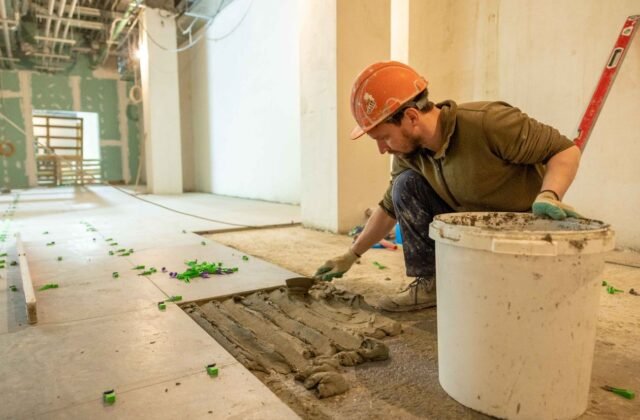
Tearing out old carpet, vinyl, or tile typically costs $1–$3 per ft² ($11–$32 per m²) when hired out, plus disposal fees. Tile and glued-down floors cost more to remove than floating floors.
Underlayment
$0.50–$1.50 per ft² ($5–$16 per m²) depending on type — basic foam, acoustic, or moisture-barrier combinations. Estimate the same area as the flooring, with the same waste allowance.
Trim and transitions
Baseboards, quarter-round, and transition strips between rooms. Budget $2–$6 per linear foot ($7–$20 per linear meter) installed for baseboard, and $10–$40 per doorway transition strip. Measure doorways and perimeter — linear footage, not square footage.
Subfloor repairs
Leveling compound, plywood patches, or squeak fixes. Allow a contingency of 5–10% of the project total — subfloor condition is the most common budget surprise. The install checklist covers what to inspect before ordering.
Supplies and delivery
Adhesive, grout, spacers, vapor barrier tape, and delivery fees. Typically $50–$200 for a room-sized project, more for tile (thin-set mortar and grout add up fast).
Worked Cost Example
Take the worked example from the complete guide: a 12 × 15 ft bedroom (180 ft² / 16.7 m²), with 10% waste → 198 ft² to order, installing laminate with a hired installer.
| Line item | Calculation | Cost |
|---|---|---|
| Laminate material at $2.50/ft² | 198 ft² × $2.50 | $495 |
| Underlayment at $0.75/ft² | 198 ft² × $0.75 | $149 |
| Labor at $2.50/ft² | 180 ft² × $2.50 | $450 |
| Carpet removal (existing) at $1.50/ft² | 180 ft² × $1.50 | $270 |
| Baseboard + transitions (allowance) | — | $120 |
| Supplies and delivery | — | $80 |
| Subtotal | $1,564 | |
| Contingency (8%) | $125 | |
| Total | ≈ $1,689 |
Note how the material ($495) is less than a third of the total — labor, removal, and accessories dominate. That’s normal, and it’s why the cheapest box isn’t always the cheapest project. Cross-checking the metric side: 198 ft² = 18.4 m² at $26.90/m² (=$2.50/ft²) gives the same $495 material cost.
Ways to Control the Budget
- Choose a simpler layout. Straight lay instead of diagonal saves both waste (5–10% vs 10–15%) and labor, since angled cuts are slow.
- Keep the old floor if it’s sound. Installing laminate or vinyl over a flat existing floor skips removal costs — check manufacturer requirements first.
- Reduce transitions. Running one material through adjoining rooms eliminates transition strips and looks better.
- Order accurately. A correct waste allowance avoids both the shortage reorder and the surplus of full boxes — the common mistakes guide covers the errors that inflate orders.
- Price the whole project, not the box. Compare materials on installed cost per ft² including underlayment, not on box price alone.
Related Guides
- Complete Guide — the full flooring estimating walkthrough with a worked example.
- Formula Explained — the area and waste math behind the numbers.
- Material Guide — hardwood, laminate, vinyl, tile, and carpet compared.
- DIY vs Pro — when doing it yourself actually saves money.
- Estimating Guide — step-by-step measuring and ordering.
- Flooring Calculator FAQ — quick answers on cost and quantities.
Frequently Asked Questions
What is the cheapest flooring to install?
Laminate and carpet typically have the lowest installed cost per square foot ($3–$8/ft²), because both the material and the labor are inexpensive relative to hardwood or tile.
Why is my flooring quote higher than the box price suggested?
The box price covers material only. Labor, underlayment, old-floor removal, trim, transitions, and supplies commonly add 1–2× the material cost to the project total.
How much should I budget for underlayment?
Budget $0.50–$1.50 per ft² ($5–$16 per m²) over the same order quantity as the flooring — same area, same waste allowance.
Is a contingency really necessary?
Yes — 5–10% of the project total. Subfloor repairs are the most common surprise; you can’t see the subfloor’s condition until the old floor comes up.
How do I compare two flooring quotes fairly?
Normalize everything to installed cost per square foot of geometric floor area, and check that both quotes include the same scope: removal, underlayment, trim, and transitions.
Build Your Budget
Start with the number that anchors everything: run your room dimensions through the Flooring Calculator to get the order quantity with waste, then multiply through each line item in the formula above with real local prices. Price the installed project, not the box — and keep the contingency. A budget built on the full line-item list has no surprises left to hide.
Disclaimer: Calculator results and the cost ranges in this guide are planning estimates. Actual costs vary with region, product, labor markets, and site conditions. Verify quantities with your supplier, get written quotes before committing, and consult a licensed professional for structural, moisture, or code-related decisions.