Introduction
Footing concrete is rarely the most expensive line on a foundation quote — excavation, labor, and rebar usually cost more than the concrete itself. An honest footing budget prices five components, not one, and the calculator’s volume number is only the starting point.
The Concrete Footing Calculator gives you the concrete quantity — run length, width, depth, and waste allowance in, cubic meters and cubic yards out. This guide turns that quantity into money: the five cost components, typical per-linear-metre ranges, a fully worked budget, and the levers that move the total. Rates below are illustrative examples for budgeting method, not quotes.
The Five Cost Components
A strip footing budget breaks into five parts:
1. Excavation
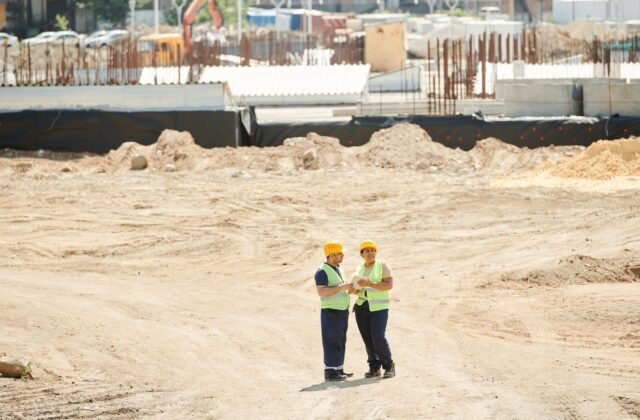
Digging the trench and disposing of the spoil. Cost scales with trench volume and soil type — rock or waterlogged ground digs slowly and expensively. The trench is deeper than the footing (it reaches below the frost line), so excavation volume is always several times the concrete volume, and loose spoil swells about 30% over its bank volume.
2. Concrete
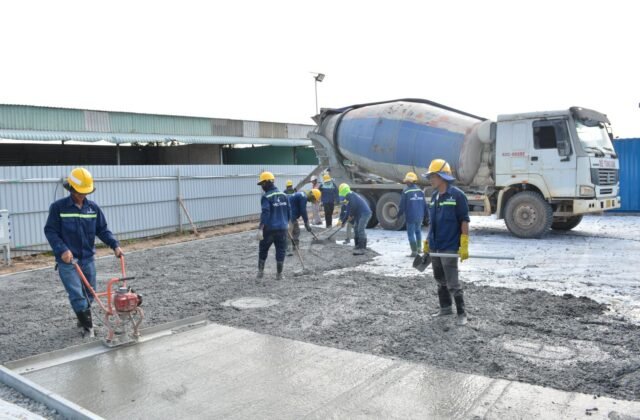
Ready-mix by the cubic yard/meter, or bagged mix for tiny runs. Ready-mix carries minimum-load charges and short-load fees, so very small footings pay a premium per unit; bagged mix only makes sense below roughly 1 m³ (1.3 yd³).
3. Reinforcement and formwork
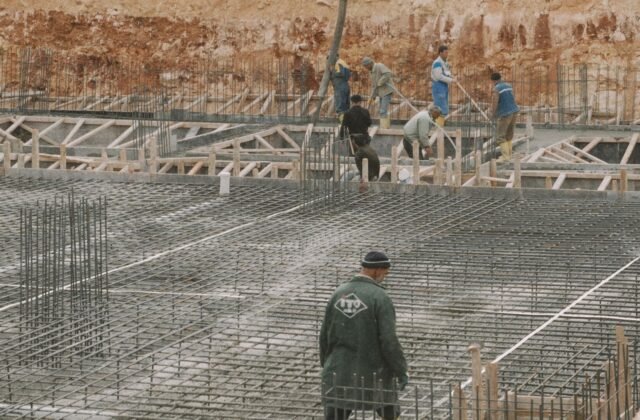
Longitudinal rebar, chairs, and any formwork. Straight trenches in firm soil are often poured directly against the earth; loose or sandy soil needs form boards. Rebar is priced per length plus laps — see the material guide for sizes and quantities.
4. Labor
The crew that sets out, digs (or supervises the excavator), places steel, pours, and strikes off. Most footing hours go into excavation and preparation, not the pour itself, which may take under an hour for a residential run.
5. Backfill and compaction
Filling the trench sides after the footing cures, compacted in layers. Often done with the excavated spoil, but imported granular fill costs extra where the spoil is unsuitable.
Typical Cost Ranges Per Linear Metre
The table below shows illustrative example rates for a standard residential strip footing (0.5–0.6 m / 20–24 in wide, trench ~0.9 m / 3 ft deep, firm soil, ready-mix). Use these to structure your budget, then replace every number with a local quote.
| Component | Example rate (per linear metre) | Example rate (per linear foot) |
|---|---|---|
| Excavation + spoil disposal | $30–$45 | $9–$14 |
| Ready-mix concrete | $35–$50 | $11–$15 |
| Rebar, chairs, formwork | $12–$20 | $4–$6 |
| Labor (place steel, pour, finish) | $50–$80 | $15–$24 |
| Backfill + compaction | $8–$12 | $2.50–$3.50 |
| Typical total | $135–$207 | $41–$63 |
Two things move the total more than anything else: trench depth (deeper frost lines mean more digging, disposal, and backfill) and site access (a pump where trucks can’t reach adds hundreds). A footing on a tight urban lot can cost double the same footing on open ground. For the quantity takeoff behind these rates, see the estimating guide.
Worked Example: Budgeting a 40 m Footing
Take the standard example: 40 m of strip footing, 0.6 m wide, 0.3 m deep, trench 0.9 m deep to clear the frost line, firm soil, 10% concrete waste. Using mid-range illustrative rates:
Step 1 — Concrete quantity. 40 × 0.6 × 0.3 = 7.2 m³; × 1.10 = 7.92 m³ (10.36 yd³) (cross-check: 131.23 × 1.97 × 0.98 ft = 254.3 ft³ = 9.417 yd³ × 1.10 = 10.36 yd³). At an illustrative $150/yd³: 10.36 × 150 = $1,554.
Step 2 — Excavation. Trench volume: 40 × 0.6 × 0.9 = 21.6 m³ (28.25 yd³). At an illustrative $45/yd³ for dig plus disposal: 28.25 × 45 = $1,271.
Step 3 — Steel and forms. Two continuous 12 mm bars over 40 m with laps ≈ 84 m (276 ft) of bar plus chairs: illustrative $380; formwork $220 for end boards and step forms (straight trench in firm soil, poured against the earth).
Step 4 — Labor and backfill. Illustrative crew cost for layout, steel placement, pour day, and strike-off: $2,400; backfill and compaction: $350.
Step 5 — Total. 1,554 + 1,271 + 380 + 220 + 2,400 + 350 = $6,175, or $154 per metre ($47 per foot) — inside the table’s typical range. Concrete is only about 25% of the total: the trench work dominates. Whether that total makes sense as DIY or hired work is covered in the DIY vs pro guide.
Ways to Control the Cost
- Keep the trench neat. Over-wide or ragged trenches fill with concrete you pay for. A clean, vertical trench in firm soil can be poured without forms.
- Right-size the width. Every extra 10 cm (4 in) of width across 40 m adds 1.2 m³ (1.57 yd³) of concrete. Size from the load calculation, not from habit — the formula guide shows how.
- Combine deliveries. If the project also needs a slab or piers, schedule one ready-mix visit — a second short load can cost nearly as much as the first.
- Step, don’t deepen, on slopes. Stepped footings follow the grade with level sections; a single deep trench to the lowest point wastes concrete along the whole high side.
- Time the excavation. Digging in dry conditions is faster and cheaper than fighting water or frozen ground; dewatering and frost protection are pure overhead.
Cost Mistakes That Blow the Budget
- Budgeting concrete only. The classic error: pricing 7.92 m³ of concrete and discovering excavation, steel, and labor triple the number.
- Forgetting spoil swell and disposal. 21.6 m³ in the ground becomes ~28 m³ loose (36.6 yd³) on a truck. Disposal fees and truck counts follow the loose volume.
- Ignoring access. If the mixer can’t reach the trench, a pump or crane adds a flat fee that dwarfs small concrete savings.
- Under-ordering and paying short-load fees. Rounding down to “save” half a yard triggers a second delivery costing more than the saved concrete.
- Rework from skipped steps. Pouring before the footing inspection, or on an unprepared trench bottom, risks rejection and re-excavation — the most expensive concrete is the concrete you pour twice.
Related Guides
- Concrete Footing Complete Guide — strip footing sizing, trench dimensions, and the full worked example.
- Concrete Footing Formula Explained — the width, volume, and rebar math derived step by step.
- Concrete Footing Estimating Guide — quantity takeoff: concrete, steel, excavation, and waste.
- Concrete Footing Pro Tips — pour-day and ordering advice that saves money and rework.
- Concrete Footing FAQ — quick answers to the most asked footing questions.
- Concrete Footing Checklist — verify everything before the concrete arrives.
Frequently Asked Questions
How much does a concrete footing cost per linear foot?
As an illustrative example, a standard residential strip footing typically budgets at roughly $41–$63 per linear foot all-in — excavation, concrete, steel, labor, and backfill. Concrete itself is usually only about a quarter of that total.
What is the most expensive part of a footing?
Usually excavation and labor, not concrete. In the 40 m example, digging and disposal ($1,271) plus labor ($2,400) exceed the concrete ($1,554). Trench depth and site access move the total more than concrete price.
Is it cheaper to mix footing concrete by hand?
Only below roughly 1 m³ (1.3 yd³), or about 65 eighty-pound bags. Above that, ready-mix is cheaper per unit and far faster; a 40 m footing needing 466 bags is not a hand-mix job.
How much does excavation add to footing cost?
Expect excavation and disposal to roughly match the concrete cost. The trench must clear the frost line, so its volume runs 2–3× the concrete volume — 21.6 m³ of digging versus 7.92 m³ of concrete in the worked example.
Can I reduce footing cost by narrowing the footing?
Only if the load calculation allows it. Every 10 cm (4 in) saved across 40 m saves ~1.2 m³ (1.57 yd³) of concrete — but an undersized footing risks settlement costing far more than the saved concrete. Size from the load, not the budget.
Do I need a pump for footing concrete?
Only if the mixer can’t reach within chute range (~4 m / 13 ft) of the trench. Where access is tight, budget a pump’s flat fee early.
Price It Out
Footing cost is an excavation project with a concrete purchase attached: budget the dig, the steel, the labor, and the backfill alongside the pour, and replace every illustrative rate here with a local quote. The Concrete Footing Calculator gives you the one number every supplier needs — the concrete volume. Take that number to two or three ready-mix suppliers and one excavation contractor, and you’ll have a real budget instead of a guess.
Disclaimer: Calculator results are planning estimates based on the dimensions you enter. Actual footing costs vary with soil conditions, site access, local labor and material rates, and code requirements. Verify quantities with your supplier and contractor, and consult a licensed professional or your local building authority for structural or code-related decisions.