Introduction
This case study is hypothetical and illustrative – a realistic composite built from typical trench dimensions, soil assumptions, and planning-range costs. It is not a report of an actual job, and no client, contractor, or location is implied. Use it as a worked planning exercise, not a bid.
The scenario: a homeowner needs a new water service line – 60 ft (18.29 m) of trench, 2 ft (0.61 m) wide, 4 ft (1.22 m) deep – run from the house to the municipal connection at the property line, in average loam soil, across a lawn. No rock, no pavement, utilities marked clear by 811. Here’s how the job gets estimated, planned, and budgeted end to end.
Follow along with the numbers in the Trench Volume Calculator. For the general method behind this walkthrough, see the complete guide.
The Estimate
Step by step, exactly as the calculator runs it:
Step 1 – Bank volume. 60 x 2 x 4 = 480 ft3 = 17.78 yd3 (18.29 x 0.61 x 1.22 = 13.61 m3 = 17.80 yd3 – cross-checks).
Step 2 – Over-excavation. 17.78 x 1.10 = 19.56 yd3.
Step 3 – Loose spoil. Loam at 25% swell: 19.56 x 1.25 = 24.4 yd3 to manage.
Step 4 – Backfill. 17.78 x 1.12 (compaction allowance) = 19.91 yd3, minus 0.19 yd3 for the 1-inch service line displacement = 19.7 yd3 of backfill needed.
Step 5 – Bedding. 6 in (15 cm) of gravel under the pipe: 60 x 2 x 0.5 = 60 ft3 = 2.2 yd3, plus 10% = order 2.5 yd3.
Step 6 – Hauling. 24.4 yd3 loose minus 19.7 yd3 held back for backfill = 4.7 yd3 surplus – one small dump trailer load off site, or spread and graded on site if there’s room.
The Plan
With numbers in hand, the job sequences like this:
- Permits and locates. Plumbing permit pulled (illustrative jurisdiction: 5-day turnaround); 811 ticket called in; marks photographed. This gates everything.
- Layout. Centerline painted 60 ft from house to curb stop; topsoil stripped along the route and stockpiled separately.
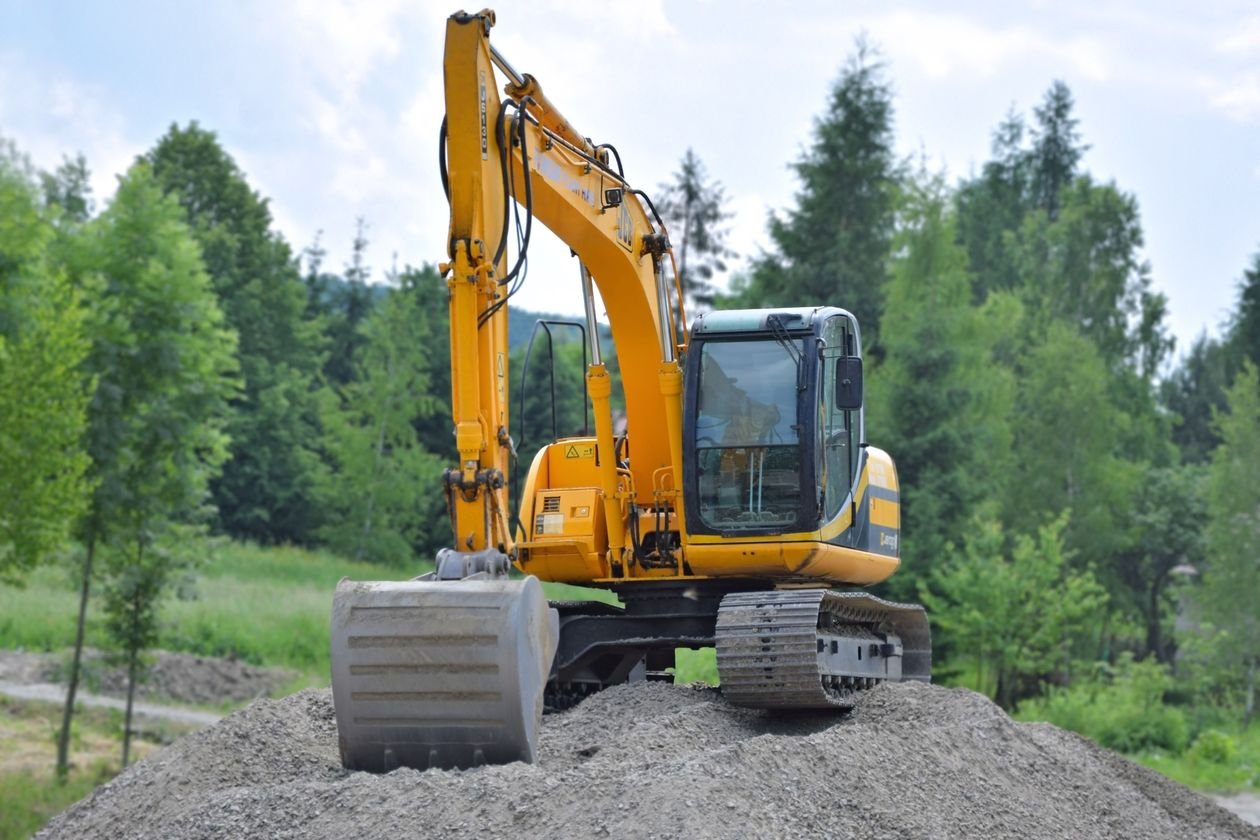
- Dig day. Mini-excavator (24-inch bucket) opens the trench in one day. Spoil cast to one side, kept 1 ft+ from the edge; bedding gravel staged on the other.
- Grade and bedding. Laser-set grade checked, 6 in of gravel shaped, water line laid and pressure-tested before any cover goes on.
- Backfill. Pipe zone hand-placed with select material 12 in over the pipe; remainder in 6-8 in lifts with a plate compactor. Topsoil respread on top.
- Restore. Rough grade, seed, and straw. Slight mound left to settle.
Note the depth: at 4 ft, this trench sits just under the 5 ft OSHA protective-system threshold – but the competent-person inspection, egress ladder, and daily checks still apply as good practice, and any sign of instability triggers protection regardless of depth. See the code compliance guide.
The Budget (Illustrative Planning Ranges)
| Line item | Basis | Typical range |
|---|---|---|
| Mini-excavator rental, 1 day + delivery | 1 day | $325-$600 |
| Plate compactor rental, 1 day | 1 day | $60-$120 |
| Gravel bedding, 2.5 yd3 delivered | 2.5 yd3 | $65-$140 |
| Surplus spoil haul-off, 1 trailer load | ~5 yd3 | $150-$300 |
| Permit + inspection fees | illustrative | $100-$300 |
| Topsoil, seed, straw | 120 ft2 | $100-$250 |
| DIY total (own labor) | $800-$1,710 |
A contractor bid for the same scope – digging, pipe, backfill, compaction, restoration – would typically land around $1,800-$3,500 in planning ranges, varying by region. The DIY path saves the labor cost but spends two to three weekends; the DIY vs pro guide frames that trade-off.
All costs are illustrative planning ranges in US dollars, not quotes. Regional labor rates, soil conditions, permit fees, and utility requirements will move these numbers – get local bids before budgeting.
What Could Go Wrong (and the Contingency)
- Rock at 3 ft: hammer rental or a contractor call-out; budget contingency 15-20% for unknown soil.
- Rain mid-job: open trench floods; pump on standby, tarp the spoil, never lay pipe in standing water.
- Unmarked utility: stop work, hand-expose, call the utility. The 811 marks are the plan; the shovel is the verification.
- Inspection failure: usually grade or bedding depth – re-checkable in an hour if caught before backfill. Never backfill before the inspection passes.
Lessons From the Exercise
- The chain matters more than any single number. Bank to swell to backfill to hauling – each step feeds the next, and skipping one breaks the plan.
- Hauling is sized on loose volume. 24.4 yd3 of spoil, not 17.78 – the trucks care about the bigger number.
- Bedding is cheap insurance. $65-$140 of gravel protects a pipe that costs far more to dig up and fix.
- Depth drives safety planning. At 4 ft you’re one foot from mandatory protective systems – plan the trench as if the rule already applies.
- Write it all down. Actual vs. estimated volumes, hours, costs – next job’s estimate starts here.
Related Guides
- Trench Complete Guide – the method this case study applies.
- Trench Cost Guide – the ranges behind this budget.
- Estimating Guide – measuring your own job this accurately.
- Trench Job Checklist – the pre-dig gates this scenario passed.
- Pro Tips – the field habits that keep a job like this on track.
Frequently Asked Questions
Is this case study based on a real job?
No. It is a hypothetical, illustrative composite using typical dimensions and planning-range costs, built as a teaching exercise. Your job’s numbers will differ – run them through the calculator.
How much does a 60 ft water line trench cost?
In illustrative US planning ranges: roughly $800-$1,710 DIY (rentals, materials, permits) or $1,800-$3,500 contracted. Soil, region, and permits move the number.
How long does a trench like this take?
A machine-dug 60 ft trench: one day to dig, one day for pipe and backfill, plus permit lead time. Hand-dug: one to three weeks of steady work.
How much spoil does a 60 x 2 x 4 ft trench make?
17.78 yd3 bank; 24.4 yd3 loose with over-excavation and 25% swell. Hold back ~19.7 yd3 for backfill; haul the ~5 yd3 surplus.
What permits does a water line trench need?
Typically a plumbing permit with inspections, plus 811 utility locates. Requirements vary by jurisdiction – verify locally before planning around them.
Get Your Number
This hypothetical job shows the full arc: estimate the chain, sequence the work, budget the ranges, and plan the contingencies. Your real job starts the same way – with dimensions in the Trench Volume Calculator and the safety and permit checks in the code compliance guide. Treat the numbers here as a template to fill with your own measurements and local quotes.
Disclaimer: This case study is hypothetical and illustrative, not a report of actual work. All costs are typical US planning ranges that vary by region, soil, and market conditions. Calculator results are planning estimates based on the dimensions you enter. Trench safety is governed by OSHA 29 CFR 1926 Subpart P and your local authority. Consult licensed professionals for bids, permits, and code-related decisions.