Introduction
“Structural steel” sounds like one material, but a steel package is a small family of them: wide-flange beams in one grade, hollow sections in another, bolts in two more, plus primer, paint, or galvanizing on top. Each material has its own price behavior and its own job — and choosing the right one is part of what keeps a steel estimate honest.
The Structural Steel Cost Calculator prices tonnage, but the tonnage has to be the right steel in the first place. This guide covers the grades, shapes, fasteners, and coatings you’ll encounter — what each is, where it’s used, and what it costs relative to the baseline.
Steel Grades: The Baseline and the Alternatives
A992 Grade 50 — the workhorse
Nearly all wide-flange beams and columns in US construction are A992, with a minimum yield strength of 50 ksi (345 MPa). It is the default “structural steel” behind the $1,200–$2,000/ton material planning range. When someone quotes “steel” without a grade, they almost always mean A992 wide-flange.
A36 — the legacy grade
A36 (36 ksi / 250 MPa yield) was the old standard and still appears for plates, angles, and miscellaneous steel. It’s generally priced similarly to or slightly below A992 for common products, but engineers specify it less often for primary framing today.
A572 Grade 50 — the plate grade
Used heavily for plates, bars, and connection material. Functionally similar strength to A992; you’ll see it on connection plates and gussets in the shop’s material list.
A500 — hollow structural sections
HSS (hollow structural sections — square, rectangular, and round tubes) are typically A500 Grade B or C. HSS columns are popular where appearance matters or where biaxial strength helps; they cost more per ton than wide-flange but can use less total steel in the right application. How material choice flows into the per-ton budget is covered in the cost guide.
Grade selection is the structural engineer’s decision, driven by strength, weldability, and availability — not the estimator’s. Never substitute grades to chase a price; the code compliance guide explains why the spec matters.
Shapes: What the Members Actually Are
| Shape | Example | Typical use | Weight example |
|---|---|---|---|
| Wide-flange (W) | W16×50 | Beams and columns — the primary frame | 50 lb/ft (74.4 kg/m) |
| HSS square/rectangular | HSS6×6×3/8 | Columns, bracing, architecturally exposed steel | Varies by wall thickness |
| HSS round (pipe) | HSS8.625×0.322 | Columns, bracing, bollards | Varies by wall thickness |
| Angle (L) | L4×4×3/8 | Bracing, lintels, connection material | 9.8 lb/ft (14.6 kg/m) |
| Channel (C) | C10×20 | Purlins, girts, miscellaneous framing | 20 lb/ft (29.8 kg/m) |
| Open-web steel joist | 24K7 | Floor and roof joists in light frames | ~10–25 lb/ft (15–37 kg/m) |
| Plate / bar | PL 1/2×12 | Base plates, gussets, connection plates | By thickness and width |
Reading a designation: W16×50 = wide-flange, ~16 in deep, 50 lb per foot. L4×4×3/8 = angle with 4 in legs, 3/8 in thick. HSS6×6×3/8 = 6 in square tube with 3/8 in walls. Joist designations (like 24K7) come from the joist manufacturer’s tables, which also give the weight per foot you need for takeoff.
For a quick-reference table of common wide-flange weights, see the formula-explained guide.
Fasteners: Bolts and Welds
Structural bolts
Field connections are overwhelmingly bolted. The two standard grades are A325 (the common structural bolt) and A490 (higher strength, used where A325 won’t do). Bolts, nuts, and washers are a modest material cost — typically captured in a $200–$500/ton connection allowance — but the labor of installing them is a major part of erection cost.
Anchor bolts
The bolts cast into concrete foundations that the steel columns bolt to. They’re cheap steel but a coordination hotspot: misplaced anchor bolts are one of the most common (and expensive) field problems. Verify who supplies and who sets them — it’s a classic scope-gap item between the concrete and steel packages.
Shop welds vs. field welds
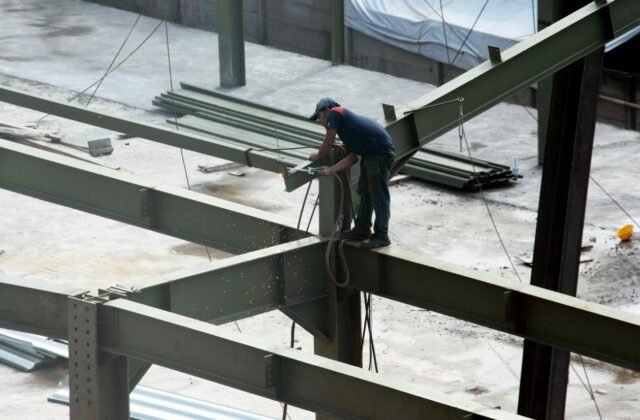
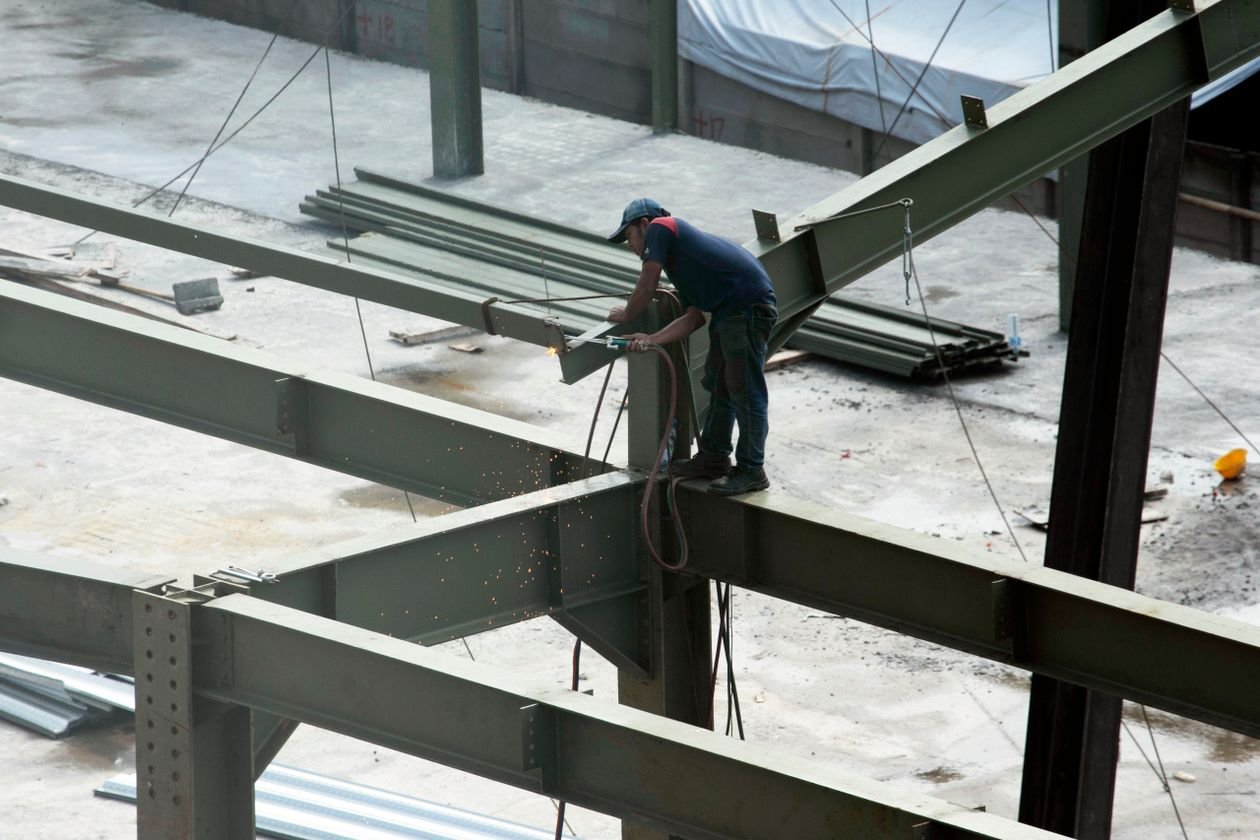
Welding done in the shop — flat position, controlled environment — is far cheaper per inch than welding done in the field, hanging off a lift. Designs that maximize shop welding and keep field work to bolting erect faster and cheaper. When the drawings show extensive field welding, expect the fabrication and erection rates to sit at the top of their ranges.
Coatings: Protection Has a Price
| Coating | Typical planning cost | When it’s used |
|---|---|---|
| Shop primer (1 coat) | Included in fabrication | Default — protects steel during shipping and erection |
| Finish paint system | $100–$300/ton add-on | Exposed steel, corrosive or coastal environments |
| Hot-dip galvanizing | $300–$600/ton add-on | Outdoor structures, marine exposure, low-maintenance designs |
| Fireproofing (spray-applied) | Separate trade, ~$2–$6/ft² floor area | Code-required fire ratings — budget separately |
| Intumescent (thin-film) fire coating | Premium add-on, project-specific | Exposed steel needing a fire rating with a finished look |
Two cautions: primer is not a finish coat — if the steel will be visible, budget the finish system. And galvanizing must be specified before fabrication, because connection detailing changes for galvanized steel (vent and drain holes, for instance). Late coating decisions cause rework — which is why deciding coatings early is one of the highest-value moves in the pro tips guide.
What About Stainless and Aluminum?
Occasionally specified for corrosive environments or appearance, but at multiples of carbon-steel cost and with different fabrication requirements. If your project calls for them, the per-ton ranges in this guide don’t apply — get material-specific quotes. For 99% of structural frames, the carbon steels above are the whole story.
Related Guides
- Complete Guide — the full overview with a start-to-finish worked example.
- Cost Guide — per-ton pricing for every cost layer.
- Formula Explained — how member weights and tonnage are computed.
- Estimating Guide — the takeoff process from drawings to budget.
- Pro Tips — practices that keep material choices economical.
- FAQ — quick answers to common steel questions.
Get Your Number
Know your materials and the estimate sharpens: A992 wide-flange at $1,200–$2,000/ton as the baseline, HSS and connection steel on top, bolts and welds in the connection allowance, and coatings chosen early — not as an afterthought. Build your member schedule from the right shapes and grades, then price it in the Structural Steel Cost Calculator. And remember: grade and size selection belong to the licensed structural engineer — the estimator’s job is to price the engineer’s frame accurately, not to redesign it.
Disclaimer: Calculator results are planning estimates. Actual steel costs vary with market prices, project complexity, and regional labor rates. Verify pricing with your supplier and fabricator, and consult a licensed professional or your local building authority for structural or code-related decisions.