Introduction
The swell factor is the highest-leverage input in the Spoil Swell Calculator — a 10-point error in the factor moves every downstream number (loose yards, truckloads, tipping fees, fill orders) by 10%. This guide covers the six soil types you’ll actually encounter, how each one swells on excavation and shrinks under compaction, and which materials are worth reusing. All factors below are typical planning ranges; site conditions, moisture, and excavation method move real numbers around them.
How Soil Type Controls Swell and Shrink
Swell is about particle structure. Granular soils (sand, gravel) have particles that re-settle easily, so they fluff up modestly and re-compact readily. Cohesive soils (clay) tear into clods that trap large voids, so they swell more and compact less willingly. Rock doesn’t have soil structure at all — blasting and ripping create angular fragments with enormous void space, hence the 40–60% range. Moisture shifts every material toward the high end of its range, and the excavation method matters as much as the material: blasted rock swells more than ripped rock, and a sheepsfoot roller compacts further than a plate compactor.
| Soil type | Typical swell | Typical shrink (compaction) | Backfill suitability |
|---|---|---|---|
| Topsoil | 10–15% | 10–15% | Poor — organic content |
| Sand | 10–15% | 10–15% | Good — compacts well |
| Gravel | 10–15% | 10–15% | Excellent — free-draining |
| Common earth | 20–25% | 20–25% | Good — the standard backfill |
| Clay | 25–35% | 25–35% | Fair — moisture-sensitive |
| Rock (blasted/ripped) | 40–60% | 40–60% | Good as engineered fill |
Topsoil (10–15% Swell)
The dark, organic surface layer — usually the top 150–300 mm (6–12 in). It swells modestly because it’s already loose, but its organic content makes it unsuitable as structural backfill: organics decompose, settle, and hold water. Strip it separately, stockpile it for landscaping reuse, and estimate it with its own 10–15% factor. A 200-BCY topsoil strip at 12% becomes 200 × 1.12 = 224 LCY (152.9 m³ bank → 171.3 m³ loose: 200 × 0.7645549 = 152.91; × 1.12 = 171.26).
Sand and Gravel (10–15% Swell)
Granular materials are the best-behaved in the table: low swell, easy compaction, free drainage. They re-settle under their own weight, so stockpiles slump to a lower angle of repose and the swell stays near the bottom of the range. As backfill they’re excellent — gravel in particular needs minimal compaction effort to reach density. The main estimating trap is bulking when mixed: sand filling the voids in a gravel load changes the volume behavior of the blend, so estimate mixed aggregates conservatively.
Common Earth (20–25% Swell)
The default category: mixed loams and ordinary excavation material that isn’t cleanly sand, clay, or rock. At 25% it anchors the industry’s favorite reference — 100 BCY → 125 LCY (76.5 m³ → 95.6 m³). Common earth compacts reliably into good structural backfill with standard rolling. When a geotechnical report doesn’t name the soil, 20–25% is the planning assumption — but “common earth” on the plan should still be confirmed with a test pit, because a clay pocket changes the factor for that portion. The estimating guide shows how to split mixed cuts by layer.
Clay (25–35% Swell)
Clay is the troublemaker. It excavates in sticky clods that trap large air voids — hence swell up to 35% — and it compacts reluctantly, needing careful moisture control and sheepsfoot rolling. Wet clay is the worst case on both ends: higher swell going out, harder compaction coming back, and weight-limited truckloads because saturated clay is dense. A 200-BCY clay cut at 30% becomes 200 × 1.30 = 260 LCY (152.9 m³ → 198.8 m³). As backfill, clay is acceptable only at controlled moisture — over-wet clay fill will settle and shift regardless of compactive effort. Never use the low end of the clay range for haul-off planning after rain.
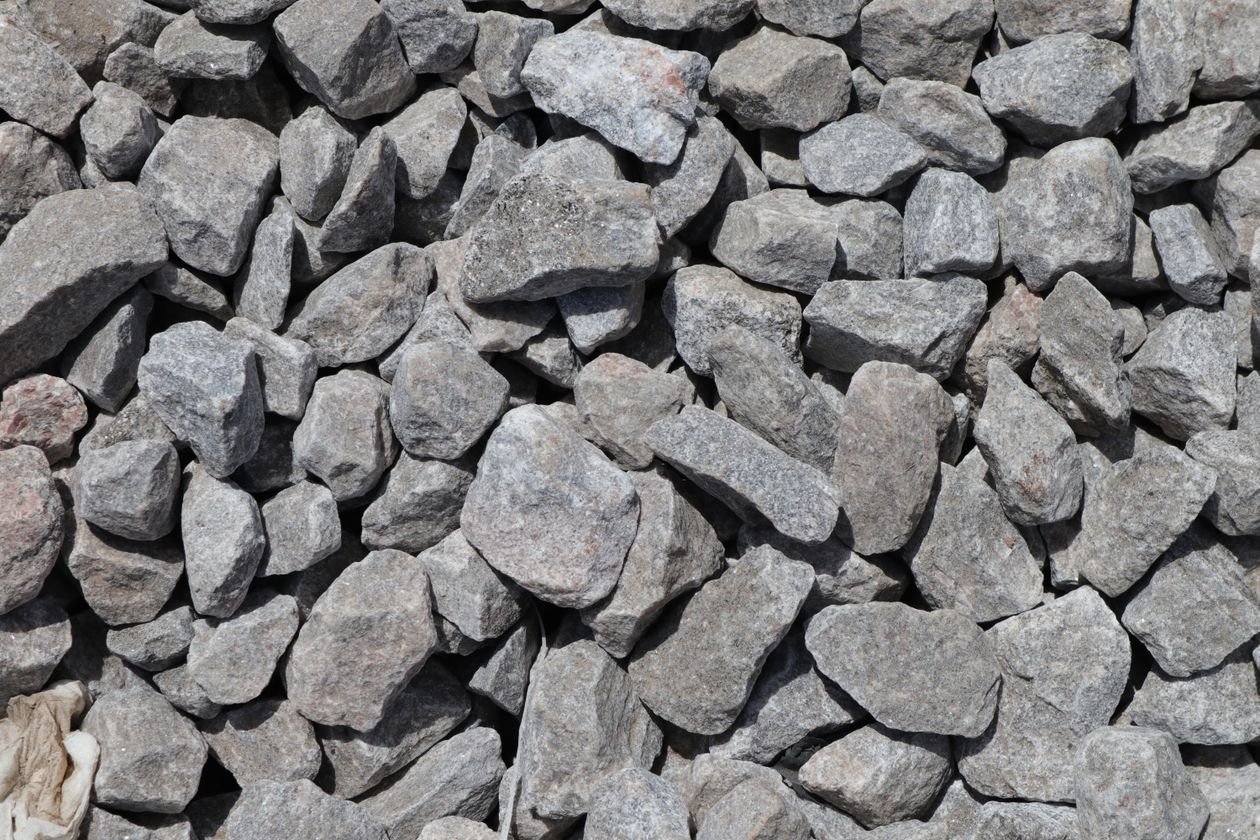
Rock — Blasted or Ripped (40–60% Swell)
The widest range and the least predictable. Blasting shatters rock into angular fragments with 40–60% void space; ripping produces larger, tighter pieces toward the lower end. Because the range spans 20 points, method-specific judgment dominates: budget toward 60% for blasted rock unless the blasting crew’s experience on similar ground says otherwise. A 200-BCY rock cut at 50% becomes 200 × 1.50 = 300 LCY (152.9 m³ → 229.4 m³). Crushed and graded, rock makes excellent engineered fill — but it must be placed in controlled lifts; dumped rock fill settles unpredictably. Haul-off is where the cost bites: at 50% swell, trucks run half again the bank volume.
Worked Comparison: One Cut, Three Soils
A 200-BCY excavation (152.9 m³ bank) through different materials shows why identification matters:
- Topsoil at 12%: 200 × 1.12 = 224 LCY (171.3 m³) → 224 ÷ 12 = 18.7 → 19 tri-axle loads.
- Clay at 30%: 200 × 1.30 = 260 LCY (198.8 m³) → 260 ÷ 12 = 21.7 → 22 loads.
- Blasted rock at 50%: 200 × 1.50 = 300 LCY (229.4 m³) → 300 ÷ 12 = 25 → 25 loads.
Same hole, six loads of difference between topsoil and rock — at an illustrative $150 per load, that’s a $900 swing on hauling alone, before tipping fees. The cost guide builds full budgets from these load counts.
Reusing Spoil: What Compacts and What Doesn’t
Reusing excavated material as backfill erases a haul-off load and a fill purchase simultaneously — but only suitable material qualifies. Good candidates: sand, gravel, and common earth, which compact to reliable density with standard equipment. Conditional: clay at controlled moisture with sheepsfoot compaction; crushed rock placed in engineered lifts. Reject: topsoil and organic material (decomposes and settles), debris-laden fill, and contaminated soil. When reuse is planned, the backfill quantity runs the shrink formula: loose stockpile ÷ (1 + shrink) = compacted yards in place. The derivation is in the formula guide, and the FAQ answers the common reuse questions.
Related Guides
- Spoil Swell Calculator: Complete Guide — the full method: terms, formulas, worked example.
- Spoil Swell Calculator: Formula Explained — where the swell and shrink formulas come from.
- Spoil Swell Calculator: Estimating Guide — splitting mixed cuts by soil layer.
- Spoil Swell Calculator: Pro Tips — field habits for honest soil identification.
- Spoil Swell Calculator: Cost Guide — how soil type moves the hauling budget.
Get Your Number
Pick the factor from the soil, not from habit: confirm the material with a test pit, split mixed cuts by layer, and nudge wet conditions toward the high end of the range. Then run each layer through the Spoil Swell Calculator and add the loose volumes — the total is your truck count, your tipping budget, and your stockpile size in one number.
Disclaimer: Swell and shrink ranges on this page are typical planning values; actual behavior varies with site conditions, moisture, and excavation and compaction methods. Calculator results are planning estimates. Verify against geotechnical data and site conditions, and consult a licensed professional or your local authority for structural or code-related decisions.

2 comments