Introduction
Renting a mini-excavator for the weekend and digging your own pool hole is one of the most tempting ideas in owner-builder construction — and one of the most mispriced. The rental rate is the smallest part of a DIY dig; the real costs are haulage, depth control, your time, and the risk of a hole the pool crew has to fix. Sometimes DIY wins clearly; sometimes hiring out is cheaper once everything is counted. This guide prices both sides honestly.
The Pool Excavation Calculator gives both approaches the same starting point — bank volume, loose volume, and truckloads. Run your numbers there, then decide who should move that dirt. Field practices for either approach are in the pro tips guide.
What Each Option Really Includes
The comparison only works if both sides count everything. DIY rental = machine rental + delivery, fuel, your labor days, haulage, depth-control tools, permits, the locate, and rework risk. Hired excavation = the contractor’s per-yard or lump-sum price (machine, operator, fuel, usually haulage coordination) plus your management time and the same permits. Hybrid — you manage the site while a hired operator runs the machine by the day — often beats both.
This is for owner-builders weighing the rental counter against the contractor’s quote. Hired-side cost components are detailed in the cost guide.
Key Terms and Variables
Mini / Midi Excavator
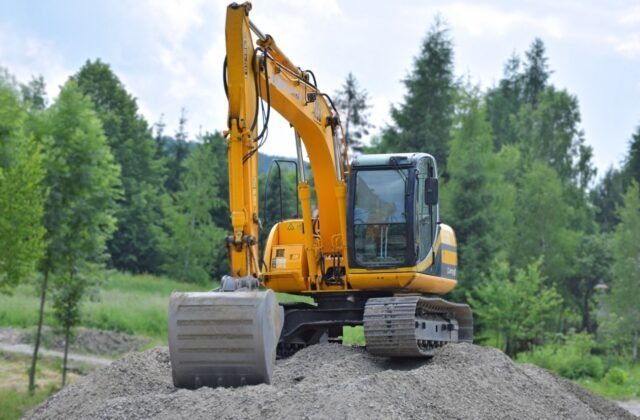
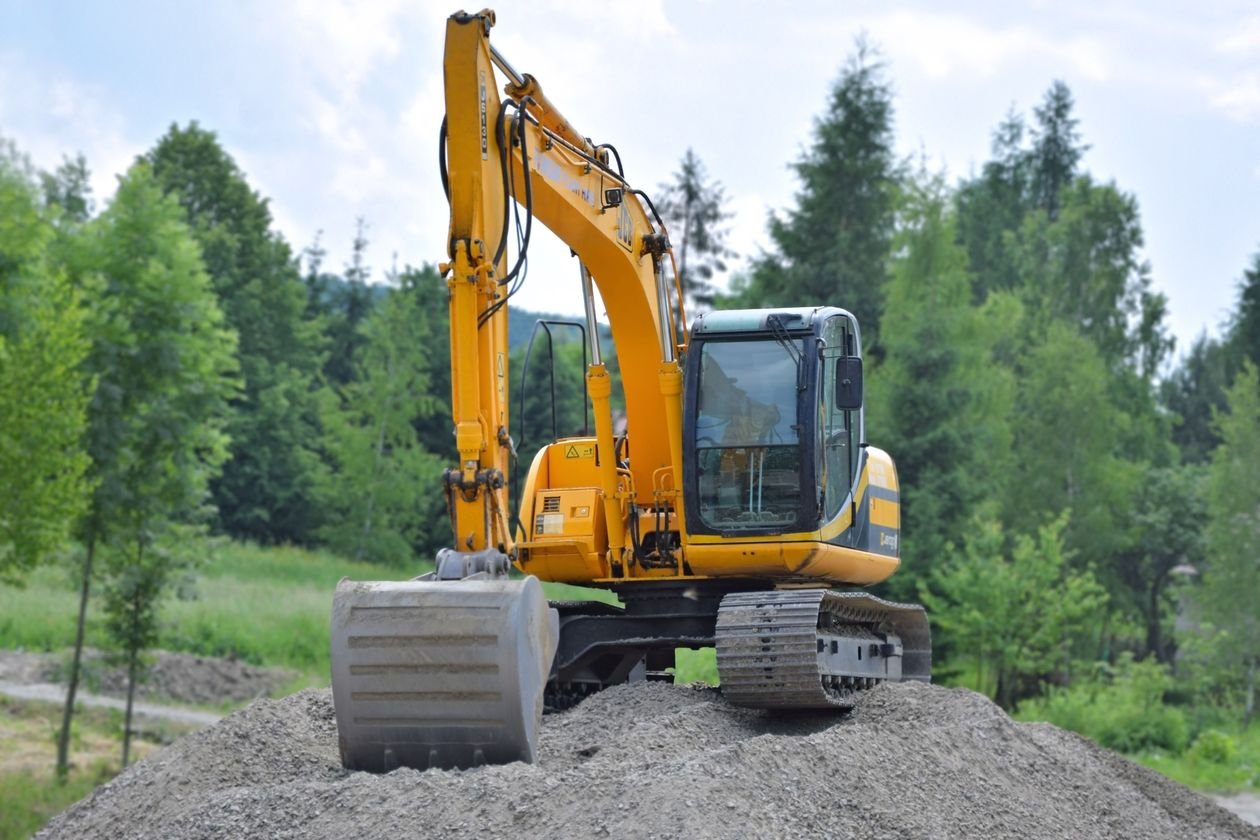
Rental-class machines (1.5–8 tonnes). A 3.5-tonne mini digs a standard pool hole but slowly — real-world production is a fraction of a full-size machine’s. Illustrative rental: $300–$600/day plus delivery.
Day Rate (Operator + Machine)
Hiring machine with operator by the day: illustrative $1,200–$2,500/day. The operator’s experience is most of what you’re buying.
Haulage
The great equalizer — 13 truckloads cost the same whether you dig or the contractor digs. DIY doesn’t make soil disappear; budget hauling identically on both sides.
Rework Risk
Fixing a DIY hole: over-dug floors needing engineered fill, under-dug working room finished by hand. Unpriced until it happens — which is why it matters.
| Cost item | DIY rental (illustrative) | Hired (illustrative) |
|---|---|---|
| Machine + operator | $300–$600/day × 3–5 days | In per-yard/lump price |
| Delivery / mobilization | $150–$400 each way | $300–$1,000 flat |
| Fuel | $100–$250 | Included |
| Haulage (13 loads) | $2,600–$4,500 | $2,600–$4,500 |
| Your labor | 3–6 days of your time | Management only |
| Depth-control tools | Laser rental ~$75–$150/day | Contractor’s equipment |
| Rework risk | Real; unpriced | Contractor’s responsibility |
The Formulas Involved
Formula 1: True DIY cost
DIY = rental × days + delivery × 2 + fuel + haulage + tools + permits + (your days × your day value)
The last term is the one DIY estimates drop. Even valued conservatively, 4–6 days is a four-figure number.
Formula 2: Hired cost
Hired = bank volume × per-yard rate + haulage + mobilization + permits
From the cost guide’s example: 118.7 yd³ × $50 + $3,265 haul + $500 mobilization ≈ $9,700 before contingency.
Formula 3: DIY day count
DIY days ≈ bank volume ÷ mini-excavator daily production (roughly 25–45 yd³/day in real backyard conditions)
119 yd³ ÷ 35 ≈ 3.4 digging days — before haulage coordination.
Formula 4: The break-even test
DIY wins if: DIY total + risk allowance < hired quote (use 10–20% of the DIY total as the risk allowance)
Formula 5: Depth tolerance cost
Rework ≈ over-dug volume × engineered-fill rate (illustrative $50–$100/m³ placed)
Over-digging the floor 0.3 m across 55 m² = 16.5 m³ of fill — one careless afternoon can erase the rental savings.
Worked Example: Both Sides of the Standard Dig
Standard pool — 118.7 yd³ bank, 148.4 yd³ loose, 13 loads — at illustrative mid-range figures:
Step 1 — Hired. 118.7 × $50 = $5,935 + $3,265 haul + $500 mobilization = $9,700.
Step 2 — DIY machine. 3.5-tonne mini $450/day × 4 = $1,800 + delivery $500 + fuel $175 + laser $200 = $2,675.
Step 3 — DIY haulage. Same 13 loads × $250 = $3,250.
Step 4 — DIY labor + risk. 5 days × $250 = $1,250 + 15% risk on $5,925 = $889 → $2,139.
Step 5 — Compare. DIY $8,064 vs. hired $9,700 — a $1,636 saving for five days of hard labor plus the rework risk. Value your time at $400/day and the saving shrinks under $900.
Metric check: bank 90.75 m³, loose 113.4 m³ ✓. DIY saves roughly 10–20% on a straightforward soil dig if the site is open and you hit no rock or water — change any of those and hiring wins on cost and risk. The hybrid option (hired operator, your site management) often beats both; see the pro tips guide.
Common Variations
- Small plunge pools (30–60 yd³): DIY’s best case — a mini finishes in 1–2 days while contractor minimums hurt the hired side.
- Rock sites: DIY is off the table for hammer work — hire it. Slow, dangerous, and schedule-killing without experience.
- Tight urban lots: contractors own the small machines and the street-permit experience; the DIY advantage shrinks.
- Builder-bundled excavation: compare the builder’s excavation allowance as a third bid — it sometimes wins on coordination alone.
Mistakes That Distort Results
- Counting only the rental rate. Delivery, fuel, haulage, tools, permits, and your days are all real — the rental is often under half the DIY total.
- Valuing your time at zero. Price it and let the comparison be honest.
- Assuming contractor production rates. Schedule DIY on mini-excavator production (25–45 yd³/day), not full-size-machine production.
- Forgetting haulage on the DIY side. 13 loads is 13 loads regardless of who digs — see the material guide.
- No depth control. Rent the laser, set grade stakes — “about 6 feet” by eye is how savings become rework bills.
- Skipping locate and permits because “it’s my yard.” Strikes and stop-work orders don’t discount for DIY — see the code compliance guide.
Related Guides
- Complete Guide — the volume numbers both options start from.
- Cost Guide — hired-side pricing in full detail.
- Pro Tips — field practices for whichever option you choose.
- Code Compliance — permits, locates, and safety rules that apply to DIY too.
- Excavation Checklist — the execution sequence for dig day.
Frequently Asked Questions
Is it cheaper to dig my own pool?
Sometimes — roughly 10–20% on straightforward soil if you value your time modestly. The saving evaporates with rock, water, tight access, or rework. Price both sides fully.
What size excavator do I need?
A 3.5–8 tonne mini/midi handles a standard residential pool in soil. On tight lots, reach and swing radius matter more than bucket size.
How long would a DIY dig take?
Plan 3–5 digging days for a standard pool with a 3.5-tonne mini in soil, plus haulage coordination. Double it mentally for clay, rock, or restricted access.
What’s the biggest DIY risk?
Depth control — over-dug floors mean imported engineered fill at $50–$100/m³ placed. Rent the laser; set grade stakes.
When should I definitely hire out?
Rock, high water table, tight access near structures, digs over ~2.5 m deep, or any site where a mistake threatens a foundation, utility, or neighbor’s property.
Get Your Number
The decision is arithmetic plus self-knowledge: price both sides completely — machine, haulage, your days, and an honest risk allowance — against the same volume from the Pool Excavation Calculator. If DIY wins clearly on an open soil site, go in prepared; if the numbers are close, hire the certainty. Either way, the locate gets called and the depths get staked before any bucket touches dirt.
Disclaimer: Cost figures are illustrative planning ranges, not quotes, and vary by market. Excavation involves serious safety risks — utility strikes, cave-ins, equipment operation. DIY excavators must call the local utility-locate service, follow OSHA or local excavation safety requirements, and consult licensed professionals for soil, slope, and dewatering decisions. Verify permit requirements with your local building authority.