Introduction
“Mulch” isn’t one product — it’s a category covering everything from shredded bark to river stone, and the material you choose affects the depth you spread, the volume you order, how often you reapply, and what you pay. Picking the wrong material for the bed is how people end up re-mulching in six months or fighting weeds through a too-thin layer.
Once you’ve chosen a material, the Mulch Calculator converts your bed dimensions and the material’s recommended depth into cubic yards and bag counts. This guide covers the materials themselves: what each type is, where it shines, what depth to use, and the trade-offs to weigh. The volume math for any of them is in the complete guide.
Organic vs Inorganic: The Fundamental Split
Every mulch is either organic (once-living material that decomposes) or inorganic (stone, rubber, or fabric that doesn’t). The split drives almost every decision:
- Organic mulches decompose over 1–2 years, enriching the soil as they break down — but they need annual top-dressing to maintain depth and appearance.
- Inorganic mulches are effectively permanent — no renewal cost — but they don’t feed the soil, they heat up more in sun, and they’re miserable to remove or plant through later.
For planting beds, organic mulch is the default professional choice: plants benefit from the soil improvement, and the annual refresh is cheap. Inorganic makes sense for paths, playgrounds, and beds you never intend to plant. Cost comparisons for both are in the cost guide.
Organic Mulch Types Compared
| Type | Recommended depth | Decomposition | Best for | Watch out for |
|---|---|---|---|---|
| Shredded bark / hardwood | 3–4 in (7.5–10 cm) | Moderate (1–2 yrs) | General landscape beds; knits together, resists washing | Dyed versions can fade; verify dye is non-toxic |
| Bark nuggets | 3–4 in (7.5–10 cm) | Slow (2–3 yrs) | Flat beds, around shrubs; stay put, slow to break down | Float and migrate in heavy rain; poor on slopes |
| Wood chips | 3–4 in (7.5–10 cm) | Slow | Paths, large natural areas; often cheapest in bulk | Fresh chips can tie up nitrogen at the soil surface |
| Pine straw / pine needles | 3–4 in (7.5–10 cm) | Moderate | Slopes (interlocks well), acid-loving plants, Southern US landscapes | Fluffs enormously — estimate at settled depth; wind loss |
| Compost | 1–2 in (2.5–5 cm) | Fast (months) | Vegetable gardens; feeds soil while mulching | Too rich/thick can smother roots; weed seeds if unfinished |
| Leaf mulch | 2–3 in (5–7.5 cm) | Fast (1 season) | Woodland beds, free material from your own trees | Mats down when wet; shred first for best results |
Shredded bark
The workhorse of landscape beds. Shredded (as opposed to chipped) bark fibers interlock, forming a mat that resists wind and water erosion better than any other organic mulch. Double-shredded is finer and more uniform; single-shred is chunkier and cheaper. Dyed bark (black, brown, red) is the same product with colorant — widely used, but confirm the dye is certified non-toxic if you have pets or vegetable beds nearby.
Bark nuggets
Chunky pieces of bark in graded sizes. They decompose slowly and look tidy, but their size is a liability on slopes and in heavy rain — nuggets float. Better for flat beds and around established shrubs than for erosion-prone spots. Because they’re coarse, 3–4 in is needed for weed suppression; at 2 in, light reaches the soil between nuggets.
Wood chips
Often the cheapest bulk option where tree services operate — arborist chips are sometimes even free for the hauling. Coarse and slow to decompose, excellent for paths and large naturalized areas. The nitrogen caveat is real but manageable: fresh chips at the soil surface temporarily lock up nitrogen as microbes break the wood down. Keep fresh chips as a top layer rather than tilling them in, and prefer aged material around heavy feeders.
Pine straw / pine needles
Standard in the Southeast US and excellent on slopes, where the needles interlock and stay put. Light to handle and quick to spread by hand. The estimating trap: a bale fluffs to several times its settled depth, so always estimate at the settled 3–4 in. Acidification of soil is often overstated — the effect is modest — but it’s a reasonable pairing with acid-loving plants like azaleas and blueberries regardless.
Compost and leaf mulch
These are soil food first and mulch second. A 1–2 in compost layer on a vegetable garden suppresses weeds modestly while feeding the soil — but it decomposes in months, not years, so it’s a seasonal application, not a multi-year one. Shredded leaves are free and excellent in woodland-style beds; run a mower over them first, since whole leaves mat into a soggy layer that sheds water.
Inorganic Mulch Types Compared
| Type | Recommended depth | Lifespan | Best for | Watch out for |
|---|---|---|---|---|
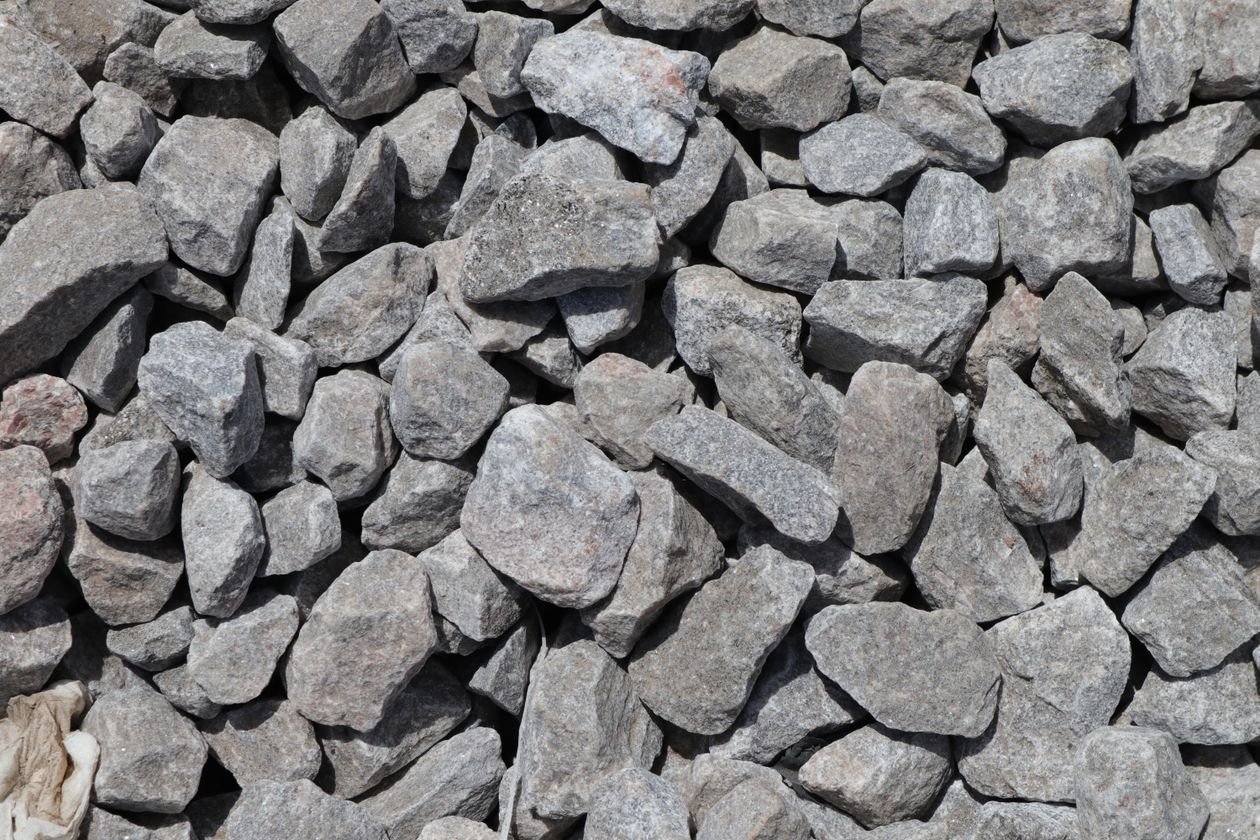
| Stone / gravel | 2–3 in (5–7.5 cm) | Permanent | Paths, xeriscapes, beds you won’t replant | Heats soil; migrates into lawn; hard to remove |
| Rubber mulch | 3–6 in (7.5–15 cm) | 10+ years | Playgrounds (fall cushioning), high-traffic areas | Highest cost; heat retention; check playground safety standards |
Stone is usually sold by weight (tons) rather than volume — roughly 1.3–1.5 tons per cubic yard depending on stone type, though this varies enough that you should confirm with your supplier. It’s a one-time cost with no renewal, which can beat organic mulch on a 5-year horizon for beds that never get replanted. Rubber mulch’s niche is playgrounds, where depth is driven by fall-height safety standards rather than weed control — verify the required depth against your local playground safety guidance, not a gardening rule of thumb.
Matching Material to the Job
- Foundation beds and borders: shredded bark, 3 in. The default for a reason.
- Slopes: shredded bark or pine straw (interlocking); avoid nuggets and stone that migrate.
- Vegetable gardens: compost or shredded leaves, 1–2 in; avoid dyed mulches and fresh wood chips near heavy feeders.
- Paths: wood chips, 2–3 in; cheap, comfortable underfoot, easy to refresh.
- Around trees: any organic bark, 2–3 in, in a wide donut — never a volcano against the trunk.
- Playgrounds: rubber mulch or engineered wood fiber at safety-standard depths.
- Xeriscape / no-replant beds: stone, 2–3 in over fabric — a permanent install.
Depth choice feeds directly back into the volume: switching a 240 sq ft bed from 3 in to 4 in of nuggets adds 0.74 yd³ to the order. Set the material and depth first, then run the Mulch Calculator — not the other way around. Spreading technique per material is covered in the pro tips guide.
Related Guides
- Mulch Calculator: Complete Guide — terminology, formulas, and the worked example.
- Cost Guide — per-type pricing and the bulk vs bagged decision.
- Pro Tips — spreading technique for each material.
- Mulch Calculator FAQ — quick answers to the most asked questions.
- DIY vs Pro — when spreading yourself makes sense.
Get Your Number
Choose the material for the bed, not the price tag: shredded bark for general beds, interlocking types for slopes, compost for vegetables, stone or rubber where permanence matters. Fix the material and its depth, then let the Mulch Calculator turn that decision into cubic yards and bags — and re-check the cost guide before you call the supplier, because the cheapest material per yard isn’t always the cheapest per year.
Disclaimer: Calculator results are planning estimates based on the dimensions you enter. Material performance varies with climate, soil, and installation. Verify product claims (dye safety, playground ratings, nitrogen content) with the manufacturer or supplier, and consult a landscaping professional for drainage, grading, or structural decisions.