Introduction
Brick, block, and stone are all “masonry,” but they behave like different materials in the estimate: different coverage rates, different mortar appetites, different laying speeds, and very different labor prices. Choosing the material is the single highest-leverage decision in the budget — it moves the per-m² total more than any waste allowance or mortar brand ever will.
The Masonry Cost Calculator prices whichever material you select, so this guide is about making the selection well: the properties, coverage math, cost structure, and best-use cases for clay brick, concrete block, and natural and manufactured stone.
Clay Brick
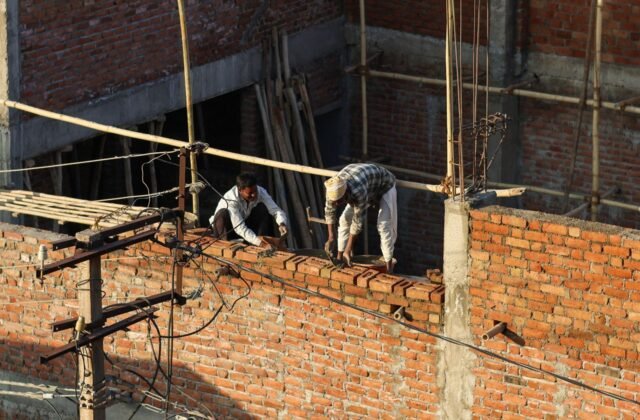
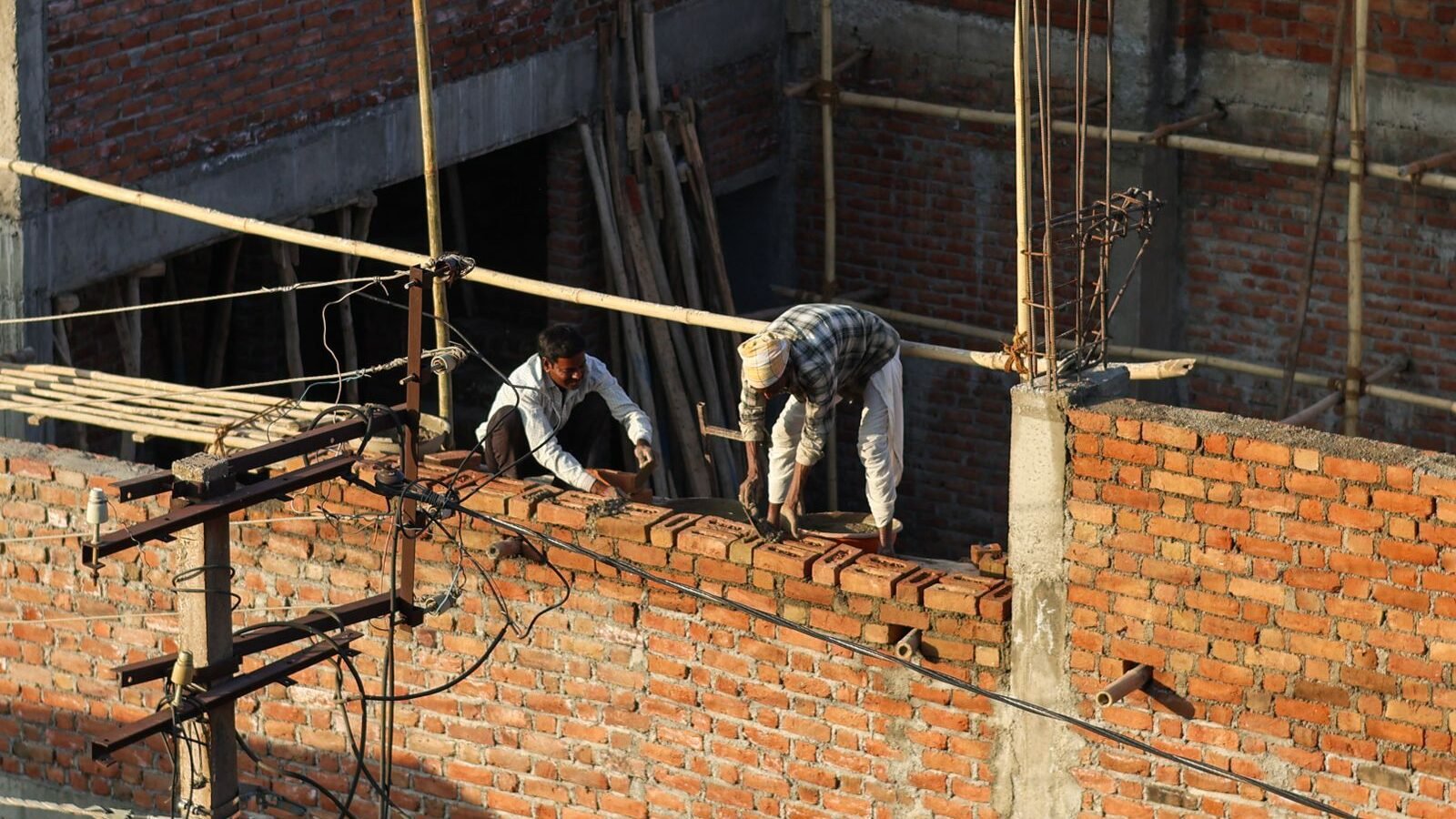
The classic unit: fired clay, typically 215 × 102.5 × 65 mm (modular sizes vary by country), laid in running, Flemish, or English bond. Coverage: ~60 bricks/m² per wythe with 10 mm joints (~5.6/ft²). Mortar: ~0.025 m³/m² — the highest per area, because 60 units mean 60 joints. Strengths: finished appearance as laid, excellent durability, huge aesthetic range (stock, facing, engineering, handmade). Weaknesses: slow laying (60 units per m² is a lot of handling), highest labor cost of the manufactured units, and color varies between batches — order all at once.
Best for: visible walls where appearance matters — house walls, garden walls, piers, chimneys. Cost position: mid-range per m² laid; illustrative all-in range roughly $60–$135/m² (see the cost guide for the breakdown).
Concrete Block
The workhorse: 390 × 190 × 190 mm hollow or solid units (nominal 400 × 200 mm with joints). Coverage: ~12.5 blocks/m² (~1.2/ft²). Mortar: ~0.015–0.02 m³/m². Strengths: fastest laying rate, lowest labor cost per m², excellent for foundations, cavity-wall inner leaves, retaining structures, and large plain runs; hollow cores accept reinforcement and grout for structural walls. Weaknesses: utilitarian appearance — usually rendered, painted, or faced; heavy per unit; cutting waste at openings matters proportionally more with only 12.5 units per m².
Best for: foundations, structural and retaining walls, large runs, cavity construction, and any project where speed and economy beat appearance. Cost position: cheapest per m² laid — but add rendering/facing costs before comparing against brick on finished appearance.
Natural Stone
Quarried walling stone or sawn veneer, either random rubble or coursed. Coverage: sold by face area (m²), so quantity math is simple — but waste runs 10–15% because every stone is cut to fit. Mortar: ~0.025–0.04 m³/m²; irregular beds consume more. Strengths: unmatched appearance and longevity; excellent thermal mass; adds the most perceived value. Weaknesses: highest material price per m², slowest laying (each stone individually fitted), heaviest handling, and the most variable — no two deliveries look identical.
Best for: feature walls, premium garden and boundary walls, restoration matching, high-end veneer. Cost position: highest — roughly double brick per m² laid, with labor doing most of the spreading.
Manufactured Stone Veneer
Cast concrete units molded to resemble natural stone, adhered or mechanically fixed rather than laid as structural masonry. Coverage: sold by m²; lighter and more uniform than natural stone, so laying is faster. Strengths: stone look at lower cost and weight; consistent sizing speeds installation; suitable over existing substrates. Weaknesses: still needs competent installation (poorly fixed veneer delaminates); less prestige and longevity than real stone; color can fade on sun-blasted exposures.
Best for: veneer over block or timber-frame walls, renovations, and budget-conscious feature work. Cost position: between brick and natural stone per m² laid.
Head-to-Head Comparison
| Factor | Clay brick | Concrete block | Natural stone | Manufactured veneer |
|---|---|---|---|---|
| Units per m² | ~60 | ~12.5 | by area | by area |
| Mortar per m² | ~0.025 m³ | ~0.018 m³ | ~0.03 m³ | ~0.02 m³ |
| Laying speed | Slow | Fast | Slowest | Medium |
| Illustrative all-in per m² | $60–$135 | $45–$100 | $150–$330+ | $100–$190 |
| Finish as laid? | Yes | Usually rendered | Yes | Yes |
| Structural use | Yes | Yes (reinforced) | Yes | No (veneer only) |
All figures are illustrative planning ranges — verify locally. Note the block row: add $15–$40/m² for rendering when comparing finished appearance against brick.
Worked Example: 12 m² Wall in Each Material
Same geometry — 10 m × 1.2 m = 12 m² — mid-range illustrative assumptions:
- Brick: 778 units × $0.55 + 19 mortar bags × $6.50 + labor 12 × $55 = $427.90 + $123.50 + $660.00 = $1,211.40
- Block: 162 units × $2.50 + mortar $110 + labor 12 × $35 = $405.00 + $110.00 + $420.00 = $935.00
- Natural stone: 13.2 m² × $75 + mortar $160 + labor 12 × $120 = $990.00 + $160.00 + $1,440.00 = $2,590.00
Imperial cross-check: 12 m² = 129.2 ft². Brick: 129.2 × 5.575 × 1.08 = 778 units ✓. Block: 129.2 × 1.161 × 1.08 = 162 units ✓. Labor: 129.2 × ($55 ÷ 10.764) = $660 ✓.
The spread — $935 to $2,590 for identical geometry — is why material selection comes before budgeting, not after. The estimating guide shows how to take off quantities for whichever you choose.
How to Choose
- Structural or retaining? Block (reinforced) or brick; veneer is not structural.
- Visible and decorative? Brick or stone; block needs a finish.
- Budget-constrained? Block, accepting the rendering cost.
- Matching existing? Whatever the existing wall is — mismatched masonry devalues the work.
- DIY? Brick and block are learnable; natural stone is not a first project (see the DIY vs pro guide).
Related Guides
- Complete Guide — the full estimating overview.
- Cost Guide — price ranges for every material.
- Formula Explained — coverage derivations.
- Case Study — material choice in a real-style budget.
- FAQ — quick material questions.
Frequently Asked Questions
Which masonry material is cheapest?
Concrete block is cheapest per m² laid, but add rendering costs when comparing finished appearance against brick. Compare all-in per m², not per unit.
Can manufactured veneer replace structural stone?
No — veneer is a facing, not a structural material. It must be applied over a structural wall (block, concrete, or framed).
Why does natural stone cost so much more?
High material price per m² plus the slowest laying rate — each stone is individually cut and fitted, pushing labor far above brick rates.
Do I need to order all bricks from one batch?
Yes. Clay bricks vary in color between kiln runs; a second delivery can show a visible band. Order the full quantity plus waste at once.
Is block strong enough for a retaining wall?
Yes, when designed as reinforced blockwork (rebar + grout in the cores) with proper drainage — but retaining walls often need engineering, per the code compliance guide.
How much extra does rendering blockwork cost?
Illustratively $15–$40 per m² depending on system and region — enough to narrow but usually not erase block’s advantage over brick.
Get Your Number
Pick the material that fits the job’s structural needs, appearance, and budget — then price it honestly with local rates in the Masonry Cost Calculator. Run the same wall in two materials and compare the all-in per-m² totals: that comparison, not the per-unit price, is the decision.
Disclaimer: Coverage rates are typical values; prices are illustrative planning ranges, not quotes. Actual quantities and costs vary with unit dimensions, joint style, workmanship, and regional markets. Verify with suppliers and masons, and consult a licensed professional or local building authority for structural or code-related decisions.