Introduction
A rock bed feels like the simplest possible project — until the HOA sends a letter about unapproved front-yard coverage, or a neighbor complains that your new bed is draining onto their patio. Surface landscaping rarely needs a building permit, but it does intersect real rules: HOA covenants, municipal drainage and grading ordinances, utility easements, and fire-wise landscaping requirements in wildfire-prone regions. Before you order, run your dimensions through the Landscape Rock Calculator so you know the project’s scale, then check the rules below against your property.
This guide covers the common regulatory touchpoints for decorative rock projects in the US. Rules vary by state, county, and HOA — treat this as a checklist of what to verify locally, not as legal advice. When drainage or grading is involved, consult a licensed professional.
HOA Rules: The Most Common Hurdle
If you live under a homeowners association, the HOA — not the city — is your first authority. Common HOA restrictions on rock landscaping include:
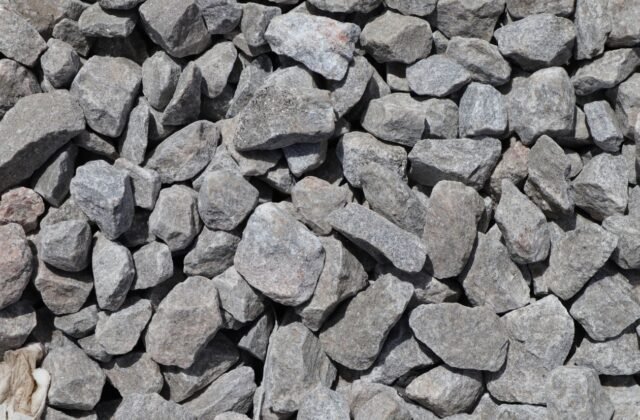
- Approved color and type lists — many HOAs limit rock to specific colors (often tans and grays) to keep a uniform streetscape.
- Coverage limits — front yards may be capped at a percentage of rock vs. plantings (e.g., 50% hardscape maximums are common).
- Prohibitions on full rock conversions — some HOAs require a minimum of live plantings or turf in visible areas.
- Edging and border standards — requirements for contained, finished bed edges.
Submit your plan before ordering: include the rock type, color sample, bed locations, and approximate coverage. HOA architectural review typically takes 2–6 weeks, so build it into your timeline. The material guide can help you pre-select HOA-friendly stone.
Drainage and Grading: The Legal Line
Most municipalities prohibit altering drainage so that water flows onto neighboring properties, public sidewalks, or streets at greater volume or velocity than before. Rock beds change infiltration and runoff patterns, so:
- Maintain positive drainage away from foundations — grade beds to slope away from the house (a common standard is 6 in / 15 cm of fall in the first 10 ft / 3 m).
- Do not concentrate flow onto neighbors — a dry creek bed that collects your roof runoff and discharges it at the property line can create liability.
- Respect existing swales and easements — drainage easements must remain functional; rock and edging cannot dam them.
- Downspout tie-ins — extending downspouts through or under a rock bed is common, but the discharge point still must comply with local rules.
If your project touches real drainage — soggy ground, slope runoff, downspout rerouting — that is the point where the DIY vs. pro guide recommends professional grading eyes. Guessing at drainage is the most liability-heavy part of an otherwise simple project.
Call 811 Before You Dig or Stake
Edging stakes, shovel work for bed prep, and any trenching for edging or drainage can strike buried utilities. In the US, calling 811 (the national “Call Before You Dig” number) triggers free utility locates, typically within 2–3 business days. This applies even to shallow work — gas, electric, and communications lines are often shallower than people assume. It is free, it is the law in most states before excavating, and it takes one phone call.
Right-of-Way and “Hell Strip” Rules
The strip between the sidewalk and the street (often called the hell strip or parkway) is frequently city-owned right-of-way even though you maintain it. Many cities restrict what you can install there:
- Some require permits for any right-of-way landscaping; others prohibit rock entirely in favor of turf or approved plantings.
- Height restrictions near intersections (sight-triangle rules) can limit larger rock features.
- The city can tear up the strip for utility work without restoring your landscaping.
Check with your city’s public works or right-of-way office before rocking the parkway. The complete guide’s planning workflow includes this check for exactly this reason.
Fire-Wise Landscaping Zones
In wildfire-prone regions, rock is actually preferred over organic mulch near structures — non-combustible ground cover in the first 5 ft (1.5 m) around the home is a cornerstone of defensible-space guidance (such as the well-known “Zone 0” concept). If you live in a fire-prone area, check your state or county’s defensible-space rules: replacing bark mulch with rock in the immediate perimeter is often not just allowed but recommended. Keep vegetation clear of the rock bed and choose non-combustible edging (steel rather than wood timbers) in these zones.
Tree Protection
Do not pile rock against tree trunks (“volcano” mounding with any material damages bark and invites decay). Keep rock 6–12 in (15–30 cm) from the trunk flare, limit depth over root zones to 2–3 in (5–7.6 cm), and avoid compacting soil over critical root zones with heavy equipment during installation. Some municipalities have tree-protection ordinances covering heritage or street trees — check before working near them.
Permits: Usually Not Required, Sometimes
| Situation | Typical requirement |
|---|---|
| Surface rock bed, no grading change | No permit in most jurisdictions |
| Regrading or altering drainage patterns | Grading permit may be required |
| Retaining walls (usually over 3–4 ft / 0.9–1.2 m) | Building permit typically required |
| Work in right-of-way / parkway strip | Right-of-way permit often required |
| Historic districts | Design review may apply to visible changes |
When in doubt, a five-minute call to your city’s planning or permitting desk settles it. The checklist includes permit and HOA verification as pre-order steps so approvals never hold up a scheduled delivery.
Related Guides
- Landscape Rock Complete Guide — the full workflow, including planning checks.
- Landscape Rock Pro Tips — drainage-safe installation details.
- Landscape Rock: DIY vs. Pro — when drainage work means hiring a professional.
- Landscape Rock Checklist — approvals and locates in the pre-order sequence.
- Landscape Rock FAQ — quick answers on permissions and rules.
Frequently Asked Questions
Can my HOA really stop me from installing rock?
If the covenants restrict landscaping materials or require architectural approval, yes — HOAs can and do enforce these rules with fines and forced removal. Always get written approval before ordering, and keep it with your project records.
Do I need a permit for a simple rock bed?
In most jurisdictions, no — surface landscaping without grading changes, structures, or drainage alterations is not permitted work. Exceptions include right-of-way strips, historic districts, and any project that changes how water drains. A quick call to the city confirms it.
Is calling 811 really necessary for shallow edging stakes?
Yes. Utility lines are often shallower than expected, and 811 locates are free. Most states legally require notification before any excavation, and “excavation” includes surprisingly shallow digging. The call takes minutes; striking a line takes much longer to fix.
Get Your Number
Approvals and locates are paperwork; the project itself is still arithmetic. Get your tonnage from the Landscape Rock Calculator, then work the compliance checklist: HOA approval, 811 locate, drainage sanity-check, and right-of-way verification — in that order, before the truck is booked.
Disclaimer: Calculator results are planning estimates based on the dimensions you enter. Actual material requirements vary with rock type, size, compaction, and supplier bulk density. Verify quantities with your supplier and consult a licensed professional for drainage or code-related decisions.