A 10×10 slab that is 4 inches thick needs 56 eighty-pound bags of concrete (buy 60 with waste) or 75 sixty-pound bags (buy 80 with waste). That covers 33.33 cubic feet — just over 1.2 cubic yards — with a sensible margin for spillage, over-excavation, and an uneven subgrade.
Before you head to the store or call a ready-mix plant, run your exact numbers through the free Concrete Calculator so you can adjust for a different thickness, an irregular shape, or a waste factor that matches your site.
Worked Example: The Math for a 10×10 Slab, 4 Inches Thick
Concrete is bought by volume, so every estimate starts with length × width × thickness in consistent units. Here is the full calculation for this slab:
- Convert thickness to feet: 4 inches ÷ 12 = 0.333 feet.
- Calculate volume in cubic feet: 10 ft × 10 ft × 0.333 ft = 33.33 cubic feet.
- Convert to cubic yards (how ready-mix is sold): 33.33 ÷ 27 = 1.235 cubic yards.
- Convert to bags (80-lb, 0.60 cu ft yield each): 33.33 ÷ 0.60 = 55.6, which rounds up to 56 bags.
- Add a 5–10% waste allowance: 56 × 1.05 ≈ 58.8 and 56 × 1.10 = 61.6, so buy 60 bags.
For 60-lb bags (0.45 cu ft yield each): 33.33 ÷ 0.45 = 74.07, rounding up to 75 bags. With a waste allowance that becomes 80 bags.
Key Variables That Change the Answer
The bag counts above assume a perfectly uniform 4-inch slab. In the real world, several factors push the number up or down:
- Actual thickness. If your form boards sit on an uneven base, the slab may average 4.5 inches in places. Every extra half inch across the full 10×10 area adds about 4.2 cubic feet — roughly 7 more 80-lb bags.
- Subgrade condition. A soft, rutted, or poorly compacted base soaks up concrete. Compact and level the subgrade before pouring to avoid losing half a bag or more into low spots.
- Bag yield assumptions. An 80-lb bag of standard mix yields about 0.60 cubic feet and a 60-lb bag about 0.45 cubic feet once mixed and placed. Specialty mixes (high-strength, fast-setting) can differ — check the bag label and use that yield in the calculator.
- Spillage and over-excavation. Wheelbarrow spills, form blowouts, and digging deeper than planned are why the 5–10% waste factor exists. On a 56-bag pour, that means 3–6 extra bags.
- Bag size economics. Eighty-pound bags usually cost less per cubic foot than 60-lb bags and mean fewer bags to haul — but each one is heavy. For a one-person pour, the lighter 60-lb bags may be worth the premium.
Metric Measurements
If you work in metric, the same slab is 3.05 m × 3.05 m × 0.102 m, which equals 0.95 m³ of concrete. That is about 95 standard 20-kg bags of ready-mix (each yields roughly 0.01 m³), and with waste you would buy 100 bags. Ready-mix in most metric markets is ordered by the cubic metre, so 0.95 m³ plus 10% waste lands you at essentially 1.0 m³ — a convenient single-cubic-metre order.
For reference, 80-lb bags weigh 36.3 kg each and 60-lb bags weigh 27.2 kg each. The slab itself, once cured, weighs roughly 5,000 lb (about 2,270 kg), so make sure the subgrade is compacted to support it.
Common Mistakes With This Question
- Rounding thickness down. Using “about 4 inches” when the pour actually averages 4.5 inches can leave you 4+ bags short. Measure the forms at several points and use the real average.
- Skipping the waste factor. Exactly 56 bags is the theoretical number. Real pours lose material — buying 56 and coming up short mid-pour is far worse than returning 2 unopened bags.
- Mixing bag sizes in the estimate. Do not divide the volume by a blended yield. Pick one bag size, run the math with its stated yield, and buy that size only.
- Assuming a 10×10 slab is always 4 inches thick. Driveways and slabs carrying heavy loads are often 5–6 inches thick, which changes the count dramatically (see the table in our guide below). Always confirm the required thickness with your local building code or a licensed contractor before buying.
- Underestimating the haul. Sixty 80-lb bags weigh 4,800 lb — over two tons. Plan how the material gets from the store to the form, and consider whether ready-mix delivery (minimums often apply) is cheaper than DIY at this scale.
Frequently Asked Questions
Can I pour a 10×10 slab 4 inches thick by myself?
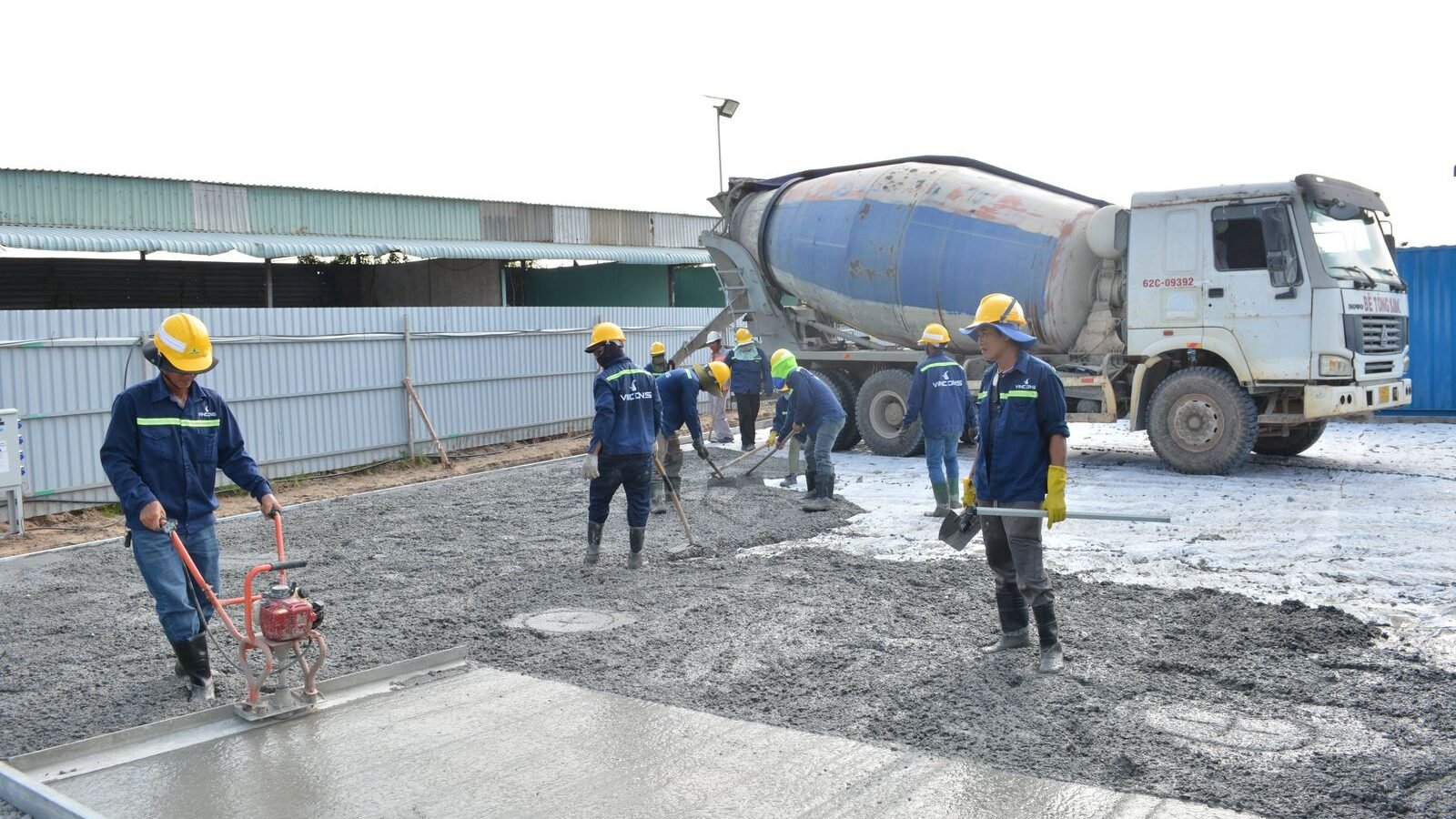
At 56–60 bags, that is about 4,800 lb of bagged concrete to move and mix, plus roughly 300 gallons of water. It is doable in a long day with a helper and a mixer, but for most DIYers this volume is the tipping point where hiring a ready-mix truck starts to look attractive. If you go the DIY route, work in sections and keep a cold joint plan ready.
How much does the concrete cost for this slab?
Bagged concrete typically costs $5–$8 per 80-lb bag, so 60 bags run roughly $300–$480 before tax, plus rebar or mesh ($30–$60) and form materials. Ready-mix for 1.25–1.5 cubic yards typically costs $150–$250 per cubic yard plus a short-load fee, so the delivered cost usually lands in the $250–$450 range. Costs vary by region, so treat these as planning ranges and get local quotes.
Should I order ready-mix instead of bags for 1.2 cubic yards?
Most suppliers deliver with a 1-cubic-yard minimum (some charge a short-load fee under 3–4 yards), so a 10×10 slab qualifies. Compare the delivered price against bagged material plus your time and a mixer rental. Many homeowners find ready-mix wins on both cost and consistency at this volume.
For the full picture — thickness tables, cost breakdowns, and ready-mix ordering tips — read the complete guide and the cost guide. Then run your final numbers through the Concrete Calculator before you buy or order.