Introduction
Frost footing budgets break into four pieces: excavation, concrete, reinforcement, and labor. Each one scales with the footing’s size, the depth of the frost line, and your local market — a 36 in (0.91 m) trench in the northern Midwest costs less to dig and fill than a 60 in (1.5 m) trench in the far north. This guide walks through each cost component with illustrative US planning ranges, so you can build a realistic budget before calling a contractor.
If you haven’t sized the footing yet, the Frost Footing Calculator gives you the width and depth numbers every cost below is built on. All figures here are typical US ranges for planning — labor rates, concrete prices, and equipment access vary widely by region, so get local quotes to firm up any budget. The estimating guide shows how to measure the inputs that drive these costs.
The Four Cost Components
Excavation
Digging a footing trench runs roughly $4–$8 per linear foot in typical residential work, or about $150–$250 per cubic yard for machine-dug trenches in normal soil. Deeper frost lines push this up directly: a 36 in (0.91 m) trench moves less material than a 60 in (1.5 m) one, and rocky ground or tight access can double the figure. Hand digging — sometimes unavoidable along existing structures — is far slower and usually charged by the hour. Backfill and compaction are often included in the trench price, but confirm that with your excavator.
Concrete
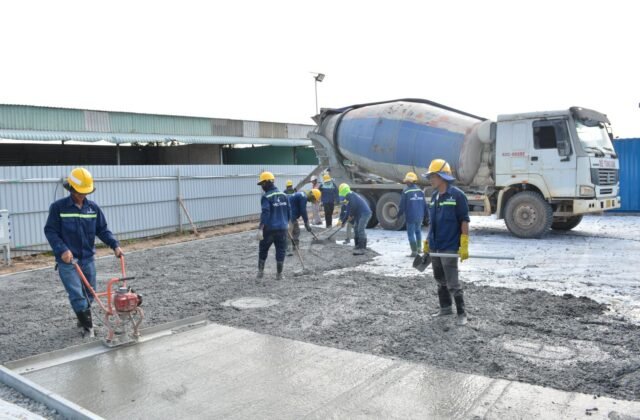
Ready-mix concrete for footings typically costs $100–$180 per cubic yard delivered and placed, with 3,000 psi (21 MPa) the common residential footing mix. Footing concrete goes fast relative to slabs because there’s no finishing — just placement, which keeps labor down. Small loads under ~4 yd³ (3 m³) usually attract a short-load fee of $100–$200, which is why bundling footing and wall concrete into one pour pays off. For mix selection detail, see the material guide.
Reinforcement
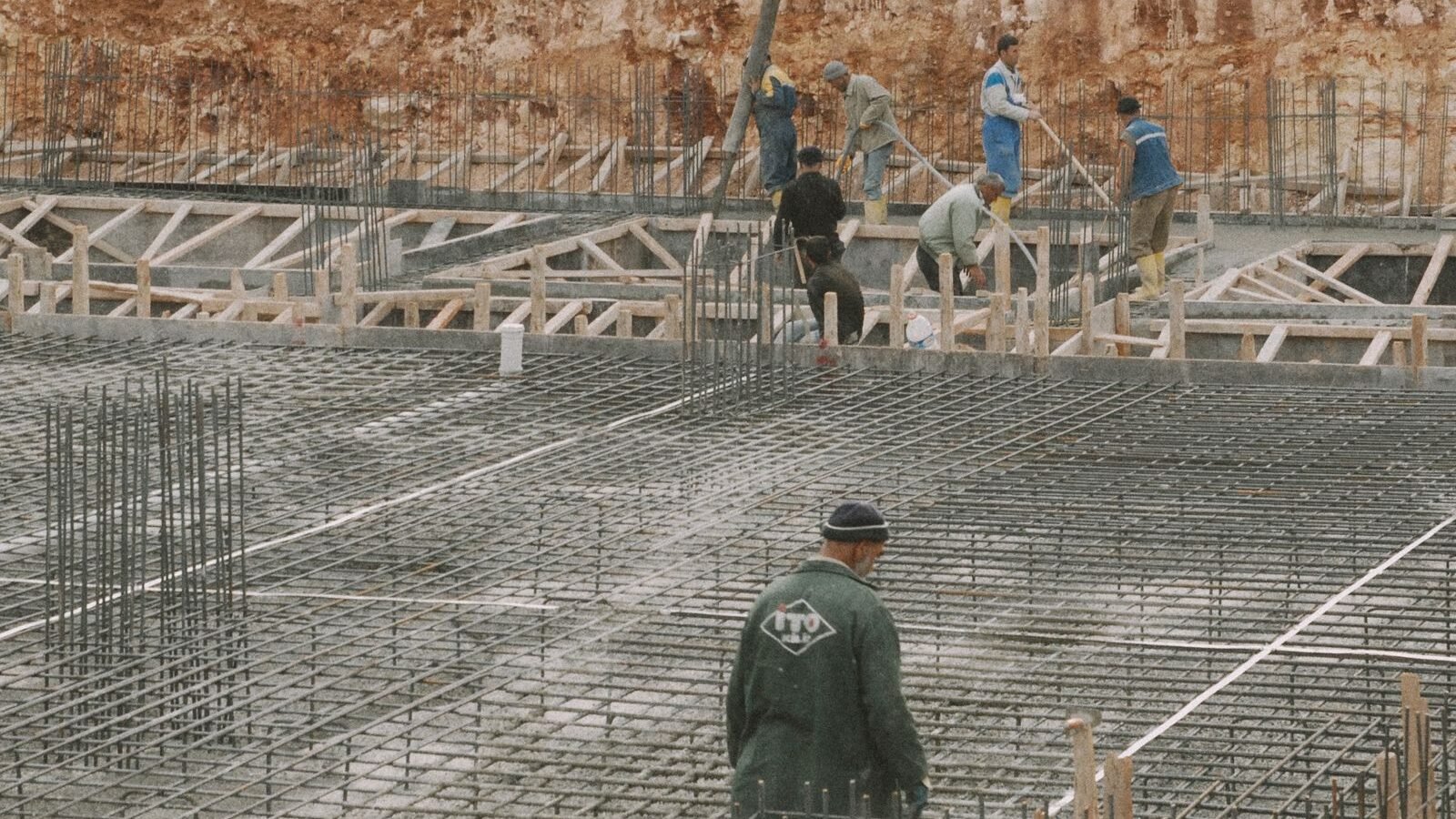
Rebar for footings is a minor line item: $0.50–$1.50 per pound for common #4 (12 mm) bars, and a typical residential strip footing uses two longitudinal bars plus ties — roughly $2–$5 per linear foot in material. Mesh, wire chairs, and dowels add a little more. Reinforcement rarely decides a footing budget, but it prevents the cracking that decides a footing’s lifespan — skipping it to save a few dollars is a false economy.
Labor
General labor and concrete finishing run $30–$70 per hour depending on region and market tightness. Footing work is less labor-intensive than flatwork — forming, setting rebar, and guiding the chute — so labor is a smaller share of the total than in slab projects. Contractor markup and overhead typically fold 15–30% over direct costs into the final price.
Putting It Together: Typical Totals
For our running example — a 100 ft (30.5 m) run of 2 ft 8 in × 8 in (0.81 × 0.20 m) strip footing with the base at 36 in (0.91 m) frost depth:
| Component | DIY (materials only) | Contractor-installed |
|---|---|---|
| Excavation (100 ft trench) | $150–$300 (rental) | $400–$800 |
| Concrete (~6.6 yd³ / 5.05 m³) | $660–$1,190 | $660–$1,190 |
| Rebar and accessories | $200–$500 | $200–$500 |
| Labor / forms | $100–$300 (form lumber) | $1,000–$2,500 |
| Estimated total | $1,100–$2,300 | $2,300–$5,000 |
Per linear foot, that works out to roughly $11–$23 DIY or $23–$50 contractor-installed for this footing size. A hypothetical project scenario with full numbers is worked through in the case study.
What Moves the Price
- Frost depth. Deeper lines mean deeper trenches: more excavation, more concrete, more backfill. This is the single biggest geographic cost driver.
- Soil conditions. Rock, high water tables, and collapsing trench walls all add excavation cost and sometimes require shoring.
- Access. A truck and mini-excavator that can reach the trench keeps costs low; hand-digging and wheelbarrow concrete across a tight lot push them up.
- Footing width. Wider footings (needed on weak soils) use proportionally more concrete — doubling width doubles concrete volume.
- Pour size. Small isolated pours pay short-load fees; combining footing and foundation wall concrete into one delivery saves per-yard cost.
- Season. Cold-weather concrete (heated enclosures, accelerators, blankets) adds 10–20% in winter; see cold-weather tips in the pro tips guide.
Where Budgets Go Wrong
- Forgetting the short-load fee on small pours — always ask the batch plant about minimums.
- Pricing concrete by the bag for 6+ yd³ jobs, where ready-mix is far cheaper per yard.
- No contingency. Trench over-excavation, weather delays, and inspection failures all cost money; 10–15% contingency is standard.
- Skipping permits and inspections. The fees are small; the cost of tearing out non-compliant work is not. The code compliance guide covers what’s typically required.
- Underestimating rebar and accessories. Chairs, ties, and dowels are cheap but add up — price them, don’t hand-wave them.
Related Guides
- Frost Footing Material Guide — concrete mixes, rebar sizes, gravel base, and formwork materials.
- Frost Footing Estimating Guide — how to measure loads, soil capacity, and frost depth.
- Frost Footing Case Study — a fully worked hypothetical project budget.
- DIY vs Pro — when footing work is a DIY project and when to hire.
- Frost Footing Complete Guide — the full overview of sizing width and depth.
Frequently Asked Questions
How much does a frost footing cost per linear foot?
Illustrative US ranges: roughly $11–$23/ft for DIY materials or $23–$50/ft contractor-installed for a typical residential strip footing, varying with depth, soil, and region.
What drives footing cost the most?
Frost depth (deeper trenches = more excavation and concrete), soil conditions, site access, and footing width. Concrete price is the single biggest material line item.
Is ready-mix or bagged concrete cheaper for footings?
Ready-mix is cheaper per yard for anything over a few cubic yards. Bagged mix only wins for very small, isolated pours where delivery minimums and short-load fees dominate.
How much contingency should I budget?
Ten to fifteen percent is standard — trench over-excavation, weather delays, and re-inspection trips are the usual overruns.
Get Your Number
Price a frost footing by pricing its four components — excavation, concrete, reinforcement, labor — against the footing size from your calculation. The Frost Footing Calculator gives you that size; local suppliers and contractors give you the prices. Treat the ranges above as planning numbers, get two or three local quotes, and carry a 10–15% contingency.
Disclaimer: Cost figures are illustrative US planning ranges based on typical market conditions. Actual costs vary widely by region, soil conditions, site access, and market rates. Verify pricing with local suppliers and contractors, and consult a licensed professional or your local building authority for structural sizing and code-related decisions.