Introduction
Concrete doesn’t care whether it arrived in bags or a truck — but your building department might care about the pour itself. Footing depth, frost lines, permits, and inspections apply to the structure, not the delivery method, and “I mixed it from bags” is not an exemption from any of them. Worse, some applications genuinely shouldn’t use bagged mix at all.
The Concrete Bags Calculator handles the quantity math. This guide covers the regulatory side: when permits are needed, what codes typically require of footings and slabs, and when bagged concrete isn’t an acceptable material — so you check before you pour, not after.
Do You Need a Permit?
Permit rules vary by jurisdiction — always check with your local building authority — but the general pattern is:
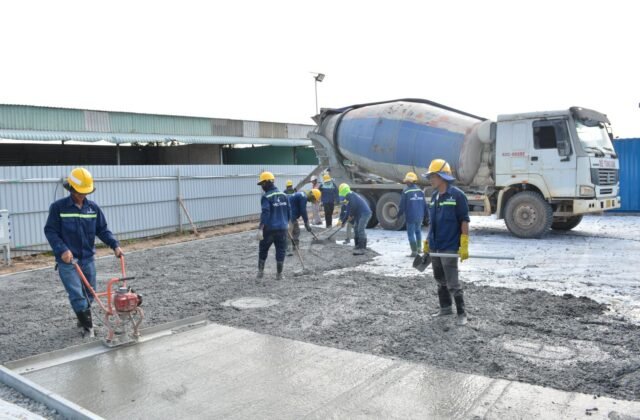
- Usually no permit: non-structural flatwork like a small patio, walkway, shed pad, or mailbox post. (Some municipalities still require permits for any concrete work — verify locally.)
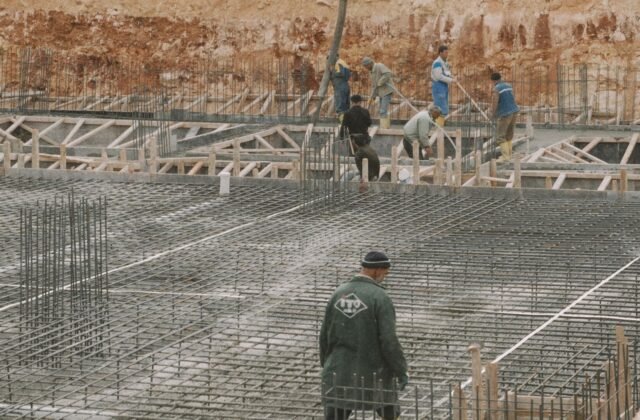
- Usually a permit: footings for decks, additions, and accessory structures; foundation work; retaining walls above a threshold height (commonly ~1–1.2 m / 3–4 ft); driveways that connect to public streets; any structural concrete.
- Always check: setback rules, HOA restrictions, and utility locates (call before you dig — footings mean excavation).
The permit question is about the structure, not the material. A deck footing needs a permit whether you pour it from bags or a truck.
Footing Depth and Frost Lines
The most common code requirement affecting bag pours is footing depth: in climates with freezing winters, footings must extend below the frost line — the depth to which soil freezes — commonly 90–120 cm (36–48 in) in northern US regions, shallower or zero in warm climates. A footing poured above the frost line heaves when the ground freezes, cracking whatever sits on it.
Practical consequences for bag estimating:
- Deep footings in cold climates need far more concrete per footing than the hole “looks like” — measure the actual required depth, not the depth you’d prefer to dig.
- A 30 cm (12 in) diameter hole at 120 cm (48 in) deep is π × 0.15² × 1.2 = 0.085 m³ (3.0 ft³) — with 10% waste, 0.093 m³ ÷ 0.017 = 5.5 → 6 eighty-pound bags per footing.
- Some jurisdictions require inspections of footing excavations before concrete is placed — pouring first and asking later can mean digging it back out.
When Bagged Mix Isn’t Acceptable
Bagged concrete is perfectly good concrete — but it’s not always the right compliance choice:
- Specified strengths. If an engineer or code specifies a compressive strength (e.g., 4,000 psi for a structural footing), you need documented compliance. Standard bagged mix is typically rated ~4,000 psi, but for permitted structural work many jurisdictions want batch documentation that ready-mix suppliers provide routinely.
- Large structural pours. Batch-to-batch variation across dozens of hand-mixed bags is a legitimate quality concern where uniformity matters structurally.
- Reinforced elements. Bagged mix works fine around rebar in small footings — but the rebar sizing, placement, and cover are design decisions, not bag decisions. Follow the approved plans.
- Anything the approved plans specify otherwise. If the plans say ready-mix, the plans govern.
When in doubt, ask the building department before buying: “I’m planning to use bagged mix for this — is that acceptable for this application?” It’s a thirty-second question that prevents expensive rework.
Inspections: What to Expect
For permitted work involving bagged concrete, typical inspection stages include:
- Footing / excavation inspection — depth, width, and soil condition checked before concrete goes in.
- Reinforcement inspection — rebar size, spacing, and cover verified before the pour (where applicable).
- Final inspection — the completed work checked against the approved plans.
Schedule inspections in advance — inspectors don’t do same-day, and concrete waits for no one. Never pour a footing that requires a pre-pour inspection until it’s signed off.
Related Guides
- Concrete Bags Complete Guide — the full how-to with a worked example.
- DIY vs Pro — realistic limits of bag mixing.
- Concrete Bags Material Guide — mix types and strengths.
- How to Estimate Bagged Concrete — measuring and ordering.
- Concrete Bags FAQ — quick answers to the most asked questions.
- Pre-Purchase Checklist — everything to verify before you buy.
Frequently Asked Questions
Do I need a permit to pour a concrete slab?
For a small non-structural patio or shed pad, usually not — but rules vary widely by jurisdiction, and some municipalities require permits for any concrete work. Check with your local building authority before you buy materials.
How deep do footings need to be?
Below the local frost line in freezing climates (commonly 90–120 cm / 36–48 in in northern regions), and per local code everywhere else. Your building department publishes the required depth for your area.
Is bagged concrete code-compliant?
The material itself is fine for most residential applications — codes regulate the structure (depth, strength, reinforcement), not the delivery method. Where a specified strength must be documented, confirm with your building department that bagged mix is acceptable.
Can I use bagged concrete for deck footings?
Yes, for typical residential deck footings — provided the footings meet code depth, the mix meets any specified strength, and required inspections happen before the pour. Confirm permit requirements locally first.
What happens if I pour without a required permit?
Possible stop-work orders, fines, and being required to expose or remove the work for inspection — or to bring it up to code retroactively. The permit is cheaper than the fix.
Check First, Pour Second
Codes exist to keep structures standing and people safe — and compliance is almost always cheaper than correction. Get your bag count from the Concrete Bags Calculator, get your requirements from your local building authority, and never let the pour schedule outrun the inspection schedule.
Disclaimer: Building codes and permit requirements vary by jurisdiction and change over time. This guide is general information, not legal or engineering advice. Always verify requirements with your local building authority and consult a licensed professional for structural decisions.