Introduction
Before you size a wire, pick a breaker, or approve a quote, run your amperage work through this checklist. Each item catches one of the input or sizing errors that produce wrong-but-plausible numbers — the kind cataloged in the common mistakes guide. Ten minutes here saves the cost of re-running cable or the hazard of an undersized circuit.
The calculation step itself belongs to the Amperage Calculator — enter watts, volts, power factor, and phase, and it returns the current. This checklist verifies everything around that calculation: the inputs going in and the decisions coming out.
Input Verification
- Wattage from the nameplate, not marketing. Rated input power in watts — “peak” or “equivalent” figures don’t count. Photograph the nameplate for the record.
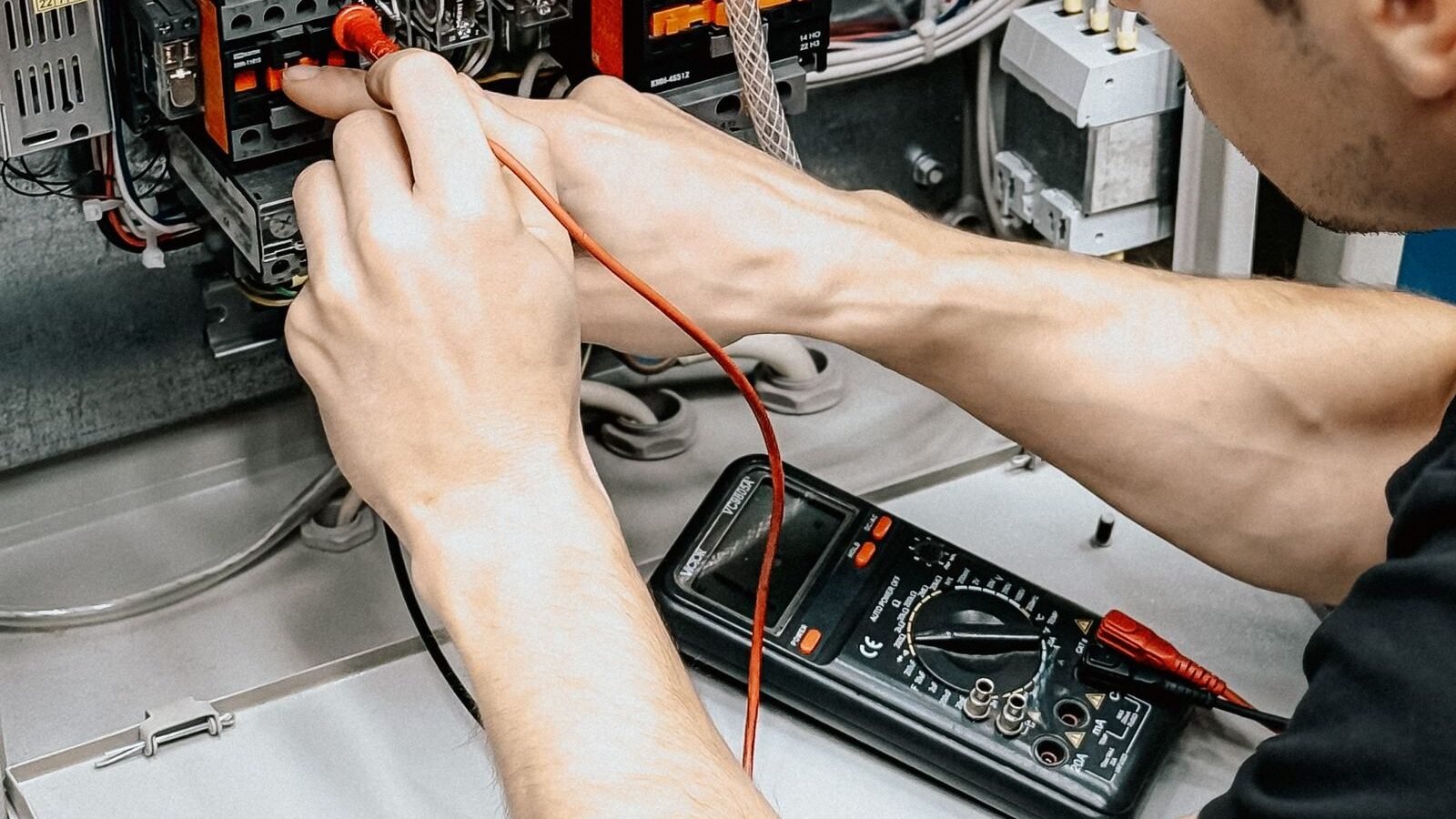
- Supply voltage confirmed. Nominal (120/240/208) from the panel or a multimeter reading — not the appliance’s marketing label. Remember 208 V vs 240 V changes current ~15%.
- Correct formula for the system. DC/resistive → I = P ÷ V; single-phase motor → I = P ÷ (V × PF); three-phase → I = P ÷ (√3 × V × PF) with line-to-line voltage. A 3-pole breaker means three-phase.
- Power factor stated or conservatively assumed. Nameplate PF when given; otherwise 0.8 for motors, 0.7 for welders when sizing. Resistive loads: 1.0.
- Units consistent. Volts with volts, watts with watts — and wire-run lengths in one unit system (feet or meters) if voltage drop enters the picture.
Calculation Verification
- Hand-check the magnitude. A 1,500 W heater on 120 V should land near 12.5 A — if your answer is 3 A or 40 A, an input is wrong, not the arithmetic.
- Cross-check against the calculator. Recompute with independently verified inputs; any disagreement points at an input error.
- Compare with nameplate amps when listed. The nameplate used the manufacturer’s measured power factor — trust it over a watts ÷ volts shortcut that assumed PF = 1.0.
- Verify the three-phase voltage is line-to-line. 208 V or 480 V between phases — not the 120/277 V phase-to-neutral figure.
- Full precision kept until sizing. 14.7 A stays 14.7 A through the math; rounding happens only when choosing standard hardware sizes — upward.
Sizing Verification
- 80% rule applied to continuous loads. Load × 1.25 ≤ breaker and wire rating for anything running 3+ hours. The 1,800 W / 15 A heater needs a 20 A circuit.
- Wire ampacity covers the load after derating. Baseline (14 AWG ≈ 15 A, 12 AWG ≈ 20 A, 10 AWG ≈ 30 A copper) reduced for ambient temperature and conduit fill per NEC 310.16 — the derated figure is the limit.
- Breaker protects the wire. Breaker rating ≤ wire ampacity (NEC 240.4). Never upsize a breaker without upsizing its wire.
- Voltage drop checked on long runs. Past ~100 ft (30 m), verify drop with the Voltage Drop Calculator — upsize wire if drop exceeds ~3% on branch circuits.
- Inrush accounted for on motors. Running current is the start; breaker type (HACR/time-delay) must handle 5–7× startup current. The Breaker Size Calculator covers selection.
- GFCI/AFCI protection where required. Wet locations → GFCI; living-area 15/20 A circuits → AFCI (per your locally adopted NEC edition).
Project Verification
- Simultaneous total, not installed total. The design number is the realistic worst-case simultaneous load — see the estimating guide method.
- Panel has spare capacity and spaces. Total demand ≤ 80% of the main rating with room to grow, and open breaker positions for the new circuits — check with the Electrical Load Calculator.
- Permit requirements confirmed with the AHJ. New circuits, subpanels, and service work need permits and inspections in essentially all jurisdictions.
- Quotes checked against your numbers. Any bid whose sizing contradicts your verified calculation gets a question before it gets a signature — the cost guide gives the price bands.
- Load list documented on the panel schedule. Circuit, wire size, breaker size, calculated load — written down so the next addition starts from facts.
Quick-Reference Numbers
| Check | Reference value |
|---|---|
| 1,500 W ÷ 120 V (resistive) | 12.5 A |
| 1,500 W ÷ (120 V × 0.85 PF) | 14.7 A |
| 10,000 W ÷ (1.732 × 208 V × 0.85) | ≈ 32.6 A |
| 1,800 W heater on 120 V | 15 A → 20 A circuit (80% rule) |
| Continuous-load limit | 80% of breaker/wire rating |
| 14 / 12 / 10 AWG copper baseline | 15 / 20 / 30 A (before derating) |
Related Guides
- Common Mistakes — what each checklist item is guarding against.
- Complete Guide — the full reference behind the checks.
- Pro Tips — habits that make verification routine.
- Code Compliance — the NEC articles behind the sizing checks.
- Amperage FAQ — quick answers while you work through the list.
Frequently Asked Questions
How long does this checklist take?
About ten minutes for a single circuit, longer for a whole-panel estimate. It’s the cheapest insurance in the project — every item is faster than re-running a cable.
Which check catches the most errors?
Input verification — especially confirming the actual supply voltage and the power factor. Most wrong answers trace to those two inputs, not to arithmetic.
Do I need to do all of this for a simple appliance swap?
Like-for-like replacements (same rating, same circuit) need only the first section’s spirit: confirm the new device’s rating matches the old. The full checklist earns its keep on new circuits, added loads, and panel work.
Can I skip the permit check if the work is minor?
No — “minor” is the AHJ’s call, not yours. A one-minute call to the building department settles it, and unpermitted work creates insurance and resale problems far exceeding the permit fee.
Get Your Number
Verification is what separates a number from a plan. Compute the current with the Amperage Calculator, walk this checklist top to bottom, and only then size wire, choose breakers, or sign quotes. Careful inputs, the 80% rule, derated ampacity, and a written record — that’s the whole discipline, and it fits on one page.
Disclaimer: planning estimates only — this checklist supports planning calculations and does not replace code-compliant design. Always verify with a licensed electrician and your local authority having jurisdiction before sizing, installing, or modifying any circuit.
