Introduction
Excavation questions cluster around the same dozen topics: what does it cost per yard, how deep can a mini-excavator dig, who pays for rock, do I need a permit, and how long does a typical dig take? This page answers all of them — thirteen questions, each answered straight, with the planning numbers and the caveats. For the full treatment behind any answer, follow the linked guide.
The Excavation Cost Calculator turns your dimensions into a volume and cost estimate in seconds — run your numbers there, then come back here for the judgment calls around them.
Cost Questions
What does excavation cost per cubic yard?
Typical US planning ranges run $50–$200 per bank cubic yard ($65–$260 per bank m³) all-in — cutting, loading, hauling, and disposal. Easy large cuts in good soil land near the bottom; small trenches, rock, tight urban sites, and long hauls push toward or past the top. Regional labor rates and dump fees move the band significantly, so treat it as a budgeting bracket and get local quotes. The cost guide breaks the range into line items.
What does it cost to dig a basement?
A typical residential basement excavation (1,200–1,500 ft² footprint, 8–9 ft deep — roughly 110–140 m² and 2.4–2.7 m) commonly runs $5,000–$15,000 in ordinary soil with reasonable haul distances, and $20,000+ with rock, dewatering, or tight access. Volume is 300–500 bank yd³; at $50–$100/yd³ all-in for a job this size, the math lands in that bracket. The hypothetical case study walks a full line-item basement budget.
Who pays if the excavation hits rock?
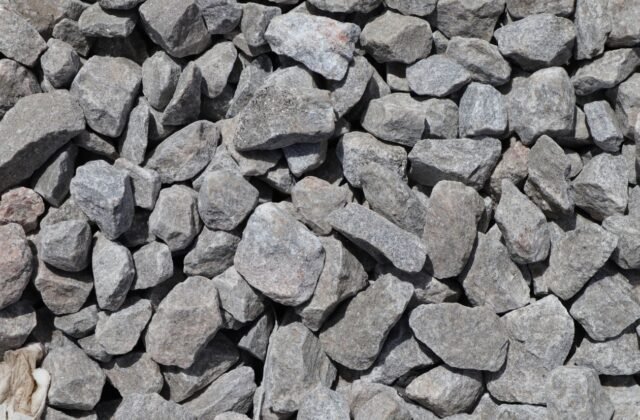
Whoever the contract says pays — which is why the contract must say. Professional practice is a rock clause: a pre-agreed unit price per cubic yard (planning range $150–$400+/bank yd³ for hammer work) triggered by a defined condition such as material requiring a hydraulic hammer, verified by measurement. Without a rock clause, expect a change order negotiated at the worst possible moment. Get a soil test before bidding so “unexpected rock” is genuinely unexpected.
How much does it cost to rent an excavator?
Mini-excavators (1.5–6 tons): $250–$450/day or $900–$1,500/week. Backhoes: $400–$700/day. Full-size excavators (14–25 tons): $800–$1,400/day, usually with an operator. Add $150–$400 each way for delivery, plus fuel. The bare rental is only part of the DIY cost — trucking, disposal, and your time close much of the gap with hiring out, as the DIY vs pro comparison shows.
Why is excavation so expensive for small jobs?
Because the fixed costs don’t shrink with the hole. Mobilization ($500–$1,500), a half-day minimum ($1,200–$2,500), and truck/tipping minimums apply whether the trench is 15 yd³ or 150. A small trench can legitimately cost $150–$200+/yd³ while a big basement cut runs $50–$80. Bundling small tasks into one mobilization is the main way to beat this.
Equipment and Method Questions
How deep can a mini-excavator dig?
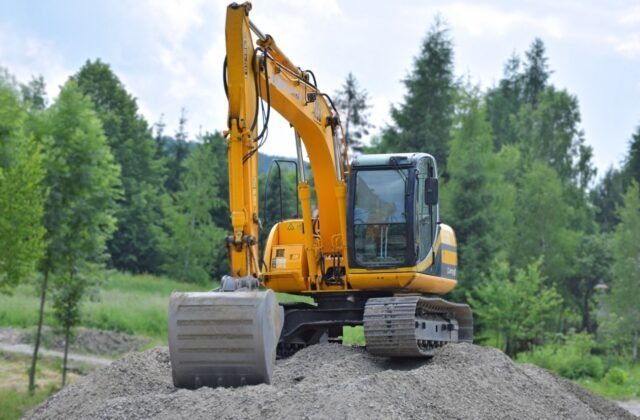
Typical mini-excavators (1.5–6 tons) dig 2.5–4.5 m (8–15 ft) deep depending on size — enough for most trenches, footings, and small foundations. Basements, deep utilities, and rock need full-size machines. Depth ratings assume the machine sits at the original grade; benching down extends reach but adds time and complexity.
What’s the difference between bank, loose, and compacted volume?
Bank is earth undisturbed in the ground — the volume of the hole. Loose is the same earth after digging, swelled by 1.2–1.3× for soil and 1.4–1.6×+ for rock. Compacted is earth placed back and compacted, shrinking to roughly 80–90% of bank. Digging rates price bank volume; trucking and tipping price loose volume; backfill planning uses compacted. Mixing them up is the classic estimating error — the formula guide keeps them straight.
How many truckloads will my dig produce?
Divide the loose volume by the truck capacity and round up. Example: 100 m³ bank × 1.25 swell = 125 m³ loose ÷ 15 m³ per truck = 8.33 → 9 loads. A tandem dump truck carries roughly 12–16 loose yd³ (9–12 loose m³); wet clay and rock may hit weight limits before volume limits, raising the count.
Permits, Safety, and Logistics Questions
Do I need a permit to excavate?
Usually yes for anything structural — basements, foundations, retaining walls, septic — plus zoning or grading permits for large cuts and fill. Simple landscaping digs often don’t need one, but the line is local. Also call 811 (US) for free utility locates before any digging; it’s required by law in most states and the strike you avoid pays for the call a thousand times over. Details are in the code compliance guide.
How long does a typical excavation take?
Production rates vary enormously by machine and ground, but planning figures: a mini-excavator moves roughly 30–60 bank yd³ (23–46 m³) per day in easy soil; a 20-ton excavator moves 300–600. So a 30-yd³ trench is a day or less with a mini-ex, while a 400-yd³ basement is 1–3 days with a full-size machine plus trucking time. Rock, water, tight access, and permit/inspection holds extend all of these. Mobilization, weather, and trucking logistics usually matter more to the schedule than raw digging speed.
What is a utility locate and is it really free?
Calling 811 (US) dispatches each public utility to mark their buried lines — gas, electric, telecom, water, sewer — at no charge to you, usually within 2–3 business days. It covers lines up to the meter; private lines beyond that (septic, well, outbuildings) need a private locate service at $300–$600. The locate expires (commonly 14–30 days), so schedule it to match your dig.
Can I keep the excavated soil on site?
Often yes, and it’s the cheapest option — no trucking, no tipping fees, and free material for grading and backfill. You need space for the pile (keep it at least 0.6 m / 2 ft back from any trench edge, more for deep cuts), and the soil must be suitable: topsoil is valuable for landscaping, clean subsoil works for grading, but clay-heavy or contaminated material may need to leave. Note that compacted backfill only reabsorbs 80–90% of bank volume, so most digs still produce surplus. Your pre-excavation checklist should include the spoil plan.
Should I rent a mini-excavator or hire a contractor?
Rent for small, simple, non-structural digging you can do safely — shallow trenches, small footings, stump removal — if you have the time and a place for the spoil. Hire for basements, anything structural, rock, deep cuts, tight urban sites, or anywhere mistakes are expensive. The honest comparison isn’t $300/day rental versus a $3,000 quote — it’s the all-in DIY cost (rental, delivery, fuel, trucking, tipping, your days, your risk) against the contractor’s. Run both sides in the DIY vs pro guide.
Related Guides
- Complete Excavation Guide — cost drivers, equipment, and soil classes in one overview.
- Excavation Pricing Guide — line-item rates behind every answer above.
- Formulas Explained — bank vs loose, swell, and trucking math.
- Soil and Rock Guide — diggability and disposal by ground class.
- Pro Tips — ten practices for accurate bids.
- Pre-Excavation Checklist — everything to verify before the machine arrives.
Get Your Number
Thirteen questions, one underlying answer: excavation costs are knowable before the first bucket, as long as you measure the volume, classify the ground, price the spoil plan, and write the scope down. The Excavation Cost Calculator does the arithmetic in seconds — use it to test your dimensions against the planning ranges above, then confirm with local quotes.
Disclaimer: Calculator results are planning estimates based on the dimensions and rates you enter. Actual excavation costs vary with soil conditions, site access, haul distances, and local rates. Verify with local contractors and your local building authority for permits and utility requirements.