Introduction
Knowing the concrete volume is only half the budgeting job — a wall’s true cost includes the ready-mix (or bags), delivery fees, formwork rental or purchase, reinforcement steel, waterproofing, and labor. Price any one of these from a guess and the project budget drifts. The Concrete Wall Calculator gives you the volume that anchors every line of the budget; this guide walks through each cost component, typical price ranges to expect, and a fully worked cost example for a standard foundation wall.
Concrete and labor prices vary widely by region, season, and supplier, so treat every figure here as an illustrative range — always get two or three local quotes before committing. The method, though, works everywhere.
The Five Cost Components
Every poured wall budget breaks into the same five lines:
- Concrete material — ready-mix by the cubic yard/meter, or bagged mix for small walls.
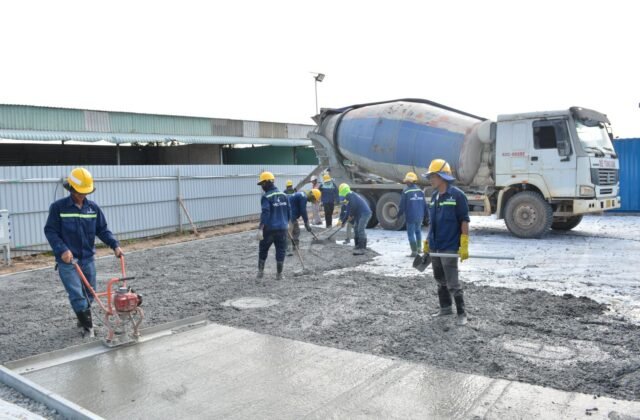
- Delivery and placement — truck delivery fees, pump rental if the truck can’t reach the forms.
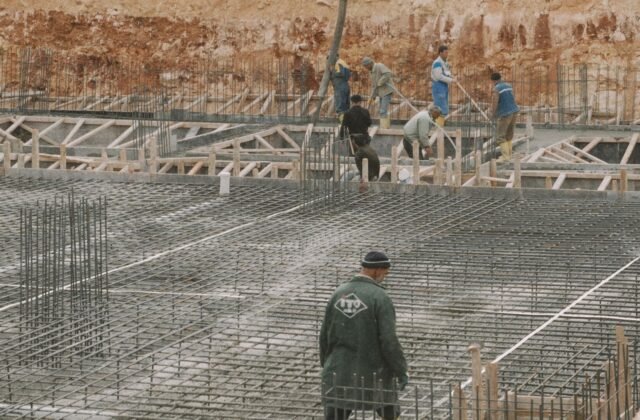
- Formwork — rental or purchase of panels, ties, walers, and bracing.
- Reinforcement and accessories — rebar, snap ties, waterstop, form release agent.
- Labor — setting forms, placing steel, pouring, finishing, stripping, and curing.
Concrete Material Costs
Ready-mix is priced per cubic yard (US) or cubic meter, and the unit price depends on mix strength, slump, admixtures, and distance from the plant. As a broad planning range, residential-grade ready-mix commonly lands around $130–$180 per cubic yard (roughly $170–$235 per cubic meter), before delivery fees. Small-load surcharges apply when you order less than a full truck — typically a few hundred dollars on top — which is why the DIY vs pro guide matters for small walls: bagged mix can be cheaper than a short-loaded truck.
Bagged concrete (80-lb bags yielding about 0.6 ft³ / 0.017 m³ each) runs roughly $5–$8 per bag at retail. That pencils out to well over $200 per cubic yard of finished concrete — fine for a 1 m³ garden wall, punishing for anything truck-sized. See the formula-explained guide for the bag-count math.
Delivery and Placement
- Standard delivery: often included within a local radius for full loads; short loads (under ~4–5 yd³) usually carry a surcharge.
- Concrete pump: when the truck can’t back up to the forms — budget roughly $500–$1,000+ per day for a line pump, more for a boom pump. Tall or long walls with poor access almost always need one.
- Waiting time: most suppliers include 30–60 minutes of discharge time; beyond that, expect per-minute charges. Have the forms ready before the truck arrives — the pour-day checklist exists for exactly this reason.
Formwork Costs
Formwork is the cost DIY estimators forget most often. Options:
- Rental panels: aluminum or steel-ply panel systems typically rent for roughly $0.50–$1.50 per square foot of wall face per month (both faces count), plus delivery and cleaning fees. For a one-off foundation wall, rental beats purchase.
- Site-built plywood forms: 3/4-in form plywood, 2×4 walers and strongbacks, snap ties, and bracing — material cost roughly $2–$4 per square foot of wall face, plus significant labor to build. Reusable for the next wall if you build carefully.
- ICF blocks: roughly $4–$7 per square foot of wall face for the blocks alone, but they stay in place as insulation and need far less bracing labor.
Whatever system you choose, add form release agent, snap ties, and bracing lumber to the line — they’re small individually and material collectively.
Reinforcement, Waterproofing, and Accessories
- Rebar: #4 (12 mm) bars for typical residential walls. Budget by weight — a 20 cm (8 in) foundation wall with verticals and horizontals at 45 cm (18 in) on center uses roughly 8–10 kg of steel per square meter of wall face (about 1.6–2 lb/ft²). At typical retail steel prices, that’s a few hundred dollars for a standard wall.
- Waterproofing / dampproofing: below-grade walls need protection — a bituminous dampproof coating is the minimum, a peel-and-stick or dimple-board membrane the better practice. Budget roughly $1–$3 per square foot of below-grade wall face for materials.
- Drainage: perforated drain pipe and gravel at the footing add a few hundred dollars and prevent the hydrostatic pressure that cracks walls — cheap insurance covered further in the material guide.
Worked Cost Example: 12 m Foundation Wall
Take the wall from the complete guide: 12 m (39.4 ft) long, 2.4 m (7.9 ft) high, 20 cm (8 in) thick — 6.34 m³ (8.29 yd³) with waste. Illustrative mid-range pricing:
| Line item | Quantity | Illustrative cost |
|---|---|---|
| Ready-mix concrete (25 MPa / 3500 psi) | 8.29 yd³ | $1,245 |
| Delivery (full load, local) | 1 truck | $150 |
| Panel formwork rental (both faces, ~630 ft²) | 1 month | $450 |
| Snap ties, release agent, bracing | — | $180 |
| Rebar (#4, both directions @ 18 in) | ~260 kg / 575 lb | $320 |
| Dampproof coating + drain pipe | ~315 ft² wall face | $400 |
| Labor (set, pour, strip, cure) | — | $1,500 |
| Illustrative total | $4,245 |
That’s roughly $510 per cubic yard of wall all-in for a contractor-built wall — concrete itself is only about 30% of the total. The lesson: formwork and labor dominate wall costs, which is why DIY saves real money only if you can source forms cheaply and supply the labor yourself. Always replace these figures with local quotes; the structure of the budget is what transfers.
Where Budgets Go Wrong
- Forgetting formwork entirely. The most common DIY budget miss — panels, ties, and bracing can rival the concrete cost.
- Ignoring the short-load fee. A 3 yd³ order can cost nearly as much in fees as in concrete.
- No pump in the plan. Discovering on pour day that the truck can’t reach the forms, then paying emergency pump rates.
- Skipping waterproofing. Saving a few hundred dollars on a below-grade wall invites a five-figure repair later.
- One quote. Ready-mix prices vary 15–25% between plants in the same metro area. Get three.
More estimating pitfalls are catalogued in the common mistakes guide.
Related Guides
- Complete Guide — the full wall-estimating walkthrough with a worked volume example.
- DIY vs Pro — when bag mixing makes sense and when to call a truck and a crew.
- Material Guide — mix strengths, rebar, formwork, and waterproofing options.
- Estimating Guide — measuring walls and deducting openings accurately.
- Concrete Wall FAQ — quick answers to the most asked wall questions.
Frequently Asked Questions
How much does a poured concrete wall cost?
All-in, a contractor-built residential foundation wall commonly runs $400–$600 per cubic yard of concrete placed, with formwork and labor the largest shares. A 12 m × 2.4 m × 20 cm wall (~8.3 yd³) illustrates at roughly $4,200 — always get local quotes.
Is bagged concrete cheaper than ready-mix for walls?
Only for very small walls (under ~1 m³ / 1.3 yd³). Above that, ready-mix is far cheaper per unit and avoids cold joints between batches.
What is a short-load fee?
A surcharge suppliers add when you order less than a full truck (often under 4–5 yd³) — commonly a few hundred dollars. It can make small orders disproportionately expensive.
How much does concrete pumping cost?
Roughly $500–$1,000+ per day for a line pump, more for a boom pump. Budget one whenever the truck can’t back directly to the forms.
Does formwork cost more than the concrete?
It can come close. Rental panels, ties, bracing, and the labor to set them frequently total 30–50% of a wall project’s cost — never leave formwork out of the budget.
How much does wall waterproofing add?
Dampproof coatings and membranes add roughly $1–$3 per square foot of below-grade wall face in materials — a small fraction of the wall cost and the cheapest insurance against water problems.
Get Your Number
Start with the volume — the Concrete Wall Calculator gives you cubic meters, cubic yards, and bag counts in seconds — then price each of the five budget lines with local quotes. Concrete is only about a third of a finished wall’s cost; formwork, labor, steel, and waterproofing make up the rest. Budget all five, get three quotes, and the number you carry to the supplier will be one you can trust.
Disclaimer: Calculator results are planning estimates based on the dimensions you enter. Actual concrete requirements vary with site conditions, formwork accuracy, and mix design. Verify volumes with your supplier and consult a licensed professional or your local building authority for structural or code-related decisions.