Introduction
Tying foundation rebar sits in a sweet spot for DIY: the work is physical and methodical but not technically mysterious — cut bars to length, position them on supports, and wire the intersections. Plenty of owner-builders do their own footing steel and pass inspection on the first visit. But it’s also real labor on a real schedule, and mistakes get buried in concrete. This guide compares the two paths honestly so you can decide which fits your project. Either way, start with quantities from the Foundation Rebar Calculator — both DIY and hired work begin from the same cut list.
What DIY Rebar Work Actually Involves
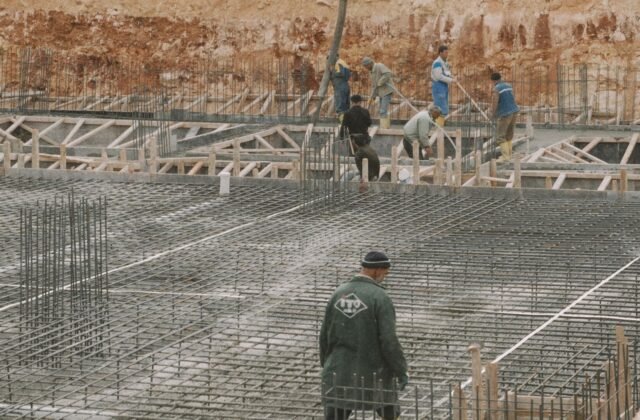
For a typical residential strip footing, the DIY scope is:
- Unloading and staging — 20-ft sticks are awkward; plan the unloading path and storage on dunnage before the truck arrives.
- Cutting — bars to the cut-list lengths with a chop saw, angle grinder, or manual cutter.
- Bending — corner bars, hooks, and stirrups with a hand bender (#4–#5) or rented mechanical bender.
- Placing and supporting — setting bars on chairs/dobies at the right height and cover.
- Tying — wiring intersections and laps with tie wire and pliers or a spinner.
A two-person team can typically cut, place, and tie a straightforward residential footing (say 100–150 ft of trench) in one to two full days. Complex layouts with many bends, deep footings, or pier cages take longer. The techniques are covered in the pro tips guide.
The Case for DIY
- Cost savings are real. Placement labor is commonly priced per ton of steel or per hour — on a residential footing this is often several hundred dollars. DIY keeps that money, and the tools (cutter, bender, tie spinner) cost a fraction of one job’s labor and are reusable.
- Schedule control. You tie on your own timeline — evenings and weekends — instead of fitting a crew’s availability before the concrete truck.
- Quality visibility. Nobody cares about your foundation’s steel more than you do. DIY means every lap length and every cover dimension gets your own eyes, not a rushed crew’s.
- Skill building. Rebar tying is a genuinely useful construction skill that transfers to slabs, walls, and future projects.
The Case for Hiring a Pro
- Speed. An experienced two-person ironworker crew ties in hours what takes a DIYer days. When the concrete is scheduled, speed is schedule insurance.
- Complex detailing. Pier cages, grade-beam stirrups, seismic detailing with closely spaced ties, and epoxy-coated bar handling all reward experience. Mistakes in complex cages are hard to spot and expensive to fix.
- Inspection confidence. Pros know what the local inspector looks for — lap schedules, cover, tie patterns — and build to pass the first time. A failed inspection costs a re-visit fee and delays the pour.
- Physical demand. Rebar work is bent-over, repetitive, and heavy. Footings at the bottom of a 4-ft trench are genuinely hard on backs and knees — factor your own body into the decision.
- Liability and warranty. On contracted foundation work, the steel installer’s workmanship is their responsibility. DIY steel on a hired pour can blur who owns a problem.
Cost Comparison: A Worked Example
Take a 150-ft (45.7 m) residential footing run estimating 600 lb (272 kg) of steel with waste. Illustrative figures (get local quotes — these show the method, not market prices):
| Cost item | DIY | Hired crew |
|---|---|---|
| Bar material (600 lb @ $0.70/lb) | $420 | $420 |
| Accessories (wire, chairs) | $35 | $35 |
| Delivery | $75 | $75 |
| Tools (cutter rental, bender, spinner) | $120 | $0 |
| Tying labor | $0 (2 days of your time) | ~$300 (illustrative) |
| Total | $650 | $830 |
The DIY saving here is roughly $180 — modest in dollars, meaningful as a share of the steel budget, and it grows with project size since labor scales with tonnage. The real DIY cost is time: two full days for a first-timer on this size of footing. Whether that’s a good trade is personal — the cost guide breaks down the full budget in more detail.
The Hybrid Option
Many owner-builders split the difference, and it’s often the best of both:
- DIY the straight runs, hire the complex parts. Tie the long straight footing sections yourself; bring in experienced help for pier cages, corners, and seismic detailing.
- Hire for a day of supervision. An experienced ironworker for one day to set up the layout, demonstrate tying, and check your work costs far less than full installation — and dramatically raises DIY quality.
- DIY the prep, pro the pour-day. Do the cutting, bending, and staging yourself; have the crew do final placement and tying if the schedule is tight.
Decision Checklist
DIY is the better choice when all of these are true:
- The layout is straightforward — straight runs, simple corners, no cages or seismic detailing.
- You have (or can rent) a cutter, bender, and tie tools — and a helper for the heavy lifts.
- The schedule has slack — at least a full buffer day between steel completion and the concrete pour.
- You’re comfortable reading the lap schedule and cover requirements off the drawings — or the code compliance guide — and building exactly to them.
- Your local inspector allows owner-builder steel work (most do for residential, but confirm).
Hire it out when any of these apply: complex cages or seismic details, epoxy-coated bar you haven’t handled before, a tight pour schedule with no slack, physical limitations, or a contracted foundation where workmanship warranty matters.
Related Guides
- Pro Tips — ordering, tying, and inspection advice.
- Cost Guide — pricing rebar by ton, size, and labor.
- Pre-Pour Checklist — everything to verify before the concrete arrives.
- Estimating Guide — step-by-step measurement and counting workflow.
- FAQ — quick answers to the most asked questions.
Decide, Then Quantify
There’s no wrong answer — only a mismatch between the choice and the project. Straightforward footings with schedule slack reward DIY; complex steel on a tight schedule rewards a pro crew; the hybrid split often beats both. Whichever path you choose, the quantities come first: run your footing through the Foundation Rebar Calculator, build the cut list, and price both options with real local numbers before you commit.
Open the Foundation Rebar Calculator
Disclaimer: Calculator results are planning estimates based on the dimensions and layout you enter. Labor costs and practices vary by region — get written quotes for your project. Verify quantities with your supplier, have structural designs reviewed by a qualified engineer, and check your local building code (including owner-builder rules) before ordering or installing.