Introduction
Calculating amps is easy; getting a number you can trust is a craft. The difference is in the habits: which wattage you read off the nameplate, how you verify the voltage, when you add margin, and what you write down for the next person. These are the workflow tips that experienced electricians and careful DIYers use to keep amperage estimates honest.
The arithmetic itself lives in the Amperage Calculator — enter your watts, volts, and power factor and it returns the current. These tips make sure the numbers you feed it (and the decisions you make from its output) hold up in the real world.
Input Tips: Getting Honest Numbers In
Read the nameplate, not the marketing
The nameplate (or the spec sheet’s “electrical” section) gives rated voltage, wattage, and often full-load amps directly. Marketing copy rounds up features and rounds down consumption. When a nameplate lists a range (e.g., 110–120 V), use the voltage you’ll actually supply — and when it lists both watts and amps, use the amps; the manufacturer already did this math with the real power factor.
Verify the actual supply voltage
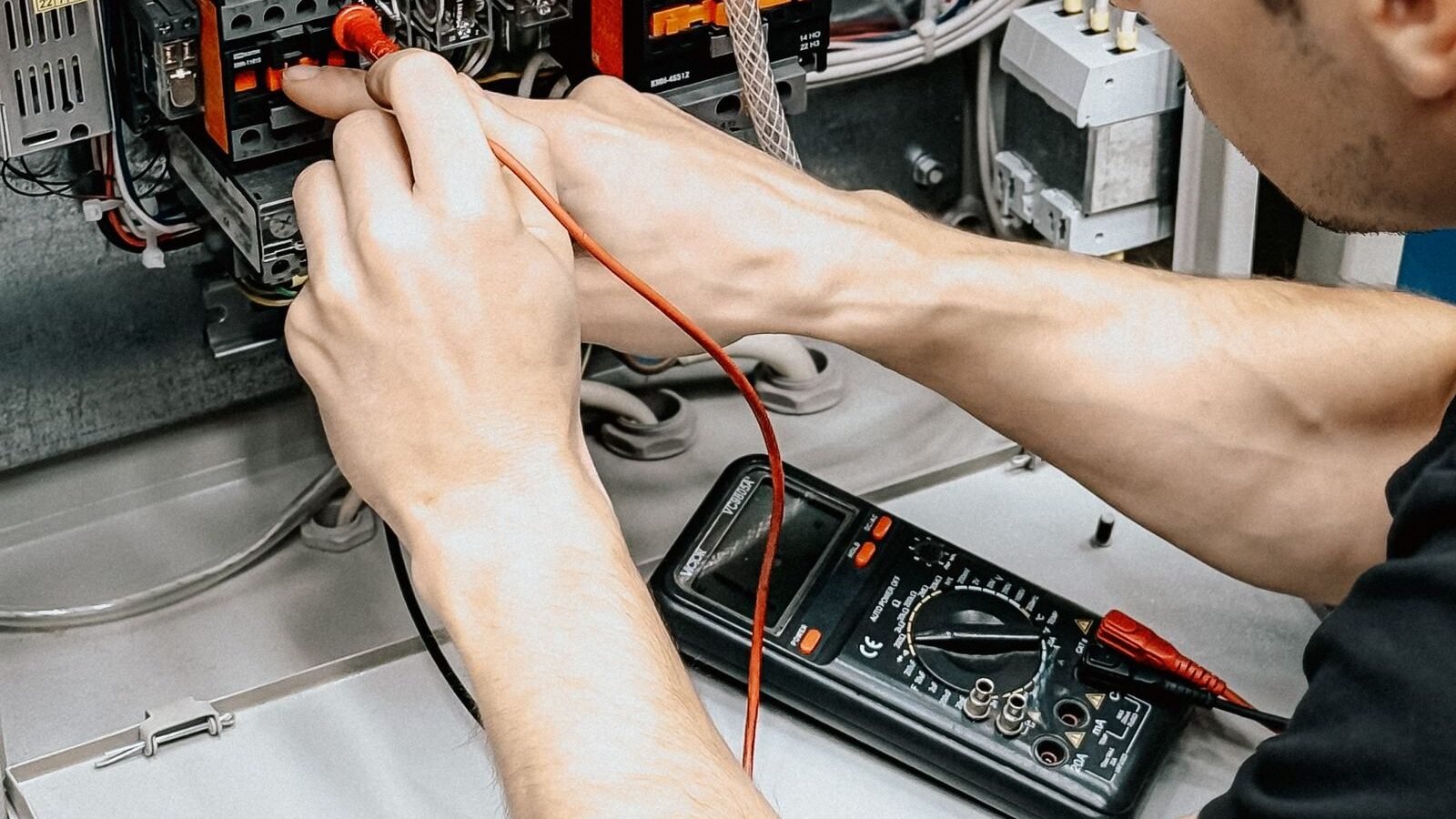
Nominal voltage and real voltage differ. A “120 V” circuit often measures 118–125 V; “240 V” residential service can be 238–245 V; and commercial “240 V” equipment frequently runs on 208 V three-phase systems. For a planning calculation, nominal is fine — but for an existing installation you’re troubleshooting or extending, a $20 multimeter reading removes the single biggest source of error. Remember the worked baseline: 1,500 W ÷ 120 V = 12.5 A, but 1,500 ÷ 208 = 7.2 A — same appliance, different supply, different wire and breaker.
Default the power factor conservatively
If the nameplate doesn’t state a power factor and you’re sizing wire or breakers, assume the worst reasonable case: 0.8 for motors, 0.7 for welders and old fluorescent ballasts. A conservative PF overestimates current slightly — which is the safe direction. Refine it later if the manufacturer provides the real figure. The formula-explained guide shows exactly how much PF moves the answer.
Count simultaneous loads, not installed loads
A workshop with a 15 A table saw, a 12 A dust collector, and a 1,500 W (12.5 A) heater has 39.5 A of installed load — but if you never run the saw and the dust collector without the other, the simultaneous load is what sizes the circuit. List what runs at the same time, add those, and apply the 80% rule to the total. This is the core skill behind the estimating guide.
Sizing Tips: From Current to Circuit
Apply the 80% rule before you fall in love with a number
Continuous loads (running 3+ hours, per NEC) must not exceed 80% of the circuit rating. So when your calculation lands on 15 A — like the classic 1,800 W space heater on 120 V — that is a 20 A circuit, not a 15 A one. Do this check first; it changes wire gauge, breaker size, and cost.
Round sizing decisions up, always
14.7 A of calculated load does not become a 15 A breaker — standard sizes go 15, 20, 25, 30, and the 80% rule already pushes 14.7 A past 15 A for continuous duty. Round the sizing up while keeping the calculation exact. Precision in the math, conservatism in the hardware.
Leave headroom for the next owner (or your future self)
A circuit sized exactly to today’s load is a circuit you’ll re-run in three years. When pulling a feeder to a garage or workshop, one gauge larger than the math requires is cheap insurance — copper is expensive, but re-running cable through finished walls is far more expensive. This is also where checking total panel load matters: use the Electrical Load Calculator to confirm the panel itself has spare capacity before adding anything.
Match wire to breaker, breaker to load — in that order
The breaker protects the wire, not the appliance. So the chain runs: load current → wire ampacity (with derating) → breaker sized to protect that wire. A 20 A breaker on 14 AWG wire is the textbook violation — the wire’s 15 A ampacity is the limit, regardless of what the load draws. Never upsize a breaker without upsizing the wire it protects.
Documentation Tips: Making the Number Last
Label the panel with the math, not just the room
“Kitchen outlets” is a label; “Kitchen outlets — 20 A, 12 AWG, est. 11 A max simultaneous” is a record. When someone (possibly future you) considers adding a load, the amperage note on the panel schedule answers the question without re-deriving anything.
Keep a load list per circuit
A simple sheet — circuit number, wire size, breaker size, connected loads with their amperage, simultaneous total — prevents the slow creep where a 14 A circuit silently becomes an 18 A circuit over five years of added plugs. Update it whenever you add or replace a significant load; the checklist includes this documentation as a final verification step.
Photograph nameplates
Nameplates fade, get painted over, or live behind appliances you can’t easily reach twice. A phone photo of every major appliance’s electrical label, stored with the panel schedule, is the cheapest documentation you’ll ever make.
Related Guides
- Common Mistakes — the errors these tips are designed to prevent.
- Estimating Guide — the simultaneous-load method in full.
- Amperage Checklist — the verification pass before any sizing decision.
- Material Guide — wire, breakers, and panels matched to your current.
- Complete Guide — the full amperage reference.
Frequently Asked Questions
Should I use the nameplate amps or calculate from watts?
Use the nameplate amps when provided — the manufacturer already accounted for the real power factor and voltage. Calculate from watts only when amps aren’t listed.
How much headroom should I leave on a circuit?
At minimum, the NEC 80% rule for continuous loads. Beyond that, one standard breaker size or one wire gauge of extra capacity is inexpensive future-proofing on new runs.
Is it worth measuring actual voltage instead of using nominal?
For planning, nominal is fine. For troubleshooting trips or extending an existing circuit near its limit, a real multimeter reading is worth the two minutes — voltage error is the largest single input error.
Can I put a bigger breaker on existing wire?
No. The breaker protects the wire; a larger breaker on the same wire removes the wire’s protection. Upsize the wire first, then the breaker.
Get Your Number
Good amperage work is a loop: honest inputs, the right formula, the 80% check, conservative sizing, and a written record. The Amperage Calculator handles the arithmetic step — these habits handle everything around it. Run your numbers, document them on the panel schedule, and the next electrical decision starts from facts instead of guesses.
Disclaimer: planning estimates only — these tips support planning calculations, not installations. Always verify with a licensed electrician and your local authority having jurisdiction before sizing, installing, or modifying any circuit.
