Introduction
It’s a natural question: steel is just metal parts bolted together — how hard can it be to do it yourself and save the erection cost? The honest answer has a hard line through it. Structural steel work on load-bearing structures is not DIY. Not “advanced DIY.” Not DIY with a rented crane. The engineering, the rigging, the connections, and the legal liability all require licensed professionals — and the cost of getting it wrong is measured in collapses, not callbacks.
The Structural Steel Cost Calculator prices professional execution: engineered design, fabricated steel, and qualified erection. This guide draws the precise boundary — what you must hire out, what you can legitimately do yourself, and why the “savings” from DIY steel erection are an illusion.
The Hard Line: Load-Bearing Steel Is Professional Work
A structural frame holds up a building and the people in it. Every member size, every connection, and every bolt pattern is an engineered decision with life-safety consequences. Here’s what stands between a DIYer and a safe steel frame:
- Engineering. Member sizing, connection design, lateral bracing, and foundation loads require a licensed structural engineer. No permit office approves an unengineered steel frame, and no insurer covers one.
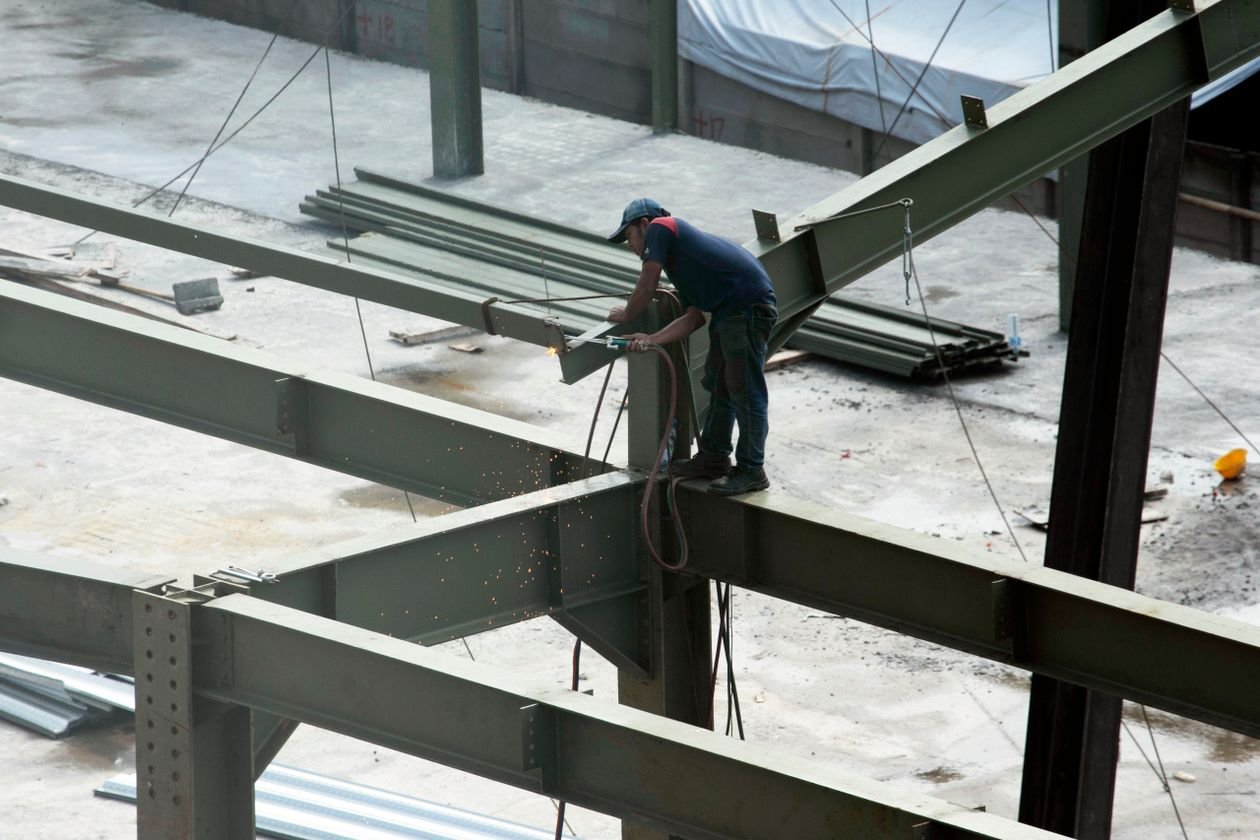
- Rigging and cranes. A single W24 beam can weigh over a ton (900+ kg). Picking, swinging, and setting multi-ton members demands certified crane operators and qualified riggers. Dropped or swinging steel kills — this is the leading edge of construction fatality statistics.
- Connection integrity. A bolted connection torqued wrong or a weld made by an uncertified welder looks identical to a correct one and fails differently. Structural bolting and welding require trained, often certified, workers and inspection.
- Working at height. Ironworkers connect steel from the frame itself, tied off under fall-protection rules. It’s among the most dangerous work in construction for reasons that don’t yield to enthusiasm.
- Liability. If a DIY-erected frame fails, the liability — civil and potentially criminal — sits with whoever built it. No savings survive that math.
The code compliance guide covers the permit and inspection side of the same boundary.
What You CAN Do Yourself
The line isn’t “touch no steel ever.” It’s drawn at structural responsibility. Legitimate DIY and owner-builder territory includes:
- Estimating and budgeting. Building the member schedule, running the takeoff, and pricing the package — exactly what this article series teaches — is valuable owner work that no license restricts.
- Non-structural steelwork. A garden trellis, a non-load-bearing equipment stand, decorative brackets — small steel that holds up nothing but itself. (If it supports people, roofs, or walls, it’s structural.)
- Painting and touch-up. Field touch-up of shop primer and finish painting of accessible steel are common owner tasks — with proper surface prep and specified coatings.
- Site preparation and logistics. Clearing laydown areas, coordinating deliveries, and keeping the site accessible for the erector’s crane.
- Quote comparison and hiring. Getting three scoped fabricator quotes and checking references is owner work that directly controls cost.
| Task | DIY or pro? | Why |
|---|---|---|
| Estimating and budgeting | DIY-friendly | No license required; sharpens your hiring |
| Structural design and sizing | Licensed engineer only | Life-safety calculations; required for permits |
| Fabrication (cutting, welding) | Certified shop | Connection quality can’t be inspected visually |
| Erection (crane, rigging, bolting) | Qualified erector | Fatality risk; specialized equipment and training |
| Non-structural small steelwork | DIY-possible | Holds up nothing structural; still follow safe practices |
| Painting and site logistics | DIY-friendly | Real savings with no structural risk |
The “Savings” Illusion
Erection at $500–$1,200/ton looks like the line item to attack — on a 20-ton frame, that’s $10,000–$24,000 of tempting “savings.” The illusion dissolves on contact with reality:
- Equipment. A crane with a certified operator rents by the day at rates that erase DIY savings within the first week — before rigging gear, lifts, and torque equipment.
- Speed. A professional crew sets in days what takes an amateur crew weeks, and every extra day is equipment rental and exposure.
- Rework. Misaligned frames, mis-set anchor bolts, and failed inspections cost more to fix than professional erection cost to begin with.
- Insurance. Builder’s risk and liability policies assume qualified contractors. DIY structural work can void coverage exactly when you need it.
The real DIY savings in a steel project come from the planning side: a sharp estimate, competitive bidding, smart material choices, and well-run logistics. The pro tips guide is where those savings live.
How to Hire Right (the Actual Money Move)
Since the work is professional, the skill that pays is hiring:
- Engineer first. Engage the structural engineer before talking to fabricators — the design drives everything downstream.
- Bid the fabrication and erection together or separately — but scoped identically. Get at least three quotes, normalized line by line. The estimate checklist has the scope list.
- Check qualifications. Fabricator certifications (such as AISC certification, where applicable), erector experience with your building type, and references from recent similar jobs.
- Verify insurance. General liability, workers’ comp, and equipment coverage — certificates in hand before steel arrives.
- Plan the site. Confirm crane access, laydown area, and schedule with the erector directly.
Related Guides
- Complete Guide — the full overview with a start-to-finish worked example.
- Code Compliance — permits, inspections, and the legal framework.
- Pro Tips — where the real savings are.
- Cost Guide — what professional execution should cost.
- Estimating Guide — the owner-side skill that pays.
- FAQ — quick answers to common questions.
Get Your Number
Do the estimating yourself — that’s smart, legal, and genuinely valuable. Leave the engineering, fabrication, and erection to licensed and qualified professionals — that’s not caution, it’s the only responsible way to build with structural steel. Price the professional job accurately with the Structural Steel Cost Calculator, hire well, and spend your DIY energy where it actually saves money: planning, bidding, and logistics.
Disclaimer: Calculator results are planning estimates. Actual steel costs vary with market prices, project complexity, and regional labor rates. Verify pricing with your supplier and fabricator, and consult a licensed professional or your local building authority for structural or code-related decisions.
1 comment