Introduction
Priming is one of the most DIY-friendly tasks in home improvement: the skill ceiling is low, the tools are cheap, and mistakes are correctable. It is also one of the tasks where hiring a professional is most defensible at scale: a crew primes a whole house in the time a homeowner does two rooms. The right choice depends on the size of the job, the condition of the surfaces, and what your time is worth.
The Primer Calculator gives you the material quantity either way; labor is the variable this guide prices. The canonical example (420 ft2 of wall, 2 gallons of primer) costs under 150 dollars in DIY materials; hired out as part of a prime-and-paint job, the same room runs 300 to 800 dollars. Here is how to decide which number is yours.
The Honest Cost Comparison
| DIY | Hired pro | |
|---|---|---|
| Primer (2 gal, canonical room) | 60-80 dollars | Included in quote |
| Supplies (rollers, tape, prep) | 35-65 dollars | Included in quote |
| Labor | Your weekend (6-10 hours incl. prep) | 300-800 dollars per room typical |
| Total, walls primed (and usually painted) | 95-145 dollars materials | 300-800 dollars all-in |
| Quality risk | Lap marks, flashing if rushed | Low with a vetted painter |
Note what the pro quote usually includes: primer and topcoats. A prime-only hire is uncommon residentially; most painters quote the finished job. The cost guide breaks down both structures in detail.
When DIY Is the Right Call
- One to three rooms. The material cost is trivial, the time cost is a weekend, and the savings versus a pro quote are 200 to 600 dollars per room.
- Sound, previously painted walls. One coat of latex on a sealed surface is the easiest priming there is; the pro tips cover the technique in an afternoon’s reading.
- You control the schedule. DIY lets you prime Saturday and topcoat Sunday on your own recoat timing, with no crew scheduling.
- Touch-ups and single walls. A quart of primer and a brush handle a repair wall; no painter has a minimum that makes this economical to hire.
When Hiring Wins
- Whole-house or multi-room jobs. A crew with sprayers primes in hours what takes a homeowner days; the per-room labor cost falls with scale.
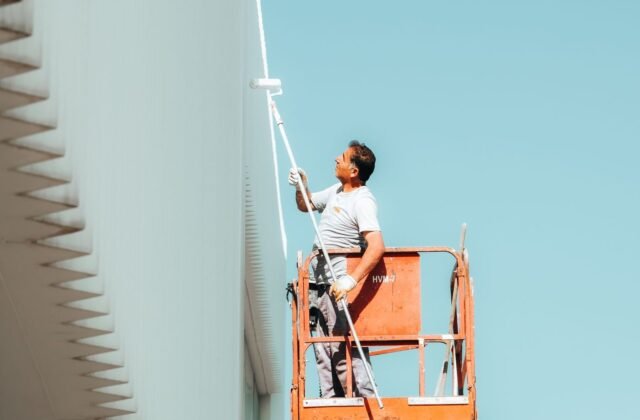
- High or difficult surfaces. Vaulted ceilings, stairwells, and exteriors need ladders, scaffolding, and spray equipment; the safety and equipment math favors pros.
- Damaged or specialty surfaces. Smoke damage, heavy staining, wallpaper removal, and lead-paint situations (see code compliance) reward experience and proper equipment.
- Your time is the constraint. Ten hours of priming plus prep is real; if those hours earn more elsewhere, the pro quote is the rational buy.
- Finish quality matters most. Dark-to-light changes, bold colors, and high-visibility spaces show every DIY shortcut. Pros cut cleaner lines.
The Hybrid Option
The most economical professional arrangement is often split: you do the prep (patching, sanding, caulking, masking, moving furniture), and the painter does the priming and painting. Prep is unskilled hours; cutting in is skilled. Homeowners who prep thoroughly routinely cut 20 to 40 percent off a quote, because prep is the labor-intensive part painters price defensively.
If you take this route, agree in writing on who supplies the primer and which product: some painters prefer their own materials for warranty reasons, and the primer type affects the estimate (see the material guide).
Time Estimates: How Long Priming Takes
| Task (canonical 420 ft2 room) | DIY time | Pro time |
|---|---|---|
| Prep: patch, sand, caulk, mask | 2-4 hours | 1-2 hours |
| Cut in edges and corners | 1-2 hours | 30-60 min |
| Roll one coat | 1-2 hours | 30-60 min |
| Cleanup | 30-60 min | 15-30 min |
| Total per coat | 5-9 hours | 2-4 hours |
Two coats roughly doubles the rolling and cutting time but not the prep. These are planning figures; first-timers should use the high end. Multiply across rooms to see the true DIY time cost before deciding.
Vetting a Painter: Five Questions
- Is primer in the quote, and which product? Get the brand and type in writing; “self-priming paint” on bare surfaces is a corner-cut to question.
- How many coats of primer and paint? The answer should match your surface: new drywall gets two primer coats, not one.
- What prep is included? Patching, sanding, caulking, and masking should be itemized, not assumed.
- How do you handle the waste and cleanup? Pros should leave the site clean and dispose of materials properly.
- Can I see recent work or references? No invented testimonials needed on your side; just ask for two recent local references and call them.
Related Guides
- Cost Guide – full pricing breakdowns, DIY and hired.
- Primer Calculator Complete Guide – the estimating walkthrough.
- Pro Tips – the techniques that close the DIY quality gap.
- Estimating Guide – measuring so your quote comparisons are apples-to-apples.
- Project Checklist – what to have ready whichever route you take.
- Code Compliance – lead paint and VOC rules that affect hiring.
Frequently Asked Questions
Is it worth hiring a painter just for primer?
Rarely as a standalone job; painters price prime-and-paint packages. Hire for the finished job, or DIY the primer and hire nothing.
How much should I pay a painter per room?
Typical per-room quotes for prime plus paint run 300 to 800 dollars for a standard bedroom, varying widely by market, ceiling height, and wall condition. Get three written quotes.
Can I prep myself and hire only the painting?
Yes, and it is the best value split for many homeowners: your unskilled prep hours replace the painter’s most expensive hours. Agree on materials and scope in writing first.
Get Your Number
Price both paths: run the Primer Calculator for materials, multiply the time table above by your room count for DIY hours, and collect two or three written quotes for the hired path. The right answer is the one where cost, time, and quality all clear your bar.
Disclaimer: Calculator results and cost ranges are planning estimates. Actual costs vary with local pricing, product selection, surface condition, and labor markets. Verify prices with local suppliers, get written quotes for hired work, and consult a professional for large, exterior, or specialty-coating projects.