Introduction
Landscape rock is priced like a commodity but bought like a design material — per ton at the yard, with delivery fees, color premiums, and bagged-vs-bulk math layered on top. Before you fall in love with a particular river rock at the display bins, it pays to know what a finished bed actually costs. Use the free Landscape Rock Calculator to convert your bed dimensions into tons, then apply the price ranges in this guide to build a realistic budget: rock, delivery, fabric, edging, and labor if you are not spreading it yourself.
All prices below are typical planning ranges for the US market, not quotes. Rock is heavy and local — a quarry-rich region can sell decorative stone for half what a city yard charges two states away, and premium colors command real premiums. Treat these numbers as budgeting anchors, then get 2–3 local quotes before you commit.
Rock Prices by Type (Per Ton)
The biggest cost variable is the rock itself. Common decorative gravels sit at the low end; specialty colors, large polished river rock, and lightweight lava rock sit at the high end.
| Rock type | Typical price per ton | Notes |
|---|---|---|
| Pea gravel | $45–$80 | Most affordable; widely available |
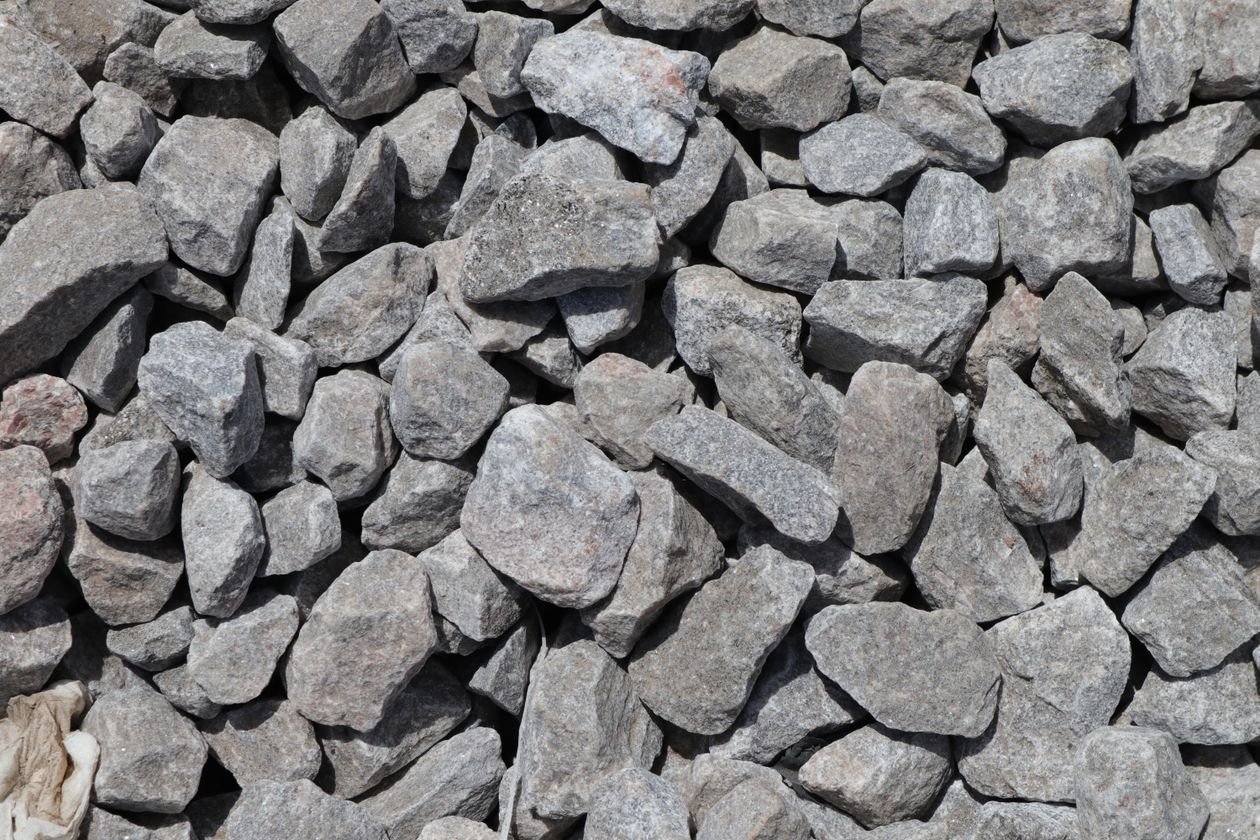
| Crushed granite / decorative crushed stone | $50–$90 | Angular; good value for coverage |
| River rock | $60–$120+ | Price climbs with stone size and color rarity |
| Marble chips | $70–$130+ | Bright white; premium finish pricing |
| Lava rock | $80–$150+ | Often sold by volume or bag; lightweight |
Two premiums to expect: color (rare reds, blacks, and whites cost more than standard tans and grays) and size (large 2–3 in / 5–8 cm river rock costs more per ton than 3/4 in / 2 cm of the same stone, and needs a deeper layer). The material guide profiles each type so you can weigh appearance against budget before you price-shop.
Delivery: The Fee Everyone Forgets
Bulk rock arrives by dump truck or trailer, and delivery typically adds $50–$150+ to the order, depending on distance, truck size, and your region. Common structures to ask about:
- Flat delivery fee within a radius (often 10–20 miles / 16–32 km), with per-mile charges beyond it.
- Minimum order — many yards require 1 ton minimum or charge a small-load surcharge below it.
- Half-load or split loads — some yards will split a truck between two rock types for a modest fee, useful if beds and a path need different stone.
- Dump-site access — trucks need roughly 10–12 ft (3–3.7 m) of width and 13+ ft (4 m) of overhead clearance; tight or soft access can mean a smaller truck and a higher fee.
If you own or can borrow a pickup or trailer, hauling 0.5–1 ton yourself can erase the delivery fee — but weigh that against your time and the yard’s loading fees. For anything over ~2 tons, professional delivery is almost always the better deal.
Bagged vs. Bulk: The 3–5× Markup
Home-improvement stores sell decorative rock in 0.5 ft³ (0.014 m³) bags, typically $5–$12 per bag depending on type. Since one cubic yard equals 54 of those bags, a yard of bagged rock costs roughly $270–$650 — versus $60–$170 per cubic yard equivalent in bulk (a $40–$100/ton rock at 1.4–1.7 tons/yd³). Worked example: a 20 ft × 4 ft (6.1 × 1.2 m) bed at 3 in (7.6 cm) needs 20 ft³ = 0.74 yd³ ≈ 1.1 tons, or 40 half-cubic-foot bags. Bagged at $8 each, that is $320; the same rock in bulk is roughly $45–$110 plus delivery. Bags only make financial sense below about 0.5 yd³ (27 bags / 13.5 ft³ / 0.38 m³), where delivery minimums would otherwise punish you.
Accessories: Fabric, Edging, and Tools
Rock is only part of the installed cost. Budget these companions:
| Item | Typical cost range | Notes |
|---|---|---|
| Woven weed-barrier fabric | $0.10–$0.30 / ft² ($1–$3 / m²) | Buy woven, not thin spunbond, for under rock |
| Plastic edging | $0.50–$1.50 / ft ($1.60–$5 / m) | Budget option; can heave in freeze-thaw |
| Aluminum edging | $2–$4 / ft ($6.50–$13 / m) | Clean look, durable |
| Steel edging | $3–$6 / ft ($10–$20 / m) | Strongest; best for containing rock long-term |
| Wheelbarrow, rake, tamper | $0–$80 | Borrow or buy; a sturdy wheelbarrow is essential |
Fabric and edging are not optional extras — they are what keep a rock bed looking intentional instead of dissolving into the lawn. The pro tips guide explains the installation order that makes these materials actually work.
DIY vs. Hired Labor
Spreading rock is simple, heavy work. DIY cost is your time: expect 2–4 hours per ton with a wheelbarrow, including hauling from the dump pile and raking to grade. A hired landscape crew typically charges $40–$80+ per labor-hour depending on region, and a two-person crew can spread 3–5 tons in a day — so budget roughly $300–$800 in labor for a mid-size project, on top of materials. Full comparison, including when the job genuinely needs a pro (drainage work, large areas, machinery access), is in the DIY vs. pro guide.
Three Realistic Project Budgets
All-in planning estimates (rock + delivery + fabric + edging), DIY labor, typical US pricing:
| Project | Tons needed | Typical all-in range |
|---|---|---|
| Small bed: 10 × 6 ft (3.05 × 1.83 m) at 2 in (5 cm) — 0.37 yd³ ≈ 0.56 tons; order ~0.75 ton | ~0.75 | $130–$260 (consider pickup to skip delivery) |
| Foundation bed: 20 × 4 ft (6.10 × 1.22 m) at 3 in (7.6 cm) — 0.74 yd³ ≈ 1.1 tons; order ~1.5 tons | ~1.5 | $280–$450 |
| Large bed: 30 × 10 ft (9.14 × 3.05 m) at 3 in (7.6 cm) — 2.78 yd³ ≈ 4.2 tons; order ~4.5 tons | ~4.5 | $650–$1,100 |
Verify each quantity with the estimating guide before ordering — the math above includes a 5–10% waste allowance, and your ground is never as flat as the arithmetic assumes.
Five Ways to Keep the Bill Down
- Get the depth right once. A second delivery for a top-up costs nearly as much in fees as the first; the case study walkthrough shows how one accurate estimate avoids it.
- Pick up small loads yourself. Under ~1 ton, a borrowed trailer can beat a $75+ delivery fee.
- Ask about “contractor” or volume pricing at 3+ tons — some yards discount larger orders.
- Choose common colors. Standard tans and grays run 20–40% cheaper than premium whites, reds, and blacks.
- Combine orders. One delivery covering beds, a path, and a neighbor’s project splits the fee.
Related Guides
- Landscape Rock Material Guide — which rock types give the best value for each application.
- Landscape Rock Estimating Guide — accurate measuring so you never pay for a second delivery.
- Landscape Rock: DIY vs. Pro — when your labor is free and when it is worth hiring out.
- Landscape Rock Pro Tips — installation details that protect your investment.
- Landscape Rock Case Study — a full hypothetical project budget, line by line.
- Landscape Rock FAQ — quick answers on pricing, delivery, and ordering.
Frequently Asked Questions
Why do quotes vary so much between suppliers?
Rock is heavy and hyper-local. Distance from the quarry, the yard’s sourcing, color rarity, and whether delivery is included all swing the price. Always compare the delivered per-ton price, not the headline rock price.
Is there a minimum order for bulk delivery?
Most yards have a 1-ton minimum or a small-load surcharge. If your project needs less, ask about pickup, bagged rock, or splitting a delivery with a neighbor.
Does rock color affect the price?
Yes. Common tans, grays, and browns are cheapest; white marble, red lava, and specialty river rock colors typically cost 20–40% more per ton and can be harder to match later — order a little extra.
Get Your Number
Start with tons, then build the budget outward: multiply by your local per-ton price, add delivery, then fabric and edging. Run your dimensions through the Landscape Rock Calculator and take that number to two or three local yards — the delivered per-ton quote is the only price that matters.
Disclaimer: Calculator results are planning estimates based on the dimensions you enter. Actual material requirements vary with rock type, size, compaction, and supplier bulk density. Verify quantities with your supplier and consult a licensed professional for drainage or code-related decisions.